Why Hydrogen Water Comes in Aluminum Cans: A Simple Guide
If you've been browsing hydrogen water options this November 2026, you've probably noticed something: nearly every serious ready-to-drink hydrogen water comes in an aluminum can, not a plastic bottle. That's not a coincidence, and it's not a style choice. It comes down to one stubborn fact of chemistry: molecular hydrogen is the smallest molecule in the universe, and it will escape through almost anything you try to hold it in. In this guide, we'll walk you step by step through why hydrogen water comes in aluminum cans, so you can shop with confidence and actually get the hydrogen you're paying for.
STEP 1: UNDERSTAND WHAT MAKES HYDROGEN WATER DIFFERENT
Before the packaging makes sense, it helps to understand the product. Hydrogen water is simply water that has been infused with extra molecular hydrogen gas (H2). That dissolved hydrogen is the entire point of the drink. Over 1,000 peer-reviewed studies have explored molecular hydrogen, and as research indexed in the National Library of Medicine shows, scientists have examined areas like exercise recovery, oxidative stress, inflammation response, cognitive function, sleep quality, energy, and gut health. To be clear, none of this is settled or proven, and hydrogen water is not a treatment for anything. But if you're going to drink it, you want the hydrogen to actually still be in the water when it reaches your lips. If you're newer to the topic, our overview of what hydrogen water is is a good place to start.
STEP 2: RECOGNIZE THE ESCAPE PROBLEM
Here's the challenge every hydrogen water maker faces: H2 molecules are incredibly small. Small enough, in fact, to slip right through materials that hold ordinary liquids just fine. Think of it like trying to store sand in a woven basket. The basket looks solid, but the grains work their way through the gaps. Hydrogen does the same thing with most packaging. The moment water is infused with hydrogen, the clock starts ticking, and the container is the only thing standing between you and plain, ordinary water. This is why the packaging question isn't a detail. It's the whole ballgame.
STEP 3: SEE WHY PLASTIC BOTTLES AND POUCHES FALL SHORT
Plastic is permeable to hydrogen gas. That means hydrogen water sold in standard plastic bottles can lose its dissolved hydrogen quickly, often within days, long before you ever open it. Pouches face a similar problem. A product might leave the facility with a respectable hydrogen concentration and arrive at your door as little more than nicely packaged water. The frustrating part is that it looks identical either way. You can't see dissolved hydrogen, and you can't taste its absence, so permeable packaging quietly undermines the product without any obvious warning signs. We dug deeper into this in our post comparing plastic vs aluminum hydrogen water, and the difference is hard to ignore.
STEP 4: LEARN WHY ALUMINUM SOLVES THE PROBLEM
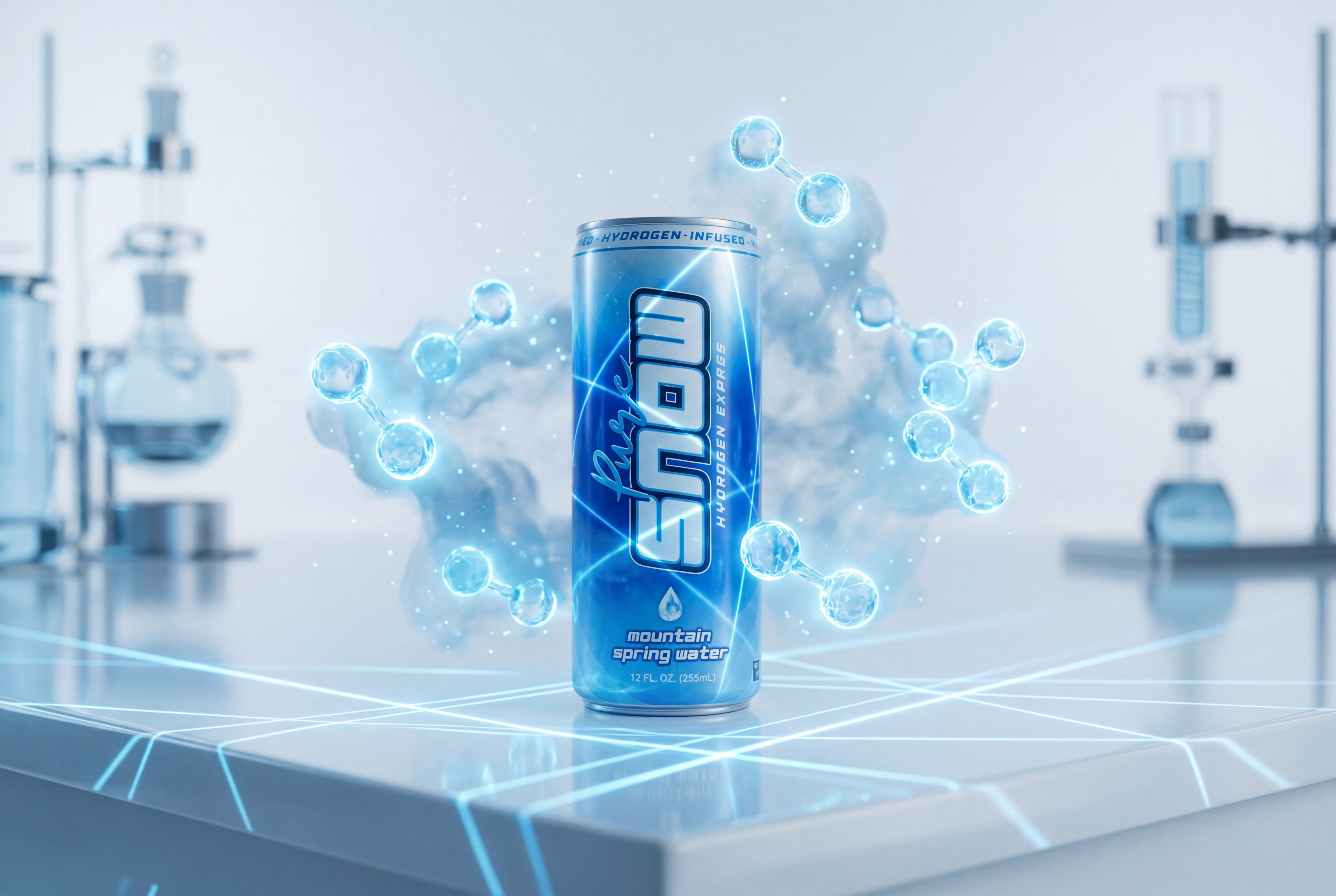
Aluminum is impermeable to hydrogen. Those tiny H2 molecules that slip through plastic simply cannot pass through an aluminum wall. When hydrogen water is sealed in an aluminum can, the hydrogen stays dissolved in the water for months, waiting for you to crack the tab. This is exactly why Pure Snow is packaged in 12 oz hermetically sealed aluminum cans. A hermetic seal means the can is completely airtight, with no exchange between the inside of the can and the outside world. Combine an airtight seal with a hydrogen-proof material, and you get a container that actually preserves what you paid for. Pure Snow is formulated at 2-3 PPM of molecular hydrogen, and the can is what keeps that concentration intact from our facility to your fridge. You can read more about the science behind the can and our concentration on our how it works page.
STEP 5: KNOW WHAT HAPPENS WHEN YOU OPEN THE CAN
The can's protection ends the moment you open it. Once hydrogen water is exposed to air, the dissolved hydrogen begins to escape, just as it would from a permeable container. The practical takeaway: drink your can within 10 to 15 minutes of opening for maximum potency. This isn't a hardship with a 12 oz can; it's an easy size to finish in one sitting. But it does mean hydrogen water isn't a sipper you leave open on your desk all afternoon. Open it when you're ready to drink it, and enjoy it while the hydrogen is still there.
STEP 6: APPLY THIS WHEN YOU SHOP
Now you have a simple filter for evaluating any hydrogen water product. First, check the packaging: if it's plastic, be skeptical about how much hydrogen will actually be left when you drink it. Second, look for a stated hydrogen concentration, measured in PPM. Third, consider what's actually in the can, because the base water matters too. Pure Snow starts with Ouachita Mountain spring water from Arkansas, a source that has earned 19 honors from the Berkeley Springs International Water Tasting competition, including multiple Best Tasting Water in the World titles. Great packaging protecting great water is the combination you're looking for. And because a can-based approach means no $400-$2,000 machine to buy and maintain, and no $90-$250 bottle producing inconsistent PPM, it's also a lower-commitment way to try hydrogen water in the first place.
WHY THE CAN IS THE QUIET HERO
It's easy to focus on hydrogen concentrations and research headlines, but the humble aluminum can is doing the unglamorous work that makes everything else possible. Without an impermeable, hermetically sealed container, even the best-made hydrogen water becomes ordinary water on a store shelf. The can is why you can keep a case in your pantry for months and still get real dissolved hydrogen in every serving. It's also recyclable, portable, and tough enough to toss in a gym bag or cooler. Once you understand the escape problem, the industry's shift toward aluminum stops looking like a trend and starts looking like the only honest way to sell this product.
KEY TAKEAWAY: Molecular hydrogen is small enough to escape through plastic within days, but it cannot pass through aluminum. Hermetically sealed aluminum cans are the reason canned hydrogen water like Pure Snow keeps its 2-3 PPM of dissolved hydrogen for months, right up until you open it.
Ready to taste what properly sealed hydrogen water is like? Head to the Pure Snow shop to grab your first 12-pack, backed by our 30-day taste guarantee that refunds your first case, no questions asked.
FAQ
Q: How long does hydrogen stay in an unopened aluminum can?
A: Because aluminum is impermeable to hydrogen and Pure Snow cans are hermetically sealed, the dissolved hydrogen stays in the water for months. That makes it easy to stock up without worrying about potency fading on the shelf.
Q: How quickly should I drink hydrogen water after opening the can?
A: Aim to finish your can within 10 to 15 minutes of opening it. Once the water is exposed to air, hydrogen begins to escape, so drinking it promptly ensures you get maximum potency.
Q: Is hydrogen water in plastic bottles worth buying?
A: Plastic is permeable to hydrogen, so bottled hydrogen water often loses its hydrogen within days of production. If you want the dissolved hydrogen you're paying for, aluminum cans are the more reliable choice.
Back to BlogSTEP 1: UNDERSTAND WHAT MAKES HYDROGEN WATER DIFFERENT
Before the packaging makes sense, it helps to understand the product. Hydrogen water is simply water that has been infused with extra molecular hydrogen gas (H2). That dissolved hydrogen is the entire point of the drink. Over 1,000 peer-reviewed studies have explored molecular hydrogen, and as research indexed in the National Library of Medicine shows, scientists have examined areas like exercise recovery, oxidative stress, inflammation response, cognitive function, sleep quality, energy, and gut health. To be clear, none of this is settled or proven, and hydrogen water is not a treatment for anything. But if you're going to drink it, you want the hydrogen to actually still be in the water when it reaches your lips. If you're newer to the topic, our overview of what hydrogen water is is a good place to start.
STEP 2: RECOGNIZE THE ESCAPE PROBLEM
Here's the challenge every hydrogen water maker faces: H2 molecules are incredibly small. Small enough, in fact, to slip right through materials that hold ordinary liquids just fine. Think of it like trying to store sand in a woven basket. The basket looks solid, but the grains work their way through the gaps. Hydrogen does the same thing with most packaging. The moment water is infused with hydrogen, the clock starts ticking, and the container is the only thing standing between you and plain, ordinary water. This is why the packaging question isn't a detail. It's the whole ballgame.
STEP 3: SEE WHY PLASTIC BOTTLES AND POUCHES FALL SHORT
Plastic is permeable to hydrogen gas. That means hydrogen water sold in standard plastic bottles can lose its dissolved hydrogen quickly, often within days, long before you ever open it. Pouches face a similar problem. A product might leave the facility with a respectable hydrogen concentration and arrive at your door as little more than nicely packaged water. The frustrating part is that it looks identical either way. You can't see dissolved hydrogen, and you can't taste its absence, so permeable packaging quietly undermines the product without any obvious warning signs. We dug deeper into this in our post comparing plastic vs aluminum hydrogen water, and the difference is hard to ignore.
STEP 4: LEARN WHY ALUMINUM SOLVES THE PROBLEM
Aluminum is impermeable to hydrogen. Those tiny H2 molecules that slip through plastic simply cannot pass through an aluminum wall. When hydrogen water is sealed in an aluminum can, the hydrogen stays dissolved in the water for months, waiting for you to crack the tab. This is exactly why Pure Snow is packaged in 12 oz hermetically sealed aluminum cans. A hermetic seal means the can is completely airtight, with no exchange between the inside of the can and the outside world. Combine an airtight seal with a hydrogen-proof material, and you get a container that actually preserves what you paid for. Pure Snow is formulated at 2-3 PPM of molecular hydrogen, and the can is what keeps that concentration intact from our facility to your fridge. You can read more about the science behind the can and our concentration on our how it works page.
STEP 5: KNOW WHAT HAPPENS WHEN YOU OPEN THE CAN
The can's protection ends the moment you open it. Once hydrogen water is exposed to air, the dissolved hydrogen begins to escape, just as it would from a permeable container. The practical takeaway: drink your can within 10 to 15 minutes of opening for maximum potency. This isn't a hardship with a 12 oz can; it's an easy size to finish in one sitting. But it does mean hydrogen water isn't a sipper you leave open on your desk all afternoon. Open it when you're ready to drink it, and enjoy it while the hydrogen is still there.
STEP 6: APPLY THIS WHEN YOU SHOP
Now you have a simple filter for evaluating any hydrogen water product. First, check the packaging: if it's plastic, be skeptical about how much hydrogen will actually be left when you drink it. Second, look for a stated hydrogen concentration, measured in PPM. Third, consider what's actually in the can, because the base water matters too. Pure Snow starts with Ouachita Mountain spring water from Arkansas, a source that has earned 19 honors from the Berkeley Springs International Water Tasting competition, including multiple Best Tasting Water in the World titles. Great packaging protecting great water is the combination you're looking for. And because a can-based approach means no $400-$2,000 machine to buy and maintain, and no $90-$250 bottle producing inconsistent PPM, it's also a lower-commitment way to try hydrogen water in the first place.
WHY THE CAN IS THE QUIET HERO
It's easy to focus on hydrogen concentrations and research headlines, but the humble aluminum can is doing the unglamorous work that makes everything else possible. Without an impermeable, hermetically sealed container, even the best-made hydrogen water becomes ordinary water on a store shelf. The can is why you can keep a case in your pantry for months and still get real dissolved hydrogen in every serving. It's also recyclable, portable, and tough enough to toss in a gym bag or cooler. Once you understand the escape problem, the industry's shift toward aluminum stops looking like a trend and starts looking like the only honest way to sell this product.
KEY TAKEAWAY: Molecular hydrogen is small enough to escape through plastic within days, but it cannot pass through aluminum. Hermetically sealed aluminum cans are the reason canned hydrogen water like Pure Snow keeps its 2-3 PPM of dissolved hydrogen for months, right up until you open it.
Ready to taste what properly sealed hydrogen water is like? Head to the Pure Snow shop to grab your first 12-pack, backed by our 30-day taste guarantee that refunds your first case, no questions asked.
FAQ
Q: How long does hydrogen stay in an unopened aluminum can?
A: Because aluminum is impermeable to hydrogen and Pure Snow cans are hermetically sealed, the dissolved hydrogen stays in the water for months. That makes it easy to stock up without worrying about potency fading on the shelf.
Q: How quickly should I drink hydrogen water after opening the can?
A: Aim to finish your can within 10 to 15 minutes of opening it. Once the water is exposed to air, hydrogen begins to escape, so drinking it promptly ensures you get maximum potency.
Q: Is hydrogen water in plastic bottles worth buying?
A: Plastic is permeable to hydrogen, so bottled hydrogen water often loses its hydrogen within days of production. If you want the dissolved hydrogen you're paying for, aluminum cans are the more reliable choice.