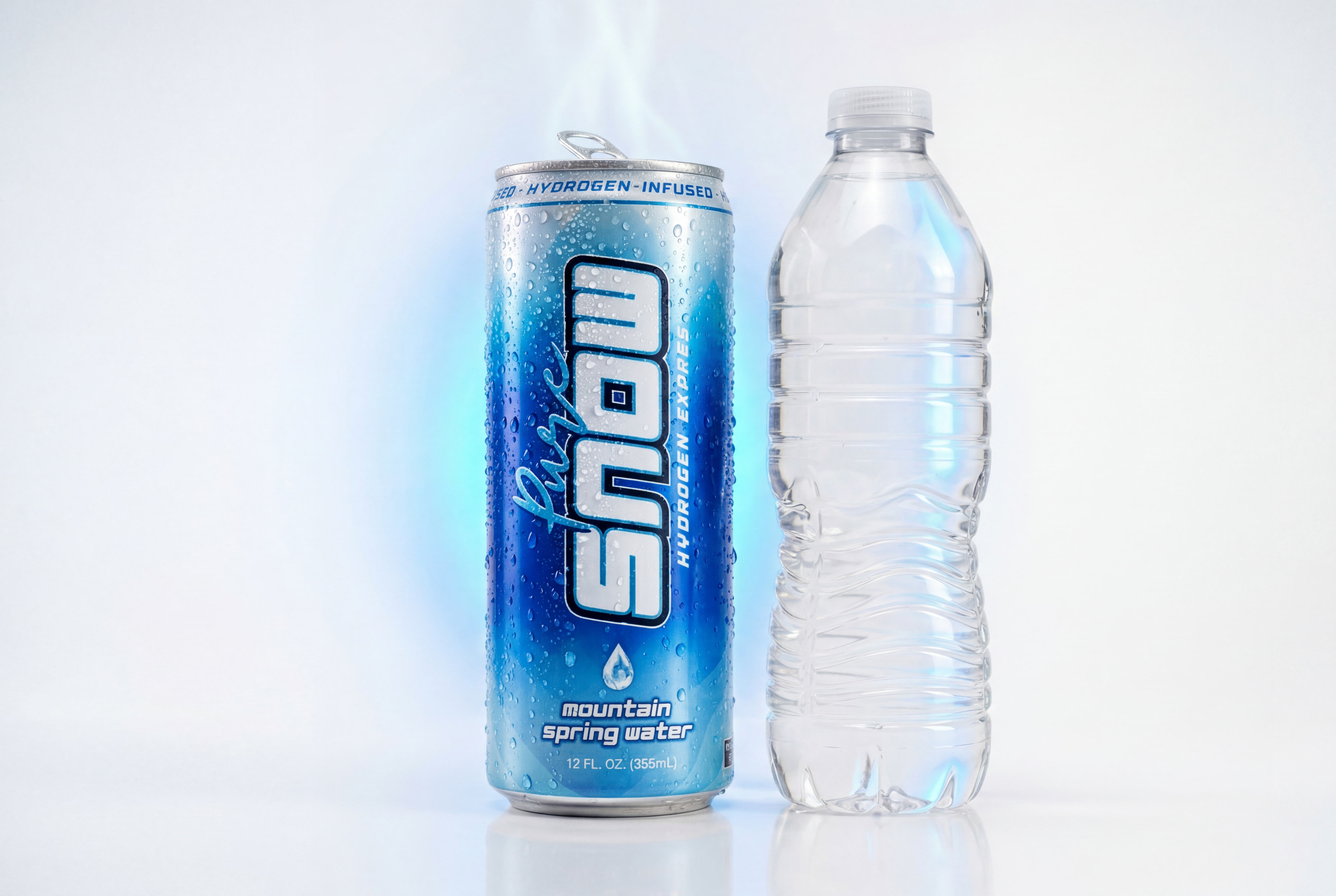
Plastic vs Aluminum Hydrogen Water Cost: Which Packaging Gives You More Value?
If you've been comparing hydrogen water options in June 2026, you've probably noticed that prices vary wildly depending on the brand, concentration, and — crucially — the type of container the water comes in. Most shoppers focus on the price tag per can or bottle, but the packaging itself plays a massive role in what you're actually getting for your money. When it comes to plastic vs aluminum hydrogen water cost, the difference isn't just about materials. It's about whether you're paying for real hydrogen concentration or just expensive-looking water.
THE PROBLEM WITH PLASTIC HYDROGEN WATER BOTTLES
Here's something most brands won't tell you upfront: hydrogen molecules are extraordinarily small. We're talking about the tiniest molecule in existence, and it escapes through permeable materials faster than almost any other dissolved gas. Plastic, even high-quality BPA-free plastic, is porous enough at a molecular level that dissolved hydrogen gas begins escaping the moment the water is bottled. By the time a plastic-packaged hydrogen water product reaches your hands — after manufacturing, shipping, warehousing, and sitting on a shelf — a meaningful portion of that hydrogen concentration may already be gone.
This matters because the therapeutic potential of hydrogen water is tied directly to concentration, typically measured in parts per million, or PPM. Research published in the journal Medical Gas Research has highlighted that the biological effects of hydrogen-rich water are dose-dependent, meaning lower concentrations may deliver fewer of the antioxidant and anti-inflammatory benefits you're paying for. If you're spending $3 or $4 on a plastic bottle of hydrogen water, you might be paying premium prices for sub-par PPM by the time you actually drink it.
WHY ALUMINUM CANS CHANGE THE EQUATION
Aluminum cans create a true hermetic seal. Unlike plastic, aluminum does not allow molecular hydrogen to permeate the container walls. When hydrogen water is sealed in an aluminum can at the point of production, the concentration stays locked in until the moment you crack it open. This is why brands serious about delivering genuine hydrogen concentration — particularly in the 2 to 3 PPM range — choose aluminum as their packaging of choice. It's not just aesthetics. It's preservation of the product's core value.
When you factor this into the plastic vs aluminum hydrogen water cost comparison, the math shifts significantly. A plastic bottle priced at $2.50 that delivers degraded hydrogen by the time you drink it is objectively worse value than an aluminum can priced at $1.75 to $2.00 that delivers its full promised concentration intact. You're not just comparing sticker prices — you're comparing what you're actually consuming.
To understand more about how aluminum sealing and PPM concentration work together to protect hydrogen water quality, Pure Snow's how it works page breaks down the science in straightforward terms worth reading before you make a purchase decision.
BREAKING DOWN THE REAL COST PER SERVING
Let's get practical. If you're buying a 12-pack of plastic-bottled hydrogen water at $36, that's $3 per bottle. If those bottles have lost even 30 to 50 percent of their hydrogen concentration during transit and storage — which is a realistic estimate for permeable packaging — your effective cost per therapeutic serving is much higher than it appears. You might be paying $3 for the equivalent of standard spring water with a marketing label.
Now compare that to aluminum-sealed hydrogen water at 2 to 3 PPM sourced from natural mountain spring water. When the concentration is preserved and the sourcing is clean, even a slightly higher per-can price delivers superior value. At Pure Snow, a 12-pack is available with subscription pricing that brings the cost per can down to a genuinely competitive level. If you want to see exactly how the numbers break down, the Pure Snow pricing page lays out the subscribe and save options clearly so you can calculate your actual cost per serving before you commit.
THE ENVIRONMENTAL AND PRACTICAL ANGLE
There's another layer to this conversation that wellness-conscious consumers increasingly care about: environmental impact and recyclability. Aluminum is one of the most recyclable materials on Earth, with recycling rates dramatically higher than plastic. A significant percentage of plastic water bottles end up in landfills or worse, regardless of recycling intentions. Choosing aluminum isn't just a quality decision — it's an alignment with values around sustainability and reducing single-use plastic waste.
From a practical standpoint, aluminum cans are also more durable for active lifestyles. They won't crack or deform under pressure the way some thinner plastic bottles do. For athletes, outdoor enthusiasts, or anyone tossing hydration into a gym bag, this durability translates to less product loss and more convenience.
PURE SNOW'S APPROACH TO PACKAGING AND PRICING
Pure Snow was built around the principle that premium hydrogen water shouldn't require compromise. The brand uses aluminum-sealed cans to lock in 2 to 3 PPM hydrogen concentration sourced from Ouachita mountain spring water — a natural source known for its purity and mineral profile. This combination of high-quality sourcing and integrity-preserving packaging ensures that what's printed on the label is what ends up in your body.
For consumers who've been burned by overpriced plastic-packaged hydrogen water that underdelivered, Pure Snow represents a meaningful shift. The Pure Snow 12-pack subscription gives you access to aluminum-sealed, high-concentration hydrogen water at a price point that makes daily use genuinely achievable, not just aspirational.
KEY TAKEAWAY: Aluminum-sealed hydrogen water preserves molecular concentration in ways plastic simply cannot, meaning the true cost comparison always favors quality packaging over a lower sticker price.
If you're ready to stop paying for hydrogen water that may have lost its potency before it reaches you, try Pure Snow today and subscribe to save 40% on your first order — because premium hydrogen water should be something you actually feel, every single day.
FAQ
Q: Does plastic packaging really reduce hydrogen concentration in water?
A: Yes, hydrogen molecules are extremely small and can permeate plastic over time, especially during shipping and storage. By the time many plastic-bottled hydrogen water products reach consumers, a measurable portion of the dissolved hydrogen may have already escaped, reducing the product's effectiveness.
Q: Is aluminum-packaged hydrogen water always more expensive than plastic?
A: Not necessarily. While some aluminum-canned hydrogen waters carry premium price tags, subscription options like Pure Snow's subscribe and save plan bring the per-can cost down significantly. When you factor in preserved PPM concentration, aluminum often delivers better value per effective serving than cheaper plastic alternatives.
Q: What PPM level should I look for when buying hydrogen water?
A: Most research into the benefits of hydrogen-rich water focuses on concentrations of 1 to 3 PPM, with higher concentrations generally considered more beneficial. Pure Snow delivers 2 to 3 PPM sealed in aluminum to ensure that concentration is intact when you open it.