What Is PPM in Hydrogen Water? 3 Common Myths Debunked
If you've been researching hydrogen water this October 2026, you've almost certainly run into the term PPM. It's printed on labels, debated in forums, and thrown around in marketing claims — often without much explanation. PPM stands for parts per million, and in the context of hydrogen water, it measures how much molecular hydrogen (H2) is actually dissolved in the water you're drinking. Sounds simple enough. But along the way, three stubborn myths have taken root: that higher PPM is always better, that all hydrogen water products deliver the PPM printed on the label, and that PPM doesn't really matter as long as the water contains some hydrogen. Today we're going to take each of these misconceptions apart, because understanding PPM is the single most useful skill you can develop as a hydrogen water consumer.
FIRST, WHAT DOES PPM ACTUALLY MEAN?
Parts per million is a concentration measurement. If a hydrogen water product contains 1.6 PPM of molecular hydrogen, that means there are 1.6 milligrams of dissolved H2 gas in every liter of water. You'll sometimes see this written as mg/L — the two are interchangeable for our purposes. Because hydrogen is the smallest and lightest molecule in the universe, dissolving it into water and keeping it there is genuinely difficult. Under normal atmospheric pressure, water can hold a maximum of about 1.6 PPM of hydrogen. This is called the saturation point. Products that advertise concentrations above that level rely on pressurization to supersaturate the water, which is why packaging matters so much — more on that shortly. If you want a deeper look at how dissolved hydrogen behaves in water and why concentration is measured this way, you can explore the science on our how it works page.
MYTH 1: HIGHER PPM IS ALWAYS BETTER
This is the most common misconception, and it's easy to see why. If some hydrogen is good, more must be better, right? Not exactly. The research on molecular hydrogen generally uses concentrations in the range of 0.5 to 1.6 PPM, and meaningful biological effects have been observed well within that window. The landmark research that kicked off modern interest in molecular hydrogen, published in Nature Medicine by Ohsawa and colleagues, demonstrated that hydrogen acts as a selective antioxidant — and it did so at modest, achievable concentrations. What matters more than chasing an eye-popping number is the total amount of hydrogen you consume and whether that hydrogen is still present when the water reaches your mouth. A can advertising 10 PPM that has leaked most of its hydrogen before you open it delivers less H2 than a properly sealed can holding a stable 2 PPM. Concentration on the label is a starting point, not the finish line.
MYTH 2: THE PPM ON THE LABEL IS WHAT YOU ACTUALLY DRINK
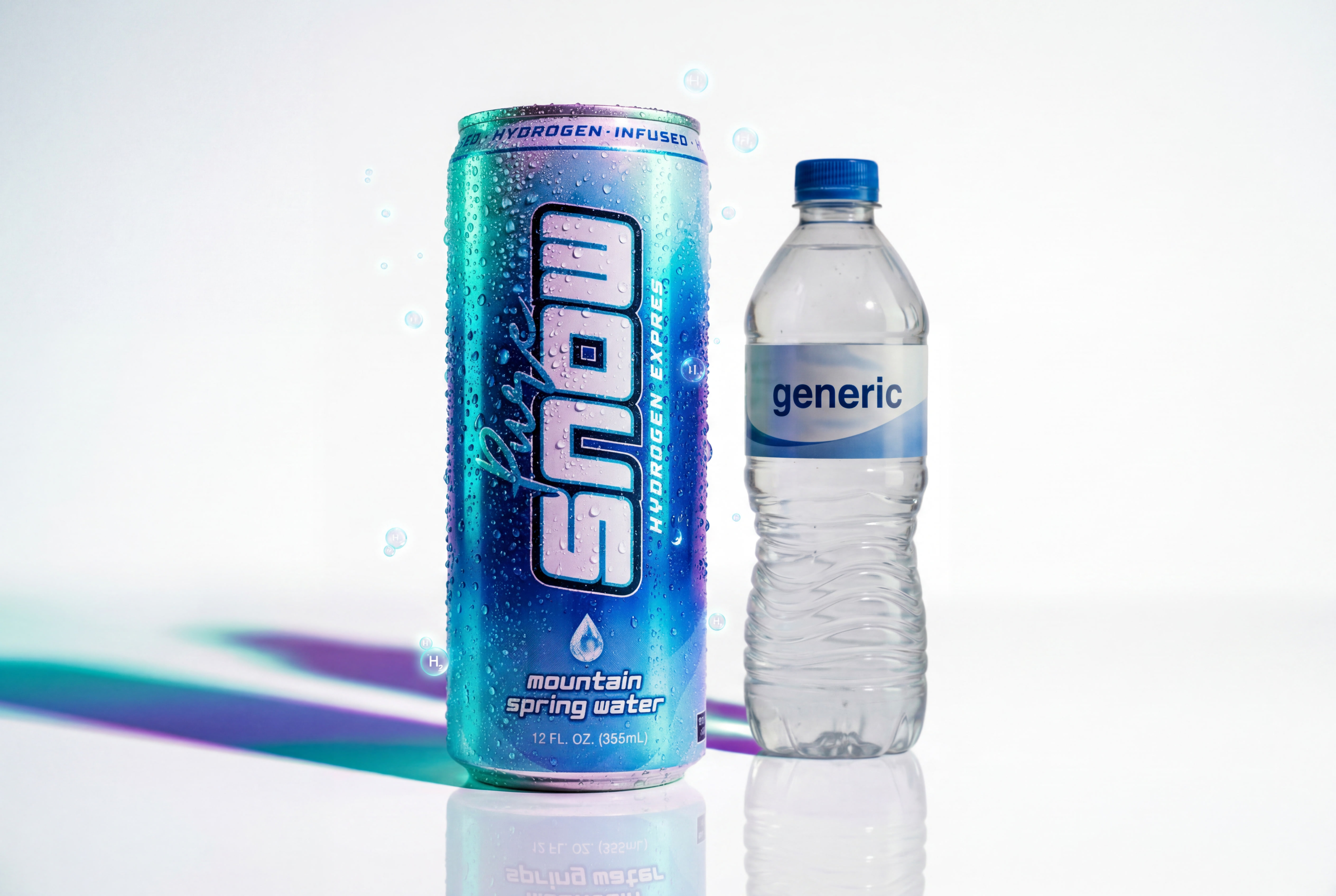
Here's the uncomfortable truth about hydrogen water: molecular hydrogen escapes from water remarkably fast. Leave a glass of hydrogen water sitting on your counter, and within a couple of hours a significant portion of the dissolved H2 has off-gassed into the air. The same problem applies to packaging. Plastic bottles are permeable to hydrogen — the molecule is so small it literally passes through the plastic over time. That means a plastic-bottled hydrogen water that tested at 1.5 PPM at the factory may deliver a fraction of that by the time it reaches your refrigerator. Aluminum, by contrast, is impermeable to hydrogen gas. This is precisely why Pure Snow packages its hydrogen-infused mountain spring water in aluminum cans: the hydrogen that goes in at canning is the hydrogen you get when you crack it open. When evaluating any hydrogen water product, don't just ask what the PPM is at production — ask what it is at the moment of consumption. Those can be very different numbers depending on the packaging and how long the product has been sitting.
MYTH 3: PPM DOESN'T MATTER AS LONG AS THERE'S SOME HYDROGEN
On the opposite end of the spectrum, some people dismiss PPM entirely, assuming any trace of hydrogen delivers the goods. The research doesn't support that view either. Studies investigating hydrogen water's effects typically use water at or near saturation, and researchers often discuss a therapeutic range measured in total milligrams of H2 consumed per day — commonly cited targets fall between roughly 1 and 3 milligrams daily. Do the math and you'll see why concentration matters: drinking a liter of water at 0.1 PPM gives you just 0.1 milligrams of hydrogen, far below the amounts used in most published studies. To reach meaningful intake from a very low-concentration product, you'd need to drink impractical volumes of water. A properly saturated product in the 1.5 to 2+ PPM range lets you reach research-relevant hydrogen intake with just one or two servings per day. PPM isn't everything, but it's far from nothing.
HOW TO READ PPM CLAIMS LIKE A PRO
Now that the myths are out of the way, here's a practical framework. First, look for a stated concentration between roughly 1 and 3 PPM — this is the sweet spot where products are both achievable and aligned with the research. Second, check the packaging: aluminum cans preserve hydrogen; plastic bottles lose it. Third, favor brands that are transparent about their testing and can tell you the concentration at the time you drink it, not just at bottling. Finally, remember that consistency beats intensity. Drinking a well-saturated hydrogen water daily is more meaningful than occasionally drinking something with a dramatic number on the label. If you still have questions about concentrations, testing, or storage, our FAQ page covers the details we get asked about most often.
WHY PURE SNOW TAKES PPM SERIOUSLY
At Pure Snow, we built our entire process around one idea: the hydrogen you pay for should be the hydrogen you drink. We start with premium mountain spring water, infuse it with molecular hydrogen under pressure, and seal it immediately in aluminum cans so the concentration stays stable from our facility to your hand. No slow leak through plastic, no guessing games about what's left in the can. It's a straightforward philosophy, but in a market full of inflated claims, straightforward is exactly what PPM-savvy consumers deserve.
KEY TAKEAWAY: PPM measures the milligrams of molecular hydrogen dissolved per liter of water, and the number that matters is the concentration at the moment you drink it — not the inflated figure on a label. Look for 1 to 3 PPM in hydrogen-impermeable packaging like aluminum, and you'll be drinking at levels consistent with published research.
Ready to experience hydrogen water that actually delivers its stated concentration? Try Pure Snow today and taste the difference that honest PPM makes.
FAQ
Q: What is a good PPM for hydrogen water?
A: Most research on molecular hydrogen uses concentrations between 0.5 and 1.6 PPM, with some pressurized products reaching 2 PPM or higher. A product delivering 1 to 3 PPM at the time of consumption puts you comfortably within the range used in published studies. Anything dramatically higher offers diminishing returns and is often a marketing claim rather than a measured reality.
Q: Does hydrogen water lose its PPM over time?
A: Yes. Molecular hydrogen is the smallest molecule in existence and escapes from open water within a few hours, and it slowly permeates through plastic bottles even when sealed. Aluminum cans are impermeable to hydrogen, which is why they preserve the stated concentration until you open them.
Q: How can I verify the PPM in my hydrogen water?
A: Dissolved hydrogen can be measured with methylene blue titration drops or a dissolved hydrogen meter, both of which are available to consumers. Test the water immediately after opening, since hydrogen begins escaping right away. Reputable brands will also share their own testing data showing concentration at the point of consumption.
Back to BlogFIRST, WHAT DOES PPM ACTUALLY MEAN?
Parts per million is a concentration measurement. If a hydrogen water product contains 1.6 PPM of molecular hydrogen, that means there are 1.6 milligrams of dissolved H2 gas in every liter of water. You'll sometimes see this written as mg/L — the two are interchangeable for our purposes. Because hydrogen is the smallest and lightest molecule in the universe, dissolving it into water and keeping it there is genuinely difficult. Under normal atmospheric pressure, water can hold a maximum of about 1.6 PPM of hydrogen. This is called the saturation point. Products that advertise concentrations above that level rely on pressurization to supersaturate the water, which is why packaging matters so much — more on that shortly. If you want a deeper look at how dissolved hydrogen behaves in water and why concentration is measured this way, you can explore the science on our how it works page.
MYTH 1: HIGHER PPM IS ALWAYS BETTER
This is the most common misconception, and it's easy to see why. If some hydrogen is good, more must be better, right? Not exactly. The research on molecular hydrogen generally uses concentrations in the range of 0.5 to 1.6 PPM, and meaningful biological effects have been observed well within that window. The landmark research that kicked off modern interest in molecular hydrogen, published in Nature Medicine by Ohsawa and colleagues, demonstrated that hydrogen acts as a selective antioxidant — and it did so at modest, achievable concentrations. What matters more than chasing an eye-popping number is the total amount of hydrogen you consume and whether that hydrogen is still present when the water reaches your mouth. A can advertising 10 PPM that has leaked most of its hydrogen before you open it delivers less H2 than a properly sealed can holding a stable 2 PPM. Concentration on the label is a starting point, not the finish line.
MYTH 2: THE PPM ON THE LABEL IS WHAT YOU ACTUALLY DRINK
Here's the uncomfortable truth about hydrogen water: molecular hydrogen escapes from water remarkably fast. Leave a glass of hydrogen water sitting on your counter, and within a couple of hours a significant portion of the dissolved H2 has off-gassed into the air. The same problem applies to packaging. Plastic bottles are permeable to hydrogen — the molecule is so small it literally passes through the plastic over time. That means a plastic-bottled hydrogen water that tested at 1.5 PPM at the factory may deliver a fraction of that by the time it reaches your refrigerator. Aluminum, by contrast, is impermeable to hydrogen gas. This is precisely why Pure Snow packages its hydrogen-infused mountain spring water in aluminum cans: the hydrogen that goes in at canning is the hydrogen you get when you crack it open. When evaluating any hydrogen water product, don't just ask what the PPM is at production — ask what it is at the moment of consumption. Those can be very different numbers depending on the packaging and how long the product has been sitting.
MYTH 3: PPM DOESN'T MATTER AS LONG AS THERE'S SOME HYDROGEN
On the opposite end of the spectrum, some people dismiss PPM entirely, assuming any trace of hydrogen delivers the goods. The research doesn't support that view either. Studies investigating hydrogen water's effects typically use water at or near saturation, and researchers often discuss a therapeutic range measured in total milligrams of H2 consumed per day — commonly cited targets fall between roughly 1 and 3 milligrams daily. Do the math and you'll see why concentration matters: drinking a liter of water at 0.1 PPM gives you just 0.1 milligrams of hydrogen, far below the amounts used in most published studies. To reach meaningful intake from a very low-concentration product, you'd need to drink impractical volumes of water. A properly saturated product in the 1.5 to 2+ PPM range lets you reach research-relevant hydrogen intake with just one or two servings per day. PPM isn't everything, but it's far from nothing.
HOW TO READ PPM CLAIMS LIKE A PRO
Now that the myths are out of the way, here's a practical framework. First, look for a stated concentration between roughly 1 and 3 PPM — this is the sweet spot where products are both achievable and aligned with the research. Second, check the packaging: aluminum cans preserve hydrogen; plastic bottles lose it. Third, favor brands that are transparent about their testing and can tell you the concentration at the time you drink it, not just at bottling. Finally, remember that consistency beats intensity. Drinking a well-saturated hydrogen water daily is more meaningful than occasionally drinking something with a dramatic number on the label. If you still have questions about concentrations, testing, or storage, our FAQ page covers the details we get asked about most often.
WHY PURE SNOW TAKES PPM SERIOUSLY
At Pure Snow, we built our entire process around one idea: the hydrogen you pay for should be the hydrogen you drink. We start with premium mountain spring water, infuse it with molecular hydrogen under pressure, and seal it immediately in aluminum cans so the concentration stays stable from our facility to your hand. No slow leak through plastic, no guessing games about what's left in the can. It's a straightforward philosophy, but in a market full of inflated claims, straightforward is exactly what PPM-savvy consumers deserve.
KEY TAKEAWAY: PPM measures the milligrams of molecular hydrogen dissolved per liter of water, and the number that matters is the concentration at the moment you drink it — not the inflated figure on a label. Look for 1 to 3 PPM in hydrogen-impermeable packaging like aluminum, and you'll be drinking at levels consistent with published research.
Ready to experience hydrogen water that actually delivers its stated concentration? Try Pure Snow today and taste the difference that honest PPM makes.
FAQ
Q: What is a good PPM for hydrogen water?
A: Most research on molecular hydrogen uses concentrations between 0.5 and 1.6 PPM, with some pressurized products reaching 2 PPM or higher. A product delivering 1 to 3 PPM at the time of consumption puts you comfortably within the range used in published studies. Anything dramatically higher offers diminishing returns and is often a marketing claim rather than a measured reality.
Q: Does hydrogen water lose its PPM over time?
A: Yes. Molecular hydrogen is the smallest molecule in existence and escapes from open water within a few hours, and it slowly permeates through plastic bottles even when sealed. Aluminum cans are impermeable to hydrogen, which is why they preserve the stated concentration until you open them.
Q: How can I verify the PPM in my hydrogen water?
A: Dissolved hydrogen can be measured with methylene blue titration drops or a dissolved hydrogen meter, both of which are available to consumers. Test the water immediately after opening, since hydrogen begins escaping right away. Reputable brands will also share their own testing data showing concentration at the point of consumption.
