What Is PPM in Hydrogen Water? 3 Common Myths Debunked
If you've been researching hydrogen water this September 2026, you've almost certainly run into the term PPM. It shows up on labels, in marketing claims, and in heated online debates — and unfortunately, it's surrounded by a surprising amount of misinformation. Three myths come up again and again: that a higher PPM number is always better, that all hydrogen water products deliver the PPM printed on the label, and that PPM doesn't really matter as long as some hydrogen is present. All three are misleading, and believing them can lead you to waste money on products that don't deliver. In this post, we'll break down what PPM actually means, why it matters, and then take each of these myths apart one by one.
WHAT PPM ACTUALLY MEANS IN HYDROGEN WATER
PPM stands for parts per million, and in the context of hydrogen water, it measures the concentration of dissolved molecular hydrogen (H2) gas in the water. If a hydrogen water product is labeled 1.6 PPM, that means there are 1.6 milligrams of dissolved hydrogen gas per liter of water. You'll sometimes see this expressed as mg/L instead — the two are interchangeable for practical purposes.
Why does concentration matter at all? Because molecular hydrogen is the active ingredient in hydrogen water. It's a tiny, neutrally charged molecule that can diffuse easily through cell membranes, and researchers believe it acts as a selective antioxidant, targeting harmful free radicals without disrupting the beneficial signaling molecules your body needs. The amount of hydrogen you actually consume — determined by PPM multiplied by the volume you drink — is what determines whether you're getting a meaningful dose. According to a comprehensive review published in Medical Gas Research, which analyzed hundreds of original studies on molecular hydrogen, the biological effects observed in research depend on delivering adequate amounts of dissolved hydrogen. In other words, PPM isn't marketing jargon — it's the single most important number on a hydrogen water label.
MYTH 1: HIGHER PPM IS ALWAYS BETTER
It's tempting to assume that if 1.6 PPM is good, 5 PPM or 10 PPM must be dramatically better. Some brands lean into this, advertising sky-high concentrations as a selling point. Here's the reality: at normal atmospheric pressure and temperature, water can hold a maximum of about 1.6 PPM of dissolved hydrogen. That's the natural saturation point. Concentrations above that level are only achievable under pressure, and the moment you open the container and pour the water, excess hydrogen begins escaping rapidly into the air.
This means extremely high PPM claims often reflect conditions inside a sealed, pressurized container — not what actually reaches your body. More importantly, research on hydrogen water has largely been conducted at concentrations in the 0.5 to 1.6 PPM range, and those studies have shown promising results. The goal isn't chasing the biggest number; it's consistently consuming hydrogen water at or near full saturation. A product that reliably delivers 1.5 to 1.6 PPM at the moment you drink it is doing exactly what the science supports.
MYTH 2: THE PPM ON THE LABEL IS WHAT YOU ACTUALLY DRINK
This is perhaps the most costly myth of all. Hydrogen is the smallest molecule in the universe, and it escapes from water with remarkable speed. The PPM measured at the time of bottling can be very different from the PPM in your glass — and packaging is the deciding factor.
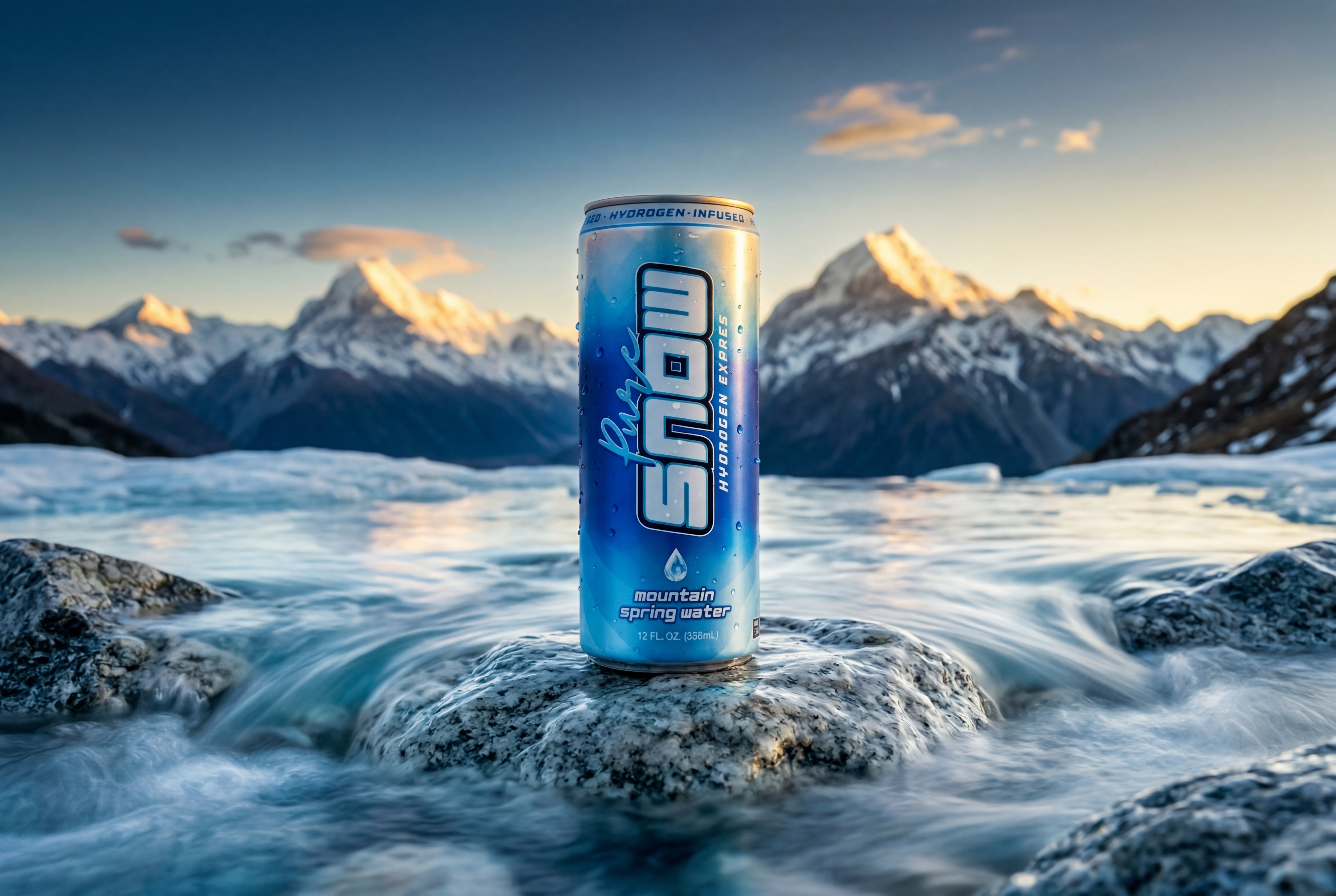
Plastic bottles are particularly problematic because hydrogen molecules are small enough to permeate directly through plastic walls. A hydrogen water product packaged in standard plastic can lose most or all of its dissolved hydrogen within days or weeks of production, long before it reaches a store shelf. Glass performs better, but the cap seal is often a weak point. Aluminum cans, by contrast, provide an effectively impermeable barrier that keeps hydrogen locked in until the moment you open it. This is exactly why Pure Snow packages its hydrogen-infused mountain spring water in aluminum — you can read more about the science behind our packaging and concentration standards on our how it works page. When evaluating any hydrogen water product, don't just ask what the PPM was at bottling. Ask what it will be when you actually drink it.
MYTH 3: PPM DOESN'T REALLY MATTER AS LONG AS THERE'S SOME HYDROGEN
On the opposite end of the spectrum, some people argue that any hydrogen is good hydrogen, so PPM is a distraction. This doesn't hold up either. Like most bioactive compounds, molecular hydrogen appears to have a threshold below which effects are negligible. Drinking water with 0.1 PPM of hydrogen delivers sixteen times less hydrogen per liter than water at 1.6 PPM — a difference that matters enormously when the studied doses generally involve consuming one to three milligrams of hydrogen per day.
Think of it like vitamin C: a glass of orange juice and a single drop of orange juice both technically contain vitamin C, but only one delivers a meaningful amount. If you're paying a premium for hydrogen water, you deserve a product that delivers a research-relevant concentration, not trace amounts. This is why transparency around PPM — both at production and at the point of consumption — should be non-negotiable when choosing a brand.
HOW TO USE PPM TO CHOOSE A QUALITY HYDROGEN WATER
Armed with the facts, here's a simple framework. Look for products that state a concentration of at least 1.0 PPM, ideally 1.5 to 1.6 PPM, at the time of consumption. Prioritize aluminum packaging over plastic, since hydrogen retention is dramatically better. Favor brands that are transparent about their testing and production methods rather than those making exaggerated claims of 5 PPM or higher. And consider the total daily dose: drinking one to two servings of fully saturated hydrogen water gets you into the range used in most clinical research. If you still have questions about concentrations, dosing, or shelf life, our FAQ page covers the questions we hear most often from new customers.
KEY TAKEAWAY: PPM measures the concentration of dissolved molecular hydrogen in water, and what matters is the concentration you actually consume — not inflated label claims. Look for products delivering close to the natural saturation point of 1.6 PPM in packaging, like aluminum, that keeps hydrogen locked in until you drink it.
Now that you know what PPM really means, you're equipped to see through the hype and choose hydrogen water that actually delivers. If you're ready to experience fully saturated hydrogen water sourced from pristine mountain springs and sealed in aluminum for maximum potency, try Pure Snow for yourself today.
FAQ
Q: What is a good PPM for hydrogen water?
A: A concentration of 1.0 to 1.6 PPM at the time of drinking is considered excellent, with 1.6 PPM representing the natural saturation limit at normal pressure. Most research on hydrogen water has used concentrations within this range, so you don't need to chase higher numbers.
Q: Can hydrogen water have more than 1.6 PPM?
A: Yes, but only under pressure inside a sealed container. Once opened and poured, supersaturated hydrogen water rapidly loses its excess hydrogen and returns toward the 1.6 PPM saturation point, so ultra-high PPM claims rarely reflect what you actually consume.
Q: How quickly does hydrogen escape from hydrogen water?
A: In an open glass, dissolved hydrogen dissipates significantly within a couple of hours, so it's best to drink hydrogen water soon after opening. In sealed aluminum cans, hydrogen remains stable for months because the metal is impermeable to the tiny hydrogen molecules.
Back to BlogWHAT PPM ACTUALLY MEANS IN HYDROGEN WATER
PPM stands for parts per million, and in the context of hydrogen water, it measures the concentration of dissolved molecular hydrogen (H2) gas in the water. If a hydrogen water product is labeled 1.6 PPM, that means there are 1.6 milligrams of dissolved hydrogen gas per liter of water. You'll sometimes see this expressed as mg/L instead — the two are interchangeable for practical purposes.
Why does concentration matter at all? Because molecular hydrogen is the active ingredient in hydrogen water. It's a tiny, neutrally charged molecule that can diffuse easily through cell membranes, and researchers believe it acts as a selective antioxidant, targeting harmful free radicals without disrupting the beneficial signaling molecules your body needs. The amount of hydrogen you actually consume — determined by PPM multiplied by the volume you drink — is what determines whether you're getting a meaningful dose. According to a comprehensive review published in Medical Gas Research, which analyzed hundreds of original studies on molecular hydrogen, the biological effects observed in research depend on delivering adequate amounts of dissolved hydrogen. In other words, PPM isn't marketing jargon — it's the single most important number on a hydrogen water label.
MYTH 1: HIGHER PPM IS ALWAYS BETTER
It's tempting to assume that if 1.6 PPM is good, 5 PPM or 10 PPM must be dramatically better. Some brands lean into this, advertising sky-high concentrations as a selling point. Here's the reality: at normal atmospheric pressure and temperature, water can hold a maximum of about 1.6 PPM of dissolved hydrogen. That's the natural saturation point. Concentrations above that level are only achievable under pressure, and the moment you open the container and pour the water, excess hydrogen begins escaping rapidly into the air.
This means extremely high PPM claims often reflect conditions inside a sealed, pressurized container — not what actually reaches your body. More importantly, research on hydrogen water has largely been conducted at concentrations in the 0.5 to 1.6 PPM range, and those studies have shown promising results. The goal isn't chasing the biggest number; it's consistently consuming hydrogen water at or near full saturation. A product that reliably delivers 1.5 to 1.6 PPM at the moment you drink it is doing exactly what the science supports.
MYTH 2: THE PPM ON THE LABEL IS WHAT YOU ACTUALLY DRINK
This is perhaps the most costly myth of all. Hydrogen is the smallest molecule in the universe, and it escapes from water with remarkable speed. The PPM measured at the time of bottling can be very different from the PPM in your glass — and packaging is the deciding factor.
Plastic bottles are particularly problematic because hydrogen molecules are small enough to permeate directly through plastic walls. A hydrogen water product packaged in standard plastic can lose most or all of its dissolved hydrogen within days or weeks of production, long before it reaches a store shelf. Glass performs better, but the cap seal is often a weak point. Aluminum cans, by contrast, provide an effectively impermeable barrier that keeps hydrogen locked in until the moment you open it. This is exactly why Pure Snow packages its hydrogen-infused mountain spring water in aluminum — you can read more about the science behind our packaging and concentration standards on our how it works page. When evaluating any hydrogen water product, don't just ask what the PPM was at bottling. Ask what it will be when you actually drink it.
MYTH 3: PPM DOESN'T REALLY MATTER AS LONG AS THERE'S SOME HYDROGEN
On the opposite end of the spectrum, some people argue that any hydrogen is good hydrogen, so PPM is a distraction. This doesn't hold up either. Like most bioactive compounds, molecular hydrogen appears to have a threshold below which effects are negligible. Drinking water with 0.1 PPM of hydrogen delivers sixteen times less hydrogen per liter than water at 1.6 PPM — a difference that matters enormously when the studied doses generally involve consuming one to three milligrams of hydrogen per day.
Think of it like vitamin C: a glass of orange juice and a single drop of orange juice both technically contain vitamin C, but only one delivers a meaningful amount. If you're paying a premium for hydrogen water, you deserve a product that delivers a research-relevant concentration, not trace amounts. This is why transparency around PPM — both at production and at the point of consumption — should be non-negotiable when choosing a brand.
HOW TO USE PPM TO CHOOSE A QUALITY HYDROGEN WATER
Armed with the facts, here's a simple framework. Look for products that state a concentration of at least 1.0 PPM, ideally 1.5 to 1.6 PPM, at the time of consumption. Prioritize aluminum packaging over plastic, since hydrogen retention is dramatically better. Favor brands that are transparent about their testing and production methods rather than those making exaggerated claims of 5 PPM or higher. And consider the total daily dose: drinking one to two servings of fully saturated hydrogen water gets you into the range used in most clinical research. If you still have questions about concentrations, dosing, or shelf life, our FAQ page covers the questions we hear most often from new customers.
KEY TAKEAWAY: PPM measures the concentration of dissolved molecular hydrogen in water, and what matters is the concentration you actually consume — not inflated label claims. Look for products delivering close to the natural saturation point of 1.6 PPM in packaging, like aluminum, that keeps hydrogen locked in until you drink it.
Now that you know what PPM really means, you're equipped to see through the hype and choose hydrogen water that actually delivers. If you're ready to experience fully saturated hydrogen water sourced from pristine mountain springs and sealed in aluminum for maximum potency, try Pure Snow for yourself today.
FAQ
Q: What is a good PPM for hydrogen water?
A: A concentration of 1.0 to 1.6 PPM at the time of drinking is considered excellent, with 1.6 PPM representing the natural saturation limit at normal pressure. Most research on hydrogen water has used concentrations within this range, so you don't need to chase higher numbers.
Q: Can hydrogen water have more than 1.6 PPM?
A: Yes, but only under pressure inside a sealed container. Once opened and poured, supersaturated hydrogen water rapidly loses its excess hydrogen and returns toward the 1.6 PPM saturation point, so ultra-high PPM claims rarely reflect what you actually consume.
Q: How quickly does hydrogen escape from hydrogen water?
A: In an open glass, dissolved hydrogen dissipates significantly within a couple of hours, so it's best to drink hydrogen water soon after opening. In sealed aluminum cans, hydrogen remains stable for months because the metal is impermeable to the tiny hydrogen molecules.