Hydrogen Water vs Regular Water: What's Actually Different?
If you've been curious about upgrading your hydration this August 2026, you've probably noticed hydrogen water popping up everywhere, from wellness blogs to gym fridges. And the natural first question is a simple one: how does hydrogen water actually compare to the regular water you've been drinking your whole life? On the surface, the two look identical. They pour the same, taste nearly the same, and hydrate you the same way. But beneath that familiar surface, there's one meaningful difference, and it's worth understanding before you decide whether hydrogen water deserves a place in your routine. In this post, we'll put hydrogen water and regular water side by side and compare them across the categories that matter most: composition, antioxidant activity, research support, taste, and cost.
THE BASELINE: WHAT REGULAR WATER DOES WELL
Let's start by giving regular water its due. Plain water is essential for nearly every process in your body, from regulating temperature and cushioning joints to transporting nutrients and flushing waste. Whether it comes from a tap, a filter, or a spring, regular water is made up of H2O molecules, and drinking enough of it is one of the most impactful things you can do for your health. Nothing about hydrogen water changes that. If you're chronically under-hydrated, the first fix is simply drinking more water, full stop. Where the comparison gets interesting is what happens when you take that same water and add something extra to it.
WHAT MAKES HYDROGEN WATER DIFFERENT
Hydrogen water is regular water that has been infused with dissolved molecular hydrogen gas, written as H2. This is not the hydrogen that's already bonded inside the water molecule. Those hydrogen atoms are chemically locked to oxygen and biologically unavailable as free hydrogen. Molecular hydrogen, by contrast, is a free-floating gas dissolved into the water under pressure, much like carbon dioxide is dissolved into sparkling water, except hydrogen gas is tasteless, odorless, and doesn't create noticeable bubbles. The concentration of dissolved hydrogen is measured in parts per million, or PPM, and this number matters a great deal. Water with a trace amount of hydrogen behaves essentially like regular water, while water with a therapeutic concentration is where the research gets interesting. If you want a deeper look at how infusion and PPM levels work, our how it works page breaks down the full process.
ANTIOXIDANT ACTIVITY: THE KEY POINT OF COMPARISON
Here is where the two waters genuinely diverge. Regular water has no antioxidant properties. It hydrates, but it doesn't interact with the oxidative processes happening inside your cells. Molecular hydrogen, on the other hand, has been studied as a selective antioxidant. Because H2 is the smallest molecule in existence, it can diffuse rapidly through cell membranes and reach places larger antioxidant compounds struggle to access, including the mitochondria. What makes it especially interesting to researchers is its selectivity. Rather than neutralizing all free radicals indiscriminately, some of which your body actually needs for signaling, molecular hydrogen appears to target the most damaging ones, like hydroxyl radicals. This idea entered mainstream science when a landmark study published in Nature Medicine demonstrated that hydrogen acts as a therapeutic antioxidant by selectively reducing cytotoxic oxygen radicals. Since then, hundreds of studies have explored molecular hydrogen's potential effects on oxidative stress, inflammation, exercise recovery, and more. Regular water simply doesn't participate in any of this. It's the delivery vehicle; hydrogen is the active ingredient.
TASTE, FEEL, AND EVERYDAY EXPERIENCE
If you poured a glass of hydrogen water next to a glass of regular water, you'd be hard-pressed to tell them apart. Molecular hydrogen doesn't change the taste, color, or texture of water in any meaningful way. Some people describe well-made hydrogen water as tasting slightly smoother or crisper, but this often comes down to the source water itself. That's one reason source quality matters so much in this category. Hydrogen water made from mountain spring water will taste like excellent spring water; hydrogen water made from mediocre tap water will taste like mediocre tap water with the same dissolved gas. The hydrogen adds function, not flavor.
STABILITY AND PACKAGING: WHERE REGULAR WATER HAS IT EASY
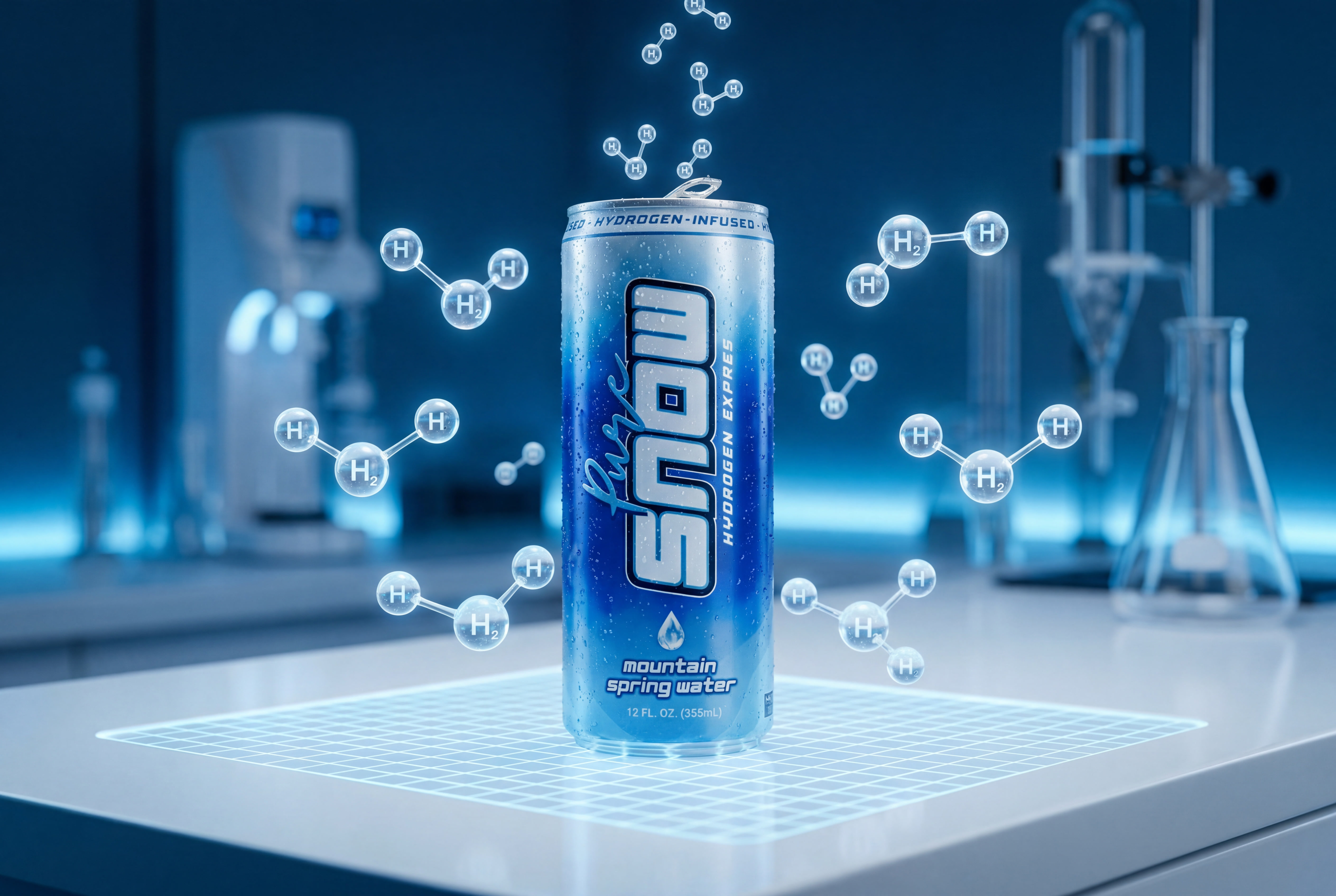
Regular water is stable. You can store it in almost anything, for almost any length of time, and it remains regular water. Hydrogen water is trickier. Because H2 is such a tiny molecule, it escapes easily, and it can actually pass through plastic bottles over time, which means hydrogen water stored in plastic gradually reverts to plain water. This is why serious hydrogen water brands package in aluminum cans, which hold dissolved hydrogen far more effectively and keep the concentration stable until you open it. It's also why an open glass of hydrogen water should be consumed within a reasonable window rather than left sitting out. If you're evaluating hydrogen water products, checking the packaging material is one of the fastest ways to separate effective products from marketing. At Pure Snow, this is exactly why we chose canned hydrogen-infused mountain spring water from the start.
COST AND PRACTICALITY
There's no getting around it: regular water wins on cost. Tap water is nearly free, and filtered water is inexpensive. Hydrogen water is a premium product because infusing water with a therapeutic concentration of H2 and packaging it to preserve that concentration requires real engineering. The fair way to think about it isn't as a replacement for all your daily water, but as a targeted addition, similar to how you might think about a quality supplement. Many people drink one or two cans of hydrogen water daily, often around workouts or in the morning, while getting the rest of their hydration from regular water. That approach keeps costs reasonable while still delivering a meaningful daily dose of molecular hydrogen.
SO WHICH SHOULD YOU DRINK?
The honest answer is both. Regular water should remain the foundation of your hydration, and no hydrogen water brand should tell you otherwise. Hydrogen water isn't better at hydrating; it's regular water with an added functional compound that has genuine, growing scientific interest behind it. If you're dealing with intense training, high stress, or you're simply interested in supporting your body's response to oxidative stress, hydrogen water offers something regular water structurally cannot. If you have more questions about dosage, timing, or safety, our FAQ page covers the most common ones.
KEY TAKEAWAY: Hydrogen water hydrates exactly like regular water but carries dissolved molecular hydrogen, a selective antioxidant that regular water completely lacks. Regular water should stay your hydration foundation, while hydrogen water works best as a targeted daily addition.
Ready to taste the difference for yourself? Explore Pure Snow's hydrogen-infused mountain spring water and try your first cans today, we think your cells will thank you.
FAQ
Q: Does hydrogen water hydrate better than regular water?
A: No, both hydrate your body equally well since they're both fundamentally H2O. The difference is that hydrogen water contains dissolved molecular hydrogen gas, which acts as a selective antioxidant, something regular water doesn't offer.
Q: Can I replace all my regular water with hydrogen water?
A: You could safely, but it isn't necessary or cost-effective. Most people get the benefits by drinking one to two servings of hydrogen water daily while relying on regular water for the rest of their hydration.
Q: Why is hydrogen water sold in aluminum cans instead of plastic bottles?
A: Molecular hydrogen is the smallest molecule in existence and can escape through plastic over time, causing the water to lose its hydrogen content. Aluminum cans retain dissolved hydrogen far better, keeping the concentration stable until you open the can.
Back to BlogTHE BASELINE: WHAT REGULAR WATER DOES WELL
Let's start by giving regular water its due. Plain water is essential for nearly every process in your body, from regulating temperature and cushioning joints to transporting nutrients and flushing waste. Whether it comes from a tap, a filter, or a spring, regular water is made up of H2O molecules, and drinking enough of it is one of the most impactful things you can do for your health. Nothing about hydrogen water changes that. If you're chronically under-hydrated, the first fix is simply drinking more water, full stop. Where the comparison gets interesting is what happens when you take that same water and add something extra to it.
WHAT MAKES HYDROGEN WATER DIFFERENT
Hydrogen water is regular water that has been infused with dissolved molecular hydrogen gas, written as H2. This is not the hydrogen that's already bonded inside the water molecule. Those hydrogen atoms are chemically locked to oxygen and biologically unavailable as free hydrogen. Molecular hydrogen, by contrast, is a free-floating gas dissolved into the water under pressure, much like carbon dioxide is dissolved into sparkling water, except hydrogen gas is tasteless, odorless, and doesn't create noticeable bubbles. The concentration of dissolved hydrogen is measured in parts per million, or PPM, and this number matters a great deal. Water with a trace amount of hydrogen behaves essentially like regular water, while water with a therapeutic concentration is where the research gets interesting. If you want a deeper look at how infusion and PPM levels work, our how it works page breaks down the full process.
ANTIOXIDANT ACTIVITY: THE KEY POINT OF COMPARISON
Here is where the two waters genuinely diverge. Regular water has no antioxidant properties. It hydrates, but it doesn't interact with the oxidative processes happening inside your cells. Molecular hydrogen, on the other hand, has been studied as a selective antioxidant. Because H2 is the smallest molecule in existence, it can diffuse rapidly through cell membranes and reach places larger antioxidant compounds struggle to access, including the mitochondria. What makes it especially interesting to researchers is its selectivity. Rather than neutralizing all free radicals indiscriminately, some of which your body actually needs for signaling, molecular hydrogen appears to target the most damaging ones, like hydroxyl radicals. This idea entered mainstream science when a landmark study published in Nature Medicine demonstrated that hydrogen acts as a therapeutic antioxidant by selectively reducing cytotoxic oxygen radicals. Since then, hundreds of studies have explored molecular hydrogen's potential effects on oxidative stress, inflammation, exercise recovery, and more. Regular water simply doesn't participate in any of this. It's the delivery vehicle; hydrogen is the active ingredient.
TASTE, FEEL, AND EVERYDAY EXPERIENCE
If you poured a glass of hydrogen water next to a glass of regular water, you'd be hard-pressed to tell them apart. Molecular hydrogen doesn't change the taste, color, or texture of water in any meaningful way. Some people describe well-made hydrogen water as tasting slightly smoother or crisper, but this often comes down to the source water itself. That's one reason source quality matters so much in this category. Hydrogen water made from mountain spring water will taste like excellent spring water; hydrogen water made from mediocre tap water will taste like mediocre tap water with the same dissolved gas. The hydrogen adds function, not flavor.
STABILITY AND PACKAGING: WHERE REGULAR WATER HAS IT EASY
Regular water is stable. You can store it in almost anything, for almost any length of time, and it remains regular water. Hydrogen water is trickier. Because H2 is such a tiny molecule, it escapes easily, and it can actually pass through plastic bottles over time, which means hydrogen water stored in plastic gradually reverts to plain water. This is why serious hydrogen water brands package in aluminum cans, which hold dissolved hydrogen far more effectively and keep the concentration stable until you open it. It's also why an open glass of hydrogen water should be consumed within a reasonable window rather than left sitting out. If you're evaluating hydrogen water products, checking the packaging material is one of the fastest ways to separate effective products from marketing. At Pure Snow, this is exactly why we chose canned hydrogen-infused mountain spring water from the start.
COST AND PRACTICALITY
There's no getting around it: regular water wins on cost. Tap water is nearly free, and filtered water is inexpensive. Hydrogen water is a premium product because infusing water with a therapeutic concentration of H2 and packaging it to preserve that concentration requires real engineering. The fair way to think about it isn't as a replacement for all your daily water, but as a targeted addition, similar to how you might think about a quality supplement. Many people drink one or two cans of hydrogen water daily, often around workouts or in the morning, while getting the rest of their hydration from regular water. That approach keeps costs reasonable while still delivering a meaningful daily dose of molecular hydrogen.
SO WHICH SHOULD YOU DRINK?
The honest answer is both. Regular water should remain the foundation of your hydration, and no hydrogen water brand should tell you otherwise. Hydrogen water isn't better at hydrating; it's regular water with an added functional compound that has genuine, growing scientific interest behind it. If you're dealing with intense training, high stress, or you're simply interested in supporting your body's response to oxidative stress, hydrogen water offers something regular water structurally cannot. If you have more questions about dosage, timing, or safety, our FAQ page covers the most common ones.
KEY TAKEAWAY: Hydrogen water hydrates exactly like regular water but carries dissolved molecular hydrogen, a selective antioxidant that regular water completely lacks. Regular water should stay your hydration foundation, while hydrogen water works best as a targeted daily addition.
Ready to taste the difference for yourself? Explore Pure Snow's hydrogen-infused mountain spring water and try your first cans today, we think your cells will thank you.
FAQ
Q: Does hydrogen water hydrate better than regular water?
A: No, both hydrate your body equally well since they're both fundamentally H2O. The difference is that hydrogen water contains dissolved molecular hydrogen gas, which acts as a selective antioxidant, something regular water doesn't offer.
Q: Can I replace all my regular water with hydrogen water?
A: You could safely, but it isn't necessary or cost-effective. Most people get the benefits by drinking one to two servings of hydrogen water daily while relying on regular water for the rest of their hydration.
Q: Why is hydrogen water sold in aluminum cans instead of plastic bottles?
A: Molecular hydrogen is the smallest molecule in existence and can escape through plastic over time, causing the water to lose its hydrogen content. Aluminum cans retain dissolved hydrogen far better, keeping the concentration stable until you open the can.