Hydrogen Water vs Alkaline Water: What's the Real Difference?
Is hydrogen water just another name for alkaline water? Does a higher pH mean more health benefits? And if you had to choose one, which is actually backed by real research? If you've been comparing hydrogen water vs alkaline water this September 2026, you're not alone — these are three of the most common questions we hear from health-conscious readers, and the answers surprise most people. While the two waters often get lumped together on wellness shelves, they work in completely different ways, and only one of them is defined by a measurable, bioactive ingredient. Let's answer each of these questions clearly, so you can make an informed choice about what goes in your glass.
IS HYDROGEN WATER THE SAME AS ALKALINE WATER?
No — and this is the single biggest misconception in the functional water category. Alkaline water is simply water with a pH above 7, typically between 8 and 9.5. That elevated pH usually comes from added minerals like calcium, magnesium, and potassium, or from an ionization process. The defining feature of alkaline water is its pH number, not any specific active compound.
Hydrogen water is something entirely different. It's water that has been infused with dissolved molecular hydrogen gas (H2) — the smallest molecule in the universe. Importantly, dissolving hydrogen gas into water does not meaningfully change its pH. Hydrogen water can be neutral in pH and still be saturated with therapeutic levels of H2. In other words, you can have alkaline water with zero molecular hydrogen, and hydrogen water with a perfectly neutral pH. The two are measured on completely different scales: alkaline water by pH, and hydrogen water by dissolved hydrogen concentration, expressed in parts per million (PPM). If you want a deeper look at how concentration is measured and why it matters, our how it works page breaks down the science of PPM in plain language.
DOES A HIGHER PH ACTUALLY MEAN MORE HEALTH BENEFITS?
This is where the marketing around alkaline water tends to outpace the evidence. The theory behind alkaline water is that drinking higher-pH water helps "balance" the body's acidity. The problem is that your body already regulates blood pH within an extremely tight range — roughly 7.35 to 7.45 — using your lungs, kidneys, and buffering systems. The moment alkaline water hits your stomach, it encounters gastric acid with a pH of around 1.5 to 3.5, which rapidly neutralizes it. Your stomach is, quite literally, designed to acidify whatever you swallow.
That doesn't mean alkaline water is harmful — for most healthy people it's perfectly safe, and some small studies suggest possible benefits for specific conditions like acid reflux. But the broad claims about systemic alkalizing effects simply aren't supported by strong clinical evidence.
Molecular hydrogen, by contrast, has a proposed mechanism that has been studied extensively since a landmark 2007 paper put it on the scientific map. According to research published in Nature Medicine, molecular hydrogen acts as a selective antioxidant, targeting the most cytotoxic free radicals — like hydroxyl radicals — while leaving beneficial signaling molecules alone. Because H2 is so small, it can diffuse rapidly through cell membranes and reach places larger antioxidant compounds can't, including mitochondria. Since that initial study, hundreds of publications have explored molecular hydrogen's effects on oxidative stress, inflammation, athletic recovery, and metabolic health. The research is still evolving, but the key difference is this: hydrogen water has an identifiable active ingredient with a plausible, studied mechanism. Alkaline water's mechanism largely dissolves — pun intended — the moment it reaches your stomach.
WHICH ONE SHOULD YOU CHOOSE?
If your goal is simply better hydration and you enjoy the taste of mineral-rich water, alkaline water is a fine choice. Hydration itself is the foundation of wellness, and any water you'll actually drink consistently is a good thing.
But if you're choosing a functional water for its potential health effects — antioxidant support, recovery, cellular protection — the science points toward hydrogen water. Here's what to look for when comparing products:
Concentration matters. Look for a stated dissolved hydrogen concentration, ideally 1.0 PPM or higher. Products that don't disclose their PPM are a red flag, because hydrogen concentration is the entire point.
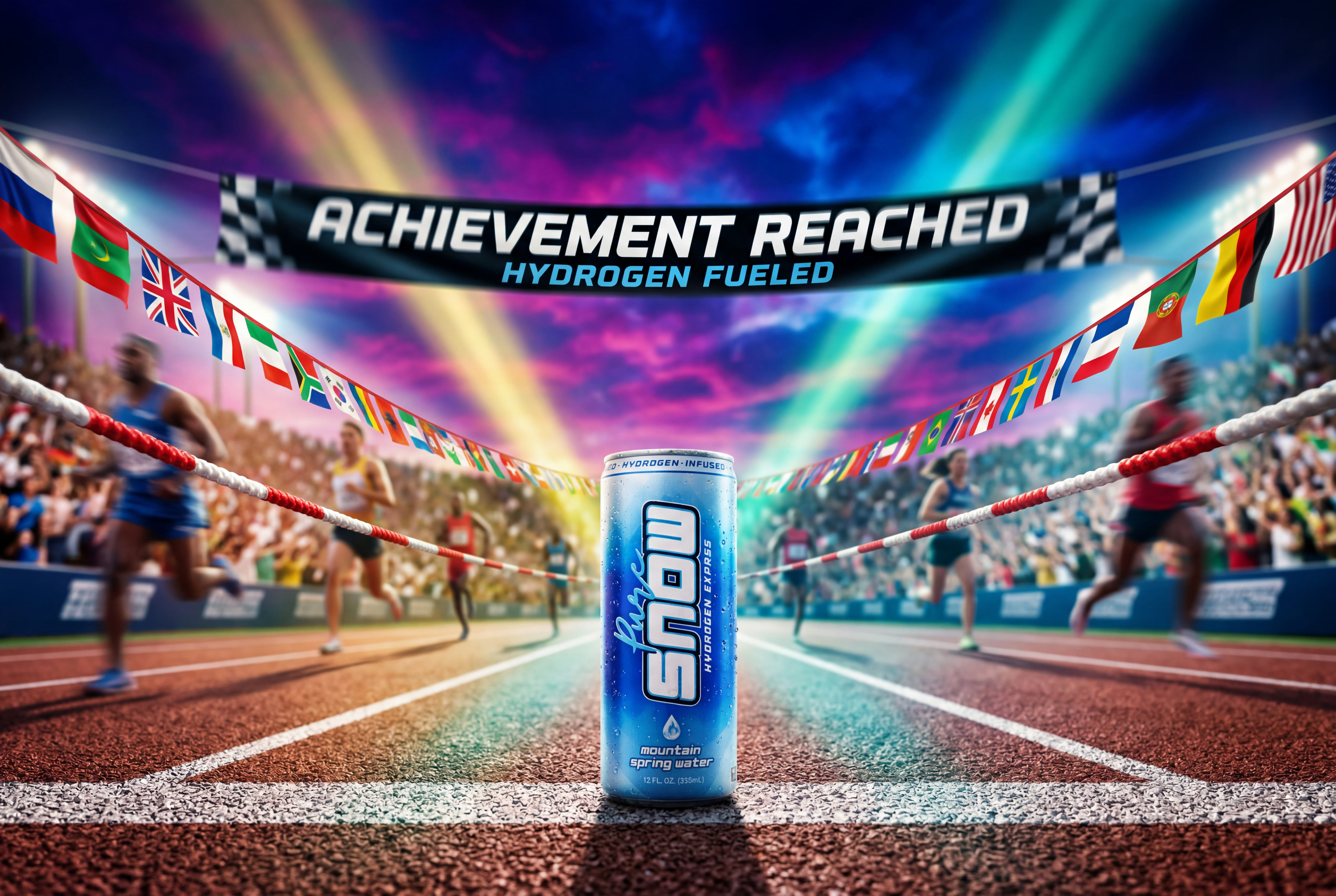
Packaging matters even more. Molecular hydrogen is the smallest molecule in existence, which means it escapes through plastic bottles over time. Aluminum cans provide a true gas barrier that keeps hydrogen locked in until you crack it open. This is exactly why Pure Snow hydrogen water is canned in aluminum rather than bottled in plastic — it's the only way to guarantee the hydrogen you pay for is still there when you drink it.
Source water matters too. Hydrogen infusion doesn't fix poor-quality base water. Starting with clean mountain spring water means you get natural mineral content and great taste alongside the dissolved H2.
One more note: some ionizing machines market themselves as producing both alkaline and hydrogen water simultaneously. While electrolysis can generate some dissolved hydrogen, the concentration is often low and inconsistent, and it dissipates quickly in open containers. A sealed, professionally infused can gives you a known, stable dose every time.
THE BOTTOM LINE ON THE COMPARISON
Think of it this way: alkaline water is defined by what it is (a pH number), while hydrogen water is defined by what it contains (dissolved H2 gas with studied biological activity). The wellness industry has a habit of blurring these categories, but they aren't interchangeable, and they aren't competing versions of the same idea. One is a chemistry characteristic; the other is a delivery system for a functional molecule that researchers around the world continue to study. If you still have questions about how the two compare or how to evaluate hydrogen water products, our FAQ page covers the most common ones in more detail.
KEY TAKEAWAY: Alkaline water is defined by its pH, which your stomach quickly neutralizes, while hydrogen water contains dissolved molecular hydrogen — a selective antioxidant with a studied mechanism of action. If you're drinking functional water for real physiological benefits, hydrogen concentration matters far more than pH.
Ready to taste the difference that real molecular hydrogen makes? Explore Pure Snow's premium canned hydrogen water and experience mountain spring purity with hydrogen sealed in every can.
FAQ
Q: Can water be both alkaline and hydrogen-rich at the same time?
A: Yes, it's technically possible since pH and dissolved hydrogen are independent properties. However, most alkaline waters contain no meaningful molecular hydrogen, and most hydrogen waters are near-neutral in pH. Always check for a stated PPM rather than assuming a high pH means hydrogen content.
Q: Does hydrogen water taste different from alkaline water?
A: Hydrogen water tastes essentially like fresh, clean water because dissolved H2 gas is tasteless and odorless. Alkaline water often has a slightly smoother or mineral-forward taste due to its added calcium and magnesium. Taste ultimately depends more on the source water than the treatment.
Q: Is it safe to drink hydrogen water every day?
A: Yes, molecular hydrogen has an excellent safety profile and is recognized as safe for consumption. Any excess hydrogen your body doesn't use is simply exhaled through your breath. Most research protocols use one to three servings daily, making it easy to build into a normal hydration routine.
Back to BlogIS HYDROGEN WATER THE SAME AS ALKALINE WATER?
No — and this is the single biggest misconception in the functional water category. Alkaline water is simply water with a pH above 7, typically between 8 and 9.5. That elevated pH usually comes from added minerals like calcium, magnesium, and potassium, or from an ionization process. The defining feature of alkaline water is its pH number, not any specific active compound.
Hydrogen water is something entirely different. It's water that has been infused with dissolved molecular hydrogen gas (H2) — the smallest molecule in the universe. Importantly, dissolving hydrogen gas into water does not meaningfully change its pH. Hydrogen water can be neutral in pH and still be saturated with therapeutic levels of H2. In other words, you can have alkaline water with zero molecular hydrogen, and hydrogen water with a perfectly neutral pH. The two are measured on completely different scales: alkaline water by pH, and hydrogen water by dissolved hydrogen concentration, expressed in parts per million (PPM). If you want a deeper look at how concentration is measured and why it matters, our how it works page breaks down the science of PPM in plain language.
DOES A HIGHER PH ACTUALLY MEAN MORE HEALTH BENEFITS?
This is where the marketing around alkaline water tends to outpace the evidence. The theory behind alkaline water is that drinking higher-pH water helps "balance" the body's acidity. The problem is that your body already regulates blood pH within an extremely tight range — roughly 7.35 to 7.45 — using your lungs, kidneys, and buffering systems. The moment alkaline water hits your stomach, it encounters gastric acid with a pH of around 1.5 to 3.5, which rapidly neutralizes it. Your stomach is, quite literally, designed to acidify whatever you swallow.
That doesn't mean alkaline water is harmful — for most healthy people it's perfectly safe, and some small studies suggest possible benefits for specific conditions like acid reflux. But the broad claims about systemic alkalizing effects simply aren't supported by strong clinical evidence.
Molecular hydrogen, by contrast, has a proposed mechanism that has been studied extensively since a landmark 2007 paper put it on the scientific map. According to research published in Nature Medicine, molecular hydrogen acts as a selective antioxidant, targeting the most cytotoxic free radicals — like hydroxyl radicals — while leaving beneficial signaling molecules alone. Because H2 is so small, it can diffuse rapidly through cell membranes and reach places larger antioxidant compounds can't, including mitochondria. Since that initial study, hundreds of publications have explored molecular hydrogen's effects on oxidative stress, inflammation, athletic recovery, and metabolic health. The research is still evolving, but the key difference is this: hydrogen water has an identifiable active ingredient with a plausible, studied mechanism. Alkaline water's mechanism largely dissolves — pun intended — the moment it reaches your stomach.
WHICH ONE SHOULD YOU CHOOSE?
If your goal is simply better hydration and you enjoy the taste of mineral-rich water, alkaline water is a fine choice. Hydration itself is the foundation of wellness, and any water you'll actually drink consistently is a good thing.
But if you're choosing a functional water for its potential health effects — antioxidant support, recovery, cellular protection — the science points toward hydrogen water. Here's what to look for when comparing products:
Concentration matters. Look for a stated dissolved hydrogen concentration, ideally 1.0 PPM or higher. Products that don't disclose their PPM are a red flag, because hydrogen concentration is the entire point.
Packaging matters even more. Molecular hydrogen is the smallest molecule in existence, which means it escapes through plastic bottles over time. Aluminum cans provide a true gas barrier that keeps hydrogen locked in until you crack it open. This is exactly why Pure Snow hydrogen water is canned in aluminum rather than bottled in plastic — it's the only way to guarantee the hydrogen you pay for is still there when you drink it.
Source water matters too. Hydrogen infusion doesn't fix poor-quality base water. Starting with clean mountain spring water means you get natural mineral content and great taste alongside the dissolved H2.
One more note: some ionizing machines market themselves as producing both alkaline and hydrogen water simultaneously. While electrolysis can generate some dissolved hydrogen, the concentration is often low and inconsistent, and it dissipates quickly in open containers. A sealed, professionally infused can gives you a known, stable dose every time.
THE BOTTOM LINE ON THE COMPARISON
Think of it this way: alkaline water is defined by what it is (a pH number), while hydrogen water is defined by what it contains (dissolved H2 gas with studied biological activity). The wellness industry has a habit of blurring these categories, but they aren't interchangeable, and they aren't competing versions of the same idea. One is a chemistry characteristic; the other is a delivery system for a functional molecule that researchers around the world continue to study. If you still have questions about how the two compare or how to evaluate hydrogen water products, our FAQ page covers the most common ones in more detail.
KEY TAKEAWAY: Alkaline water is defined by its pH, which your stomach quickly neutralizes, while hydrogen water contains dissolved molecular hydrogen — a selective antioxidant with a studied mechanism of action. If you're drinking functional water for real physiological benefits, hydrogen concentration matters far more than pH.
Ready to taste the difference that real molecular hydrogen makes? Explore Pure Snow's premium canned hydrogen water and experience mountain spring purity with hydrogen sealed in every can.
FAQ
Q: Can water be both alkaline and hydrogen-rich at the same time?
A: Yes, it's technically possible since pH and dissolved hydrogen are independent properties. However, most alkaline waters contain no meaningful molecular hydrogen, and most hydrogen waters are near-neutral in pH. Always check for a stated PPM rather than assuming a high pH means hydrogen content.
Q: Does hydrogen water taste different from alkaline water?
A: Hydrogen water tastes essentially like fresh, clean water because dissolved H2 gas is tasteless and odorless. Alkaline water often has a slightly smoother or mineral-forward taste due to its added calcium and magnesium. Taste ultimately depends more on the source water than the treatment.
Q: Is it safe to drink hydrogen water every day?
A: Yes, molecular hydrogen has an excellent safety profile and is recognized as safe for consumption. Any excess hydrogen your body doesn't use is simply exhaled through your breath. Most research protocols use one to three servings daily, making it easy to build into a normal hydration routine.
