Hydrogen Water for Brain Function: What the Science Actually Says
If you've been exploring ways to sharpen your focus and protect your long-term cognitive health this June 2026, you may have come across claims about hydrogen water for brain function. Some sound almost too good to be true — and others get dismissed too quickly. The reality, as with most emerging science, sits somewhere in the middle. Let's clear up three of the most common misconceptions about hydrogen water and the brain, so you can make a genuinely informed decision.
MISCONCEPTION 1: HYDROGEN WATER IS JUST A WELLNESS TREND WITH NO REAL SCIENCE BEHIND IT
This is probably the most common pushback you'll hear, and it's understandable. The wellness industry has a long history of overpromising. But hydrogen water is not without a scientific foundation — particularly when it comes to brain health. The key mechanism is molecular hydrogen's ability to act as a selective antioxidant. Unlike broad-spectrum antioxidants that can interfere with beneficial reactive oxygen species, molecular hydrogen specifically targets the most damaging free radicals in the body, including hydroxyl radicals and peroxynitrite. These are the exact compounds associated with oxidative stress in brain tissue.
Oxidative stress in the brain is linked to cognitive decline, neuroinflammation, and conditions like Parkinson's and Alzheimer's disease. Research exploring molecular hydrogen's neuroprotective effects has grown substantially over the past decade. According to a study published in PLOS ONE, molecular hydrogen demonstrated significant neuroprotective effects in animal models, reducing oxidative damage and improving cognitive performance markers. While much of this research is still in early stages, the underlying mechanism is real and reproducible — this isn't astrology, it's biochemistry.
MISCONCEPTION 2: YOUR BRAIN CAN'T ACTUALLY BENEFIT BECAUSE HYDROGEN DOESN'T CROSS THE BLOOD-BRAIN BARRIER
This misconception stops a lot of curious people in their tracks, and it's based on a misunderstanding of molecular hydrogen's properties. Most substances cannot cross the blood-brain barrier — that's the point of it. It's a highly selective membrane designed to protect the brain from pathogens and most chemicals. However, molecular hydrogen is one of the smallest molecules in existence. Its size and neutral charge actually allow it to pass through biological membranes with relative ease, including the blood-brain barrier.
This is precisely why researchers have been interested in hydrogen as a potential neuroprotective agent. Once it crosses into brain tissue, it can neutralize cytotoxic free radicals directly at the site where they cause damage. This is not a theoretical claim — it's a measurable property of the hydrogen molecule itself. The challenge isn't whether hydrogen can reach the brain; it's ensuring the concentration in your water is high enough and that you're consuming it before the hydrogen dissipates. That's why concentration and packaging matter enormously, something we'll come back to shortly.
MISCONCEPTION 3: ALL HYDROGEN WATER PRODUCTS DELIVER THE SAME BRAIN BENEFITS
This might be the most practically important misconception to address. Not all hydrogen water is created equal, and the differences are significant enough to determine whether you experience any cognitive benefit at all. The two biggest variables are hydrogen concentration (measured in parts per million, or PPM) and packaging integrity.
Hydrogen is a gas, and it wants to escape. If your hydrogen water comes in a plastic bottle, the gas permeates through the walls over time, often leaving the water with negligible hydrogen content by the time it reaches you. Aluminum cans, on the other hand, are impermeable — the hydrogen stays locked in until you open it. This is why how hydrogen water is packaged and pressurized is not a marketing detail, it's a functional one that directly affects potency.
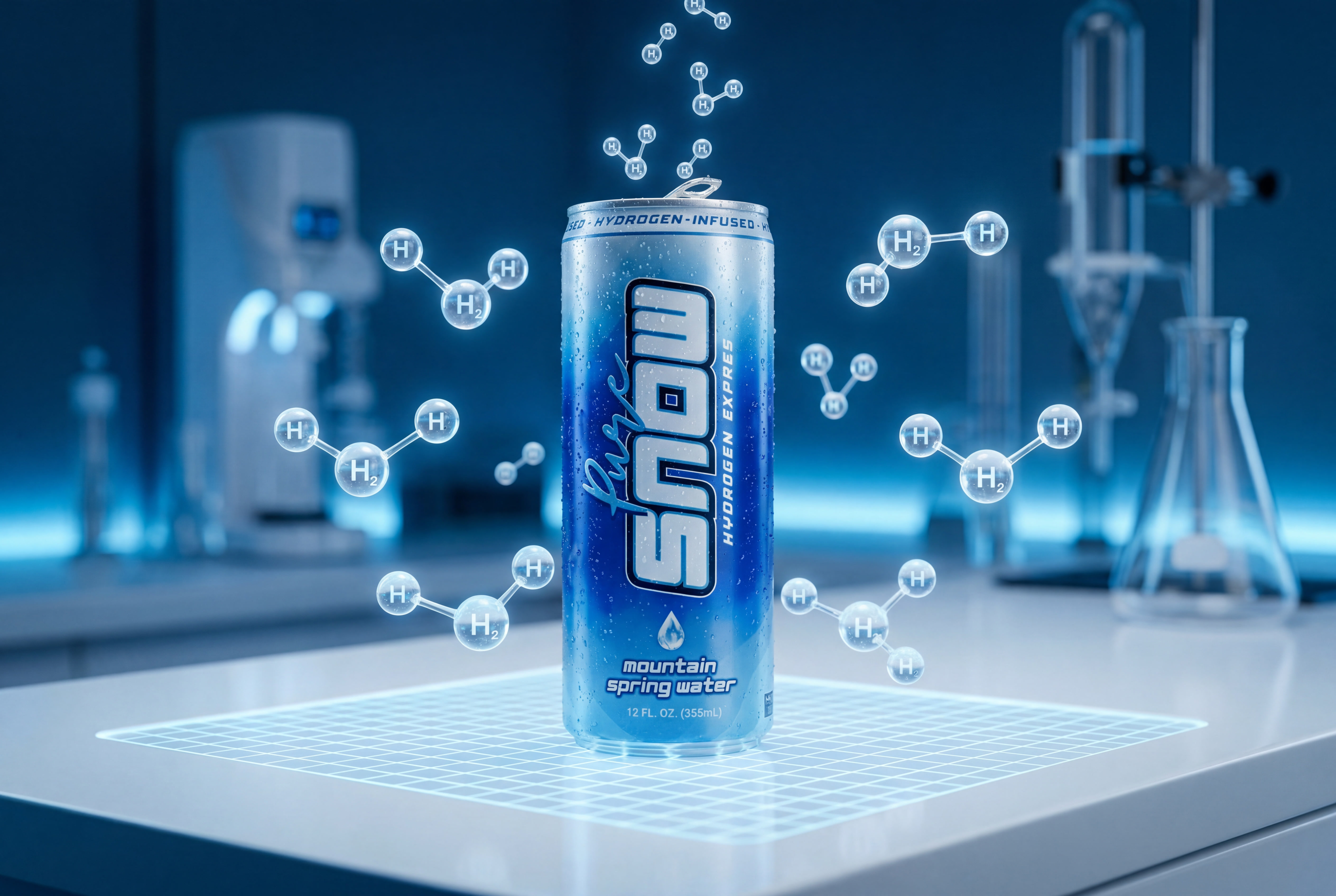
Therapeutic levels of dissolved hydrogen are generally considered to start at around 1.0 PPM or higher. Many products on the market fall short of this threshold, especially by the time they've been shipped and stored. If you're drinking hydrogen water for brain function specifically, you want confidence that what's in the can is what was promised on the label. Pure Snow is formulated to deliver consistent, high-concentration molecular hydrogen using aluminum can technology that preserves potency from the moment it's sealed to the moment you drink it.
WHAT DOES BRAIN SUPPORT FROM HYDROGEN WATER ACTUALLY LOOK LIKE IN PRACTICE
Cognitive benefits aren't always dramatic or immediate, but users and researchers alike report improvements in areas like mental clarity, reduced mental fatigue, and sustained focus — particularly under conditions of high cognitive load or stress. These effects are consistent with hydrogen's anti-inflammatory and antioxidant mechanisms. Neuroinflammation is increasingly recognized as a root contributor to brain fog, slow thinking, and mood dysregulation. By reducing oxidative stress and inflammatory signaling at the cellular level, hydrogen water may support the conditions your brain needs to perform at its best.
This doesn't mean hydrogen water replaces sleep, a balanced diet, or other foundational health practices. But as a daily addition to a brain-healthy routine, the science is more promising than most people realize — and far more grounded than the skeptics suggest.
KEY TAKEAWAY:
Hydrogen water's potential brain benefits are rooted in real, measurable science — specifically its ability to cross the blood-brain barrier and neutralize oxidative stress — but only if the product you're drinking delivers a therapeutic concentration of molecular hydrogen.
If you're ready to experience the difference that properly formulated, high-concentration hydrogen water can make, Pure Snow is built from the ground up with that standard in mind. Visit our shop to try it for yourself and feel the clarity you've been looking for.
FAQ
Q: How quickly can hydrogen water affect brain function?
A: Effects on mental clarity and focus can vary by individual, but some users report noticeable differences within a few days of consistent use. The anti-inflammatory and antioxidant processes hydrogen supports are ongoing, so regular daily consumption tends to produce the most meaningful results over time.
Q: How much hydrogen water should I drink to support cognitive health?
A: Most research suggesting cognitive and neuroprotective benefits involves consumption of at least one to two cans or servings of high-concentration hydrogen water per day. Consistency matters more than quantity, so building it into a daily routine is generally more effective than occasional use.
Q: Is hydrogen water safe to drink every day for brain health?
A: Yes, molecular hydrogen has an excellent safety profile. It is a naturally occurring molecule that the body produces during digestion, and no adverse effects have been reported at therapeutic concentrations found in hydrogen water. It is considered safe for daily consumption by healthy adults.
Back to BlogMISCONCEPTION 1: HYDROGEN WATER IS JUST A WELLNESS TREND WITH NO REAL SCIENCE BEHIND IT
This is probably the most common pushback you'll hear, and it's understandable. The wellness industry has a long history of overpromising. But hydrogen water is not without a scientific foundation — particularly when it comes to brain health. The key mechanism is molecular hydrogen's ability to act as a selective antioxidant. Unlike broad-spectrum antioxidants that can interfere with beneficial reactive oxygen species, molecular hydrogen specifically targets the most damaging free radicals in the body, including hydroxyl radicals and peroxynitrite. These are the exact compounds associated with oxidative stress in brain tissue.
Oxidative stress in the brain is linked to cognitive decline, neuroinflammation, and conditions like Parkinson's and Alzheimer's disease. Research exploring molecular hydrogen's neuroprotective effects has grown substantially over the past decade. According to a study published in PLOS ONE, molecular hydrogen demonstrated significant neuroprotective effects in animal models, reducing oxidative damage and improving cognitive performance markers. While much of this research is still in early stages, the underlying mechanism is real and reproducible — this isn't astrology, it's biochemistry.
MISCONCEPTION 2: YOUR BRAIN CAN'T ACTUALLY BENEFIT BECAUSE HYDROGEN DOESN'T CROSS THE BLOOD-BRAIN BARRIER
This misconception stops a lot of curious people in their tracks, and it's based on a misunderstanding of molecular hydrogen's properties. Most substances cannot cross the blood-brain barrier — that's the point of it. It's a highly selective membrane designed to protect the brain from pathogens and most chemicals. However, molecular hydrogen is one of the smallest molecules in existence. Its size and neutral charge actually allow it to pass through biological membranes with relative ease, including the blood-brain barrier.
This is precisely why researchers have been interested in hydrogen as a potential neuroprotective agent. Once it crosses into brain tissue, it can neutralize cytotoxic free radicals directly at the site where they cause damage. This is not a theoretical claim — it's a measurable property of the hydrogen molecule itself. The challenge isn't whether hydrogen can reach the brain; it's ensuring the concentration in your water is high enough and that you're consuming it before the hydrogen dissipates. That's why concentration and packaging matter enormously, something we'll come back to shortly.
MISCONCEPTION 3: ALL HYDROGEN WATER PRODUCTS DELIVER THE SAME BRAIN BENEFITS
This might be the most practically important misconception to address. Not all hydrogen water is created equal, and the differences are significant enough to determine whether you experience any cognitive benefit at all. The two biggest variables are hydrogen concentration (measured in parts per million, or PPM) and packaging integrity.
Hydrogen is a gas, and it wants to escape. If your hydrogen water comes in a plastic bottle, the gas permeates through the walls over time, often leaving the water with negligible hydrogen content by the time it reaches you. Aluminum cans, on the other hand, are impermeable — the hydrogen stays locked in until you open it. This is why how hydrogen water is packaged and pressurized is not a marketing detail, it's a functional one that directly affects potency.
Therapeutic levels of dissolved hydrogen are generally considered to start at around 1.0 PPM or higher. Many products on the market fall short of this threshold, especially by the time they've been shipped and stored. If you're drinking hydrogen water for brain function specifically, you want confidence that what's in the can is what was promised on the label. Pure Snow is formulated to deliver consistent, high-concentration molecular hydrogen using aluminum can technology that preserves potency from the moment it's sealed to the moment you drink it.
WHAT DOES BRAIN SUPPORT FROM HYDROGEN WATER ACTUALLY LOOK LIKE IN PRACTICE
Cognitive benefits aren't always dramatic or immediate, but users and researchers alike report improvements in areas like mental clarity, reduced mental fatigue, and sustained focus — particularly under conditions of high cognitive load or stress. These effects are consistent with hydrogen's anti-inflammatory and antioxidant mechanisms. Neuroinflammation is increasingly recognized as a root contributor to brain fog, slow thinking, and mood dysregulation. By reducing oxidative stress and inflammatory signaling at the cellular level, hydrogen water may support the conditions your brain needs to perform at its best.
This doesn't mean hydrogen water replaces sleep, a balanced diet, or other foundational health practices. But as a daily addition to a brain-healthy routine, the science is more promising than most people realize — and far more grounded than the skeptics suggest.
KEY TAKEAWAY:
Hydrogen water's potential brain benefits are rooted in real, measurable science — specifically its ability to cross the blood-brain barrier and neutralize oxidative stress — but only if the product you're drinking delivers a therapeutic concentration of molecular hydrogen.
If you're ready to experience the difference that properly formulated, high-concentration hydrogen water can make, Pure Snow is built from the ground up with that standard in mind. Visit our shop to try it for yourself and feel the clarity you've been looking for.
FAQ
Q: How quickly can hydrogen water affect brain function?
A: Effects on mental clarity and focus can vary by individual, but some users report noticeable differences within a few days of consistent use. The anti-inflammatory and antioxidant processes hydrogen supports are ongoing, so regular daily consumption tends to produce the most meaningful results over time.
Q: How much hydrogen water should I drink to support cognitive health?
A: Most research suggesting cognitive and neuroprotective benefits involves consumption of at least one to two cans or servings of high-concentration hydrogen water per day. Consistency matters more than quantity, so building it into a daily routine is generally more effective than occasional use.
Q: Is hydrogen water safe to drink every day for brain health?
A: Yes, molecular hydrogen has an excellent safety profile. It is a naturally occurring molecule that the body produces during digestion, and no adverse effects have been reported at therapeutic concentrations found in hydrogen water. It is considered safe for daily consumption by healthy adults.