Hydrogen Water Bottle vs Canned Hydrogen Water: Which Actually Keeps the Hydrogen In?
If you have been comparing hydrogen water options this October 2026, you have probably run into some confident-sounding claims that simply do not hold up to scrutiny. Three misconceptions come up again and again: first, that any sealed container will keep molecular hydrogen locked in the water; second, that plastic bottles are just as good as aluminum cans for hydrogen retention; and third, that packaging is purely a branding decision with no real impact on what ends up in your glass. All three of these ideas are wrong, and understanding why will completely change how you shop for hydrogen water. Let us walk through each myth, look at the science of why packaging matters so much for this particular product, and settle the hydrogen water bottle vs canned hydrogen water debate once and for all.
MYTH ONE: ANY SEALED CONTAINER KEEPS HYDROGEN IN THE WATER
This is the most common misconception, and it is easy to see why people believe it. If a bottle holds water without leaking, surely it holds everything dissolved in that water too, right? Not quite. Molecular hydrogen (H2) is the smallest molecule in the universe. It is dramatically smaller than oxygen, carbon dioxide, or the water molecules surrounding it. That tiny size gives hydrogen a remarkable ability to escape through materials that would easily contain other gases and liquids. A container that is watertight is not necessarily hydrogen-tight. This is why a bottle of sparkling water can hold its carbonation for months, while the same bottle filled with hydrogen water can lose most of its dissolved hydrogen in a matter of hours or days. The gas simply slips through microscopic gaps in the packaging material itself, not through the cap or seams. So when you are evaluating hydrogen water, the question is never just whether the container is sealed. The question is whether the material itself can stop the smallest molecule in existence from diffusing straight through its walls.
MYTH TWO: PLASTIC BOTTLES WORK JUST AS WELL AS ALUMINUM CANS
Here is where the hydrogen water bottle vs canned hydrogen water comparison gets decisive. Standard PET plastic, the material used in most bottled water, is a polymer with a molecular structure that hydrogen passes through with relative ease. Think of plastic as a chain-link fence and hydrogen as a swarm of gnats. The fence holds back larger things, but the gnats fly right through. Studies on hydrogen retention consistently show that hydrogen water stored in PET bottles loses a significant portion of its dissolved hydrogen within the first day and can approach negligible concentrations well before the printed expiration date. Aluminum, by contrast, is a dense, non-porous metal. Hydrogen molecules cannot diffuse through an aluminum wall the way they slip through plastic polymers. A properly manufactured aluminum can with a hydrogen-tight seal can preserve dissolved hydrogen concentrations for months, meaning the PPM level printed on the can is far more likely to reflect what you actually drink. This is exactly why Pure Snow chose aluminum cans from day one, and you can read more about the science behind that decision on our how it works page. Glass performs similarly well as a barrier, but glass bottles with standard caps often leak hydrogen through the closure, and glass is heavier, more fragile, and less recyclable in practice than aluminum. When you weigh barrier performance, durability, portability, and sustainability together, aluminum cans win the packaging contest decisively.
MYTH THREE: PACKAGING IS JUST MARKETING AND DOES NOT AFFECT BENEFITS
Some skeptics argue that debates about cans versus bottles are just brands jockeying for differentiation. But the packaging question goes directly to whether the product can deliver any benefit at all. The entire premise of hydrogen water rests on dissolved molecular hydrogen acting as a selective antioxidant in the body. Foundational research, including the landmark 2007 study published in Nature Medicine, found that molecular hydrogen can selectively reduce harmful hydroxyl radicals, which helped launch an entire field of hydrogen research. But every one of those studies depends on the subject actually receiving a meaningful dose of hydrogen. If your hydrogen water has off-gassed through a plastic bottle during weeks of warehousing and shipping, you are essentially drinking expensive regular water. The research-backed potential of hydrogen water is only as good as the packaging that delivers it. In other words, packaging is not a side note in this category. It is the whole ballgame.
WHAT ABOUT PORTABLE HYDROGEN WATER BOTTLES AND GENERATORS?
One honest nuance worth addressing: some people use the phrase hydrogen water bottle to mean a rechargeable electrolysis device that generates hydrogen in water on demand. These devices sidestep the storage problem because you drink the water immediately after generating it. However, they come with their own tradeoffs, including inconsistent hydrogen concentrations between sessions, maintenance and cleaning requirements, variable water quality depending on your source, and upfront costs that can run into the hundreds of dollars. A canned product like Pure Snow hydrogen water offers verified concentration, pristine mountain spring water as the base, and zero maintenance. You simply crack the can and drink. For most people, the convenience and consistency of a properly canned product outweigh the appeal of a gadget, especially when you factor in the quality of the source water itself.
HOW TO CHOOSE WITH CONFIDENCE
When you are shopping for hydrogen water, apply three simple filters. First, check the packaging material: aluminum cans are the gold standard, and plastic bottles should be an immediate red flag. Second, look for a stated hydrogen concentration in PPM, ideally with transparency about testing. Third, consider the source water, because hydrogen is only one part of the equation and the water carrying it matters too. If you still have questions about concentrations, shelf life, or how to store your cans, our frequently asked questions page covers the details.
KEY TAKEAWAY: Molecular hydrogen is the smallest molecule in existence and escapes through plastic bottles within hours to days, while aluminum cans act as a true barrier that preserves hydrogen concentration for months. If you want the hydrogen you are paying for, choose canned hydrogen water over plastic bottles every time.
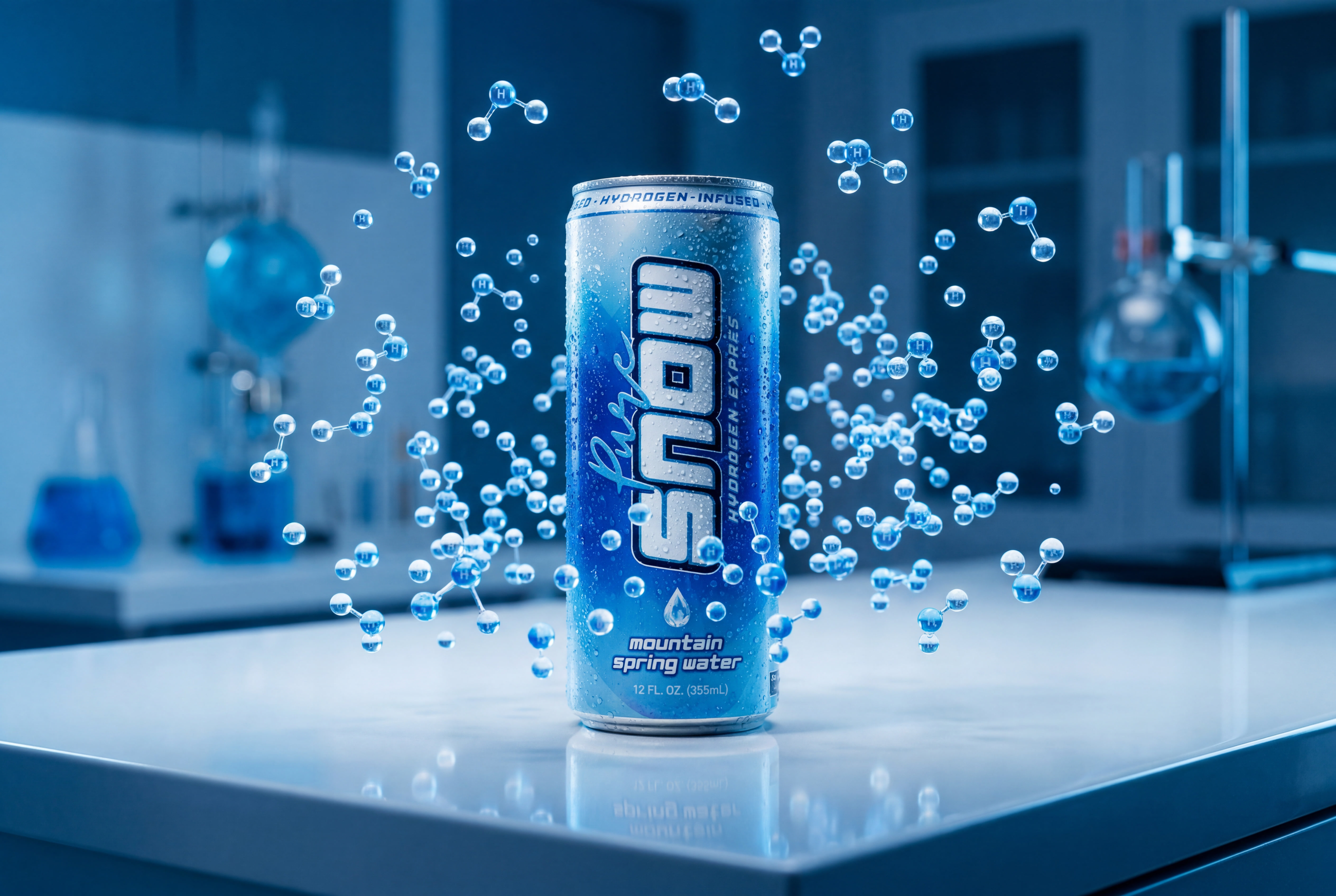
At Pure Snow, we infuse premium mountain spring water with molecular hydrogen and seal it in aluminum cans so the hydrogen is still there when you take your first sip. Visit our shop today and taste the difference that smart packaging makes.
FAQ
Q: How quickly does hydrogen escape from a plastic bottle?
A: Hydrogen begins diffusing through PET plastic almost immediately after bottling. Depending on the bottle thickness and storage conditions, a significant portion of the dissolved hydrogen can be lost within 24 to 72 hours, often leaving very little by the time the product reaches you.
Q: How long does canned hydrogen water stay potent?
A: Aluminum is effectively impermeable to hydrogen gas, so a well-sealed can preserves its stated hydrogen concentration for months. Store cans upright in a cool place and drink promptly after opening, since hydrogen begins escaping into the air once the seal is broken.
Q: Should I drink hydrogen water right after opening the can?
A: Yes, ideally within 15 to 30 minutes of opening. Once the can is open, dissolved hydrogen gradually off-gasses into the surrounding air, so drinking it promptly ensures you get the full concentration you paid for.
Back to BlogMYTH ONE: ANY SEALED CONTAINER KEEPS HYDROGEN IN THE WATER
This is the most common misconception, and it is easy to see why people believe it. If a bottle holds water without leaking, surely it holds everything dissolved in that water too, right? Not quite. Molecular hydrogen (H2) is the smallest molecule in the universe. It is dramatically smaller than oxygen, carbon dioxide, or the water molecules surrounding it. That tiny size gives hydrogen a remarkable ability to escape through materials that would easily contain other gases and liquids. A container that is watertight is not necessarily hydrogen-tight. This is why a bottle of sparkling water can hold its carbonation for months, while the same bottle filled with hydrogen water can lose most of its dissolved hydrogen in a matter of hours or days. The gas simply slips through microscopic gaps in the packaging material itself, not through the cap or seams. So when you are evaluating hydrogen water, the question is never just whether the container is sealed. The question is whether the material itself can stop the smallest molecule in existence from diffusing straight through its walls.
MYTH TWO: PLASTIC BOTTLES WORK JUST AS WELL AS ALUMINUM CANS
Here is where the hydrogen water bottle vs canned hydrogen water comparison gets decisive. Standard PET plastic, the material used in most bottled water, is a polymer with a molecular structure that hydrogen passes through with relative ease. Think of plastic as a chain-link fence and hydrogen as a swarm of gnats. The fence holds back larger things, but the gnats fly right through. Studies on hydrogen retention consistently show that hydrogen water stored in PET bottles loses a significant portion of its dissolved hydrogen within the first day and can approach negligible concentrations well before the printed expiration date. Aluminum, by contrast, is a dense, non-porous metal. Hydrogen molecules cannot diffuse through an aluminum wall the way they slip through plastic polymers. A properly manufactured aluminum can with a hydrogen-tight seal can preserve dissolved hydrogen concentrations for months, meaning the PPM level printed on the can is far more likely to reflect what you actually drink. This is exactly why Pure Snow chose aluminum cans from day one, and you can read more about the science behind that decision on our how it works page. Glass performs similarly well as a barrier, but glass bottles with standard caps often leak hydrogen through the closure, and glass is heavier, more fragile, and less recyclable in practice than aluminum. When you weigh barrier performance, durability, portability, and sustainability together, aluminum cans win the packaging contest decisively.
MYTH THREE: PACKAGING IS JUST MARKETING AND DOES NOT AFFECT BENEFITS
Some skeptics argue that debates about cans versus bottles are just brands jockeying for differentiation. But the packaging question goes directly to whether the product can deliver any benefit at all. The entire premise of hydrogen water rests on dissolved molecular hydrogen acting as a selective antioxidant in the body. Foundational research, including the landmark 2007 study published in Nature Medicine, found that molecular hydrogen can selectively reduce harmful hydroxyl radicals, which helped launch an entire field of hydrogen research. But every one of those studies depends on the subject actually receiving a meaningful dose of hydrogen. If your hydrogen water has off-gassed through a plastic bottle during weeks of warehousing and shipping, you are essentially drinking expensive regular water. The research-backed potential of hydrogen water is only as good as the packaging that delivers it. In other words, packaging is not a side note in this category. It is the whole ballgame.
WHAT ABOUT PORTABLE HYDROGEN WATER BOTTLES AND GENERATORS?
One honest nuance worth addressing: some people use the phrase hydrogen water bottle to mean a rechargeable electrolysis device that generates hydrogen in water on demand. These devices sidestep the storage problem because you drink the water immediately after generating it. However, they come with their own tradeoffs, including inconsistent hydrogen concentrations between sessions, maintenance and cleaning requirements, variable water quality depending on your source, and upfront costs that can run into the hundreds of dollars. A canned product like Pure Snow hydrogen water offers verified concentration, pristine mountain spring water as the base, and zero maintenance. You simply crack the can and drink. For most people, the convenience and consistency of a properly canned product outweigh the appeal of a gadget, especially when you factor in the quality of the source water itself.
HOW TO CHOOSE WITH CONFIDENCE
When you are shopping for hydrogen water, apply three simple filters. First, check the packaging material: aluminum cans are the gold standard, and plastic bottles should be an immediate red flag. Second, look for a stated hydrogen concentration in PPM, ideally with transparency about testing. Third, consider the source water, because hydrogen is only one part of the equation and the water carrying it matters too. If you still have questions about concentrations, shelf life, or how to store your cans, our frequently asked questions page covers the details.
KEY TAKEAWAY: Molecular hydrogen is the smallest molecule in existence and escapes through plastic bottles within hours to days, while aluminum cans act as a true barrier that preserves hydrogen concentration for months. If you want the hydrogen you are paying for, choose canned hydrogen water over plastic bottles every time.
At Pure Snow, we infuse premium mountain spring water with molecular hydrogen and seal it in aluminum cans so the hydrogen is still there when you take your first sip. Visit our shop today and taste the difference that smart packaging makes.
FAQ
Q: How quickly does hydrogen escape from a plastic bottle?
A: Hydrogen begins diffusing through PET plastic almost immediately after bottling. Depending on the bottle thickness and storage conditions, a significant portion of the dissolved hydrogen can be lost within 24 to 72 hours, often leaving very little by the time the product reaches you.
Q: How long does canned hydrogen water stay potent?
A: Aluminum is effectively impermeable to hydrogen gas, so a well-sealed can preserves its stated hydrogen concentration for months. Store cans upright in a cool place and drink promptly after opening, since hydrogen begins escaping into the air once the seal is broken.
Q: Should I drink hydrogen water right after opening the can?
A: Yes, ideally within 15 to 30 minutes of opening. Once the can is open, dissolved hydrogen gradually off-gasses into the surrounding air, so drinking it promptly ensures you get the full concentration you paid for.