Hydrogen Water Bottle vs Canned Cost Over a Year Explained
If you have been weighing a hydrogen water bottle vs canned cost over a year, you are asking exactly the right question this October 2026. The upfront price tag of a reusable hydrogen bottle can look tempting next to a case of cans, but the honest answer is more nuanced than a sticker price. At Pure Snow, we think about this comparison constantly, because we deliberately chose cans over every other format. In this post, we will walk through the real year-long math on both options, explain the tradeoffs that rarely make it onto a product page, and show you exactly why we built Pure Snow the way we did.
WHAT A HYDROGEN WATER BOTTLE REALLY COSTS
Hydrogen water bottles, the portable devices that generate hydrogen in your drinking water at the push of a button, typically cost between $90 and $250 upfront. On paper, that one-time purchase sounds like a bargain compared to buying ready-to-drink cases all year. But the upfront price is only part of the story. The bigger issue is consistency. These bottles are known for producing inconsistent PPM, meaning the concentration of molecular hydrogen in your water can vary from one fill to the next, and you often have no reliable way of knowing what you are actually drinking. If the whole point of hydrogen water is the dissolved hydrogen, paying $90 to $250 for an unpredictable dose is a real cost, even if it never shows up on a receipt. It is also worth noting that full-size hydrogen water machines run even higher, typically $400 to $2,000 upfront plus ongoing maintenance, a comparison we broke down in detail in our post on hydrogen machine cost vs canned water.
WHAT PURE SNOW CANS COST OVER A YEAR
Now let us run the numbers on cans, using real Pure Snow pricing. A one-time 12-pack is $29.99, which works out to about $2.50 per can. But most of our regular drinkers subscribe, and the math gets noticeably friendlier. Your first subscription order is $17.99 for a 12-pack, a 40% discount, and every order after that is $24.99 per 12-pack, which is 20% off, locked in for as long as you subscribe. Shipping is free on every order.
So what does a year look like? If you drink a 12-pack per month, your first year on a subscription comes to $17.99 for the first case plus $24.99 for each of the remaining eleven, roughly $293 for the year. Drink more often, say a 12-pack every two weeks, and you are looking at around $618 for the year. That is more than the upfront cost of a mid-range bottle, we will not pretend otherwise. But here is the critical difference: every single one of those cans is formulated at 2-3 PPM of molecular hydrogen, sealed at the moment of canning, and guaranteed to deliver that concentration when you crack it open. You are not paying for a device and hoping it performs. You are paying for a known, consistent dose of hydrogen every time. You can see the full breakdown, including subscription perks, on our pricing page.
WHY WE CHOSE ALUMINUM CANS IN THE FIRST PLACE
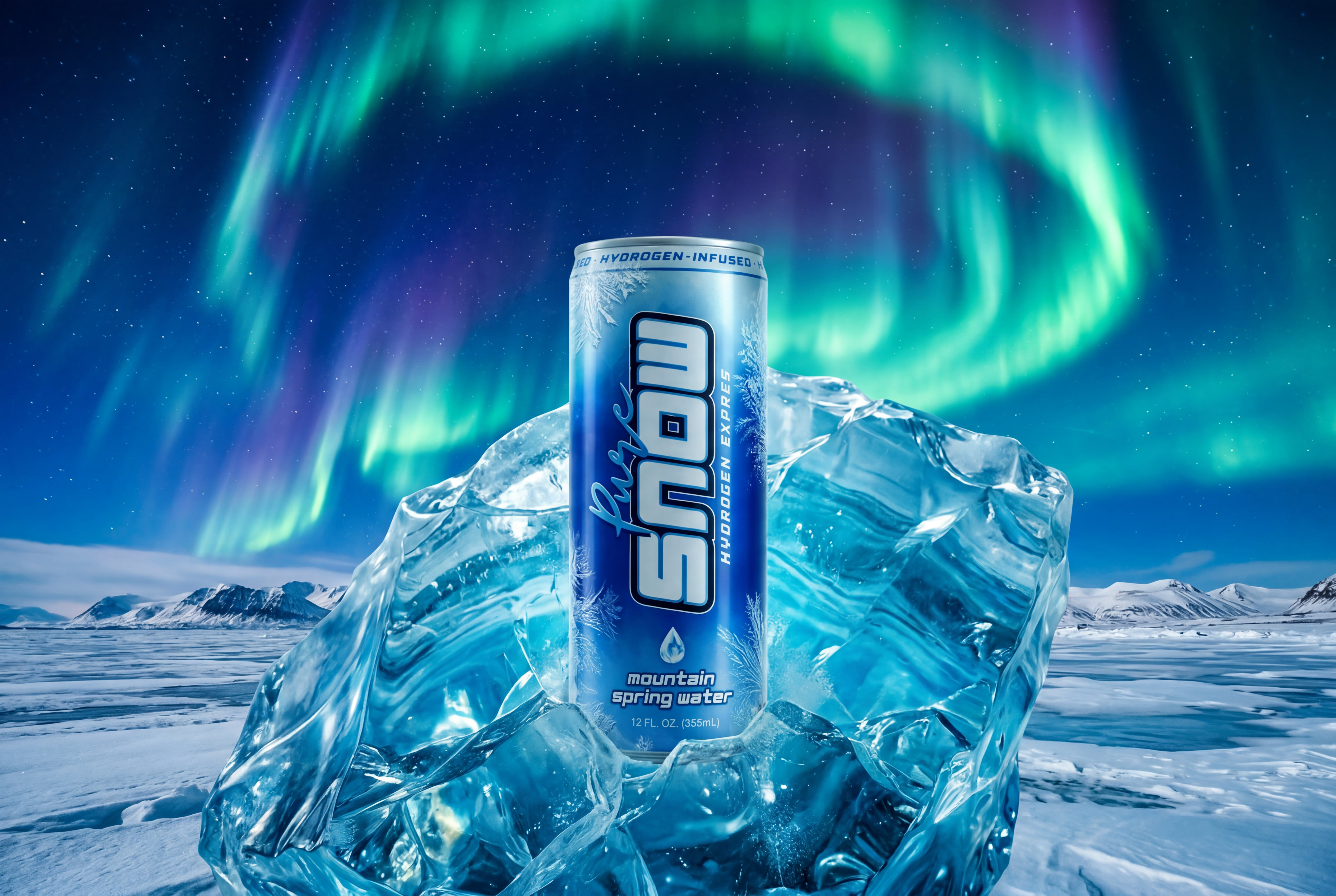
This is where the Pure Snow story really diverges from the rest of the market, and it comes down to chemistry. Molecular hydrogen is the smallest molecule in existence, and it escapes through most materials with ease. Plastic bottles and pouches let hydrogen seep out, often within days of filling. Aluminum, on the other hand, is impermeable to hydrogen. That means a hermetically sealed Pure Snow can holds its hydrogen for months, sitting patiently in your pantry or fridge until the moment you need it. Once you open a can, we recommend finishing it within 10 to 15 minutes for maximum potency, because hydrogen begins to escape the moment it meets open air. That is not a flaw, it is simply how the molecule behaves, and it is exactly why a sealed can beats an open-format device for reliability. If you want to go deeper on the science of PPM, sealing, and why the can matters so much, our how it works page covers it all.
And the interest in getting this right is not niche. According to research indexed in the National Library of Medicine, over 1,000 peer-reviewed studies have explored molecular hydrogen, with research examining areas such as exercise recovery, oxidative stress, inflammation response, cognitive function, sleep quality, energy, and gut health. None of that is settled or proven, and we never claim it is, but it does explain why consistency of dose matters to the people drinking hydrogen water daily. Early research is built on known concentrations, not guesswork.
THE WATER ITSELF IS HALF THE STORY
Here is something a hydrogen bottle can never give you: the water. A device infuses whatever you pour into it, tap water, filtered water, whatever is handy. Pure Snow starts with Ouachita Mountain spring water from Arkansas, a source that has earned 19 honors from the Berkeley Springs International Water Tasting competition, including multiple Best Tasting Water in the World titles. When you compare a hydrogen water bottle vs canned cost over a year, remember that you are not just comparing hydrogen delivery methods. With Pure Snow, every can is award-winning spring water first and hydrogen water second. With a bottle, the base water is entirely on you.
WHICH OPTION FITS YOUR YEAR
If you are a dedicated tinkerer who enjoys managing a device, charging it, cleaning it, and accepting some variability, a hydrogen bottle may suit you. But if you want certainty, a verified 2-3 PPM in every can, world-class spring water, free shipping, and zero maintenance, cans are the simpler and more trustworthy path. Our subscription also removes every bit of friction we could find: pricing is locked in, and you can skip, pause, swap, or cancel anytime with no fees. New to the category entirely? Start with the basics on what hydrogen water is before you decide.
KEY TAKEAWAY: A hydrogen water bottle costs $90 to $250 upfront but produces inconsistent PPM, while a Pure Snow subscription delivers a guaranteed 2-3 PPM of hydrogen in award-winning spring water for roughly $293 to $618 per year depending on how much you drink. Over a year, you are paying for certainty, not just water.Back to Blog
WHAT A HYDROGEN WATER BOTTLE REALLY COSTS
Hydrogen water bottles, the portable devices that generate hydrogen in your drinking water at the push of a button, typically cost between $90 and $250 upfront. On paper, that one-time purchase sounds like a bargain compared to buying ready-to-drink cases all year. But the upfront price is only part of the story. The bigger issue is consistency. These bottles are known for producing inconsistent PPM, meaning the concentration of molecular hydrogen in your water can vary from one fill to the next, and you often have no reliable way of knowing what you are actually drinking. If the whole point of hydrogen water is the dissolved hydrogen, paying $90 to $250 for an unpredictable dose is a real cost, even if it never shows up on a receipt. It is also worth noting that full-size hydrogen water machines run even higher, typically $400 to $2,000 upfront plus ongoing maintenance, a comparison we broke down in detail in our post on hydrogen machine cost vs canned water.
WHAT PURE SNOW CANS COST OVER A YEAR
Now let us run the numbers on cans, using real Pure Snow pricing. A one-time 12-pack is $29.99, which works out to about $2.50 per can. But most of our regular drinkers subscribe, and the math gets noticeably friendlier. Your first subscription order is $17.99 for a 12-pack, a 40% discount, and every order after that is $24.99 per 12-pack, which is 20% off, locked in for as long as you subscribe. Shipping is free on every order.
So what does a year look like? If you drink a 12-pack per month, your first year on a subscription comes to $17.99 for the first case plus $24.99 for each of the remaining eleven, roughly $293 for the year. Drink more often, say a 12-pack every two weeks, and you are looking at around $618 for the year. That is more than the upfront cost of a mid-range bottle, we will not pretend otherwise. But here is the critical difference: every single one of those cans is formulated at 2-3 PPM of molecular hydrogen, sealed at the moment of canning, and guaranteed to deliver that concentration when you crack it open. You are not paying for a device and hoping it performs. You are paying for a known, consistent dose of hydrogen every time. You can see the full breakdown, including subscription perks, on our pricing page.
WHY WE CHOSE ALUMINUM CANS IN THE FIRST PLACE
This is where the Pure Snow story really diverges from the rest of the market, and it comes down to chemistry. Molecular hydrogen is the smallest molecule in existence, and it escapes through most materials with ease. Plastic bottles and pouches let hydrogen seep out, often within days of filling. Aluminum, on the other hand, is impermeable to hydrogen. That means a hermetically sealed Pure Snow can holds its hydrogen for months, sitting patiently in your pantry or fridge until the moment you need it. Once you open a can, we recommend finishing it within 10 to 15 minutes for maximum potency, because hydrogen begins to escape the moment it meets open air. That is not a flaw, it is simply how the molecule behaves, and it is exactly why a sealed can beats an open-format device for reliability. If you want to go deeper on the science of PPM, sealing, and why the can matters so much, our how it works page covers it all.
And the interest in getting this right is not niche. According to research indexed in the National Library of Medicine, over 1,000 peer-reviewed studies have explored molecular hydrogen, with research examining areas such as exercise recovery, oxidative stress, inflammation response, cognitive function, sleep quality, energy, and gut health. None of that is settled or proven, and we never claim it is, but it does explain why consistency of dose matters to the people drinking hydrogen water daily. Early research is built on known concentrations, not guesswork.
THE WATER ITSELF IS HALF THE STORY
Here is something a hydrogen bottle can never give you: the water. A device infuses whatever you pour into it, tap water, filtered water, whatever is handy. Pure Snow starts with Ouachita Mountain spring water from Arkansas, a source that has earned 19 honors from the Berkeley Springs International Water Tasting competition, including multiple Best Tasting Water in the World titles. When you compare a hydrogen water bottle vs canned cost over a year, remember that you are not just comparing hydrogen delivery methods. With Pure Snow, every can is award-winning spring water first and hydrogen water second. With a bottle, the base water is entirely on you.
WHICH OPTION FITS YOUR YEAR
If you are a dedicated tinkerer who enjoys managing a device, charging it, cleaning it, and accepting some variability, a hydrogen bottle may suit you. But if you want certainty, a verified 2-3 PPM in every can, world-class spring water, free shipping, and zero maintenance, cans are the simpler and more trustworthy path. Our subscription also removes every bit of friction we could find: pricing is locked in, and you can skip, pause, swap, or cancel anytime with no fees. New to the category entirely? Start with the basics on what hydrogen water is before you decide.
KEY TAKEAWAY: A hydrogen water bottle costs $90 to $250 upfront but produces inconsistent PPM, while a Pure Snow subscription delivers a guaranteed 2-3 PPM of hydrogen in award-winning spring water for roughly $293 to $618 per year depending on how much you drink. Over a year, you are paying for certainty, not just water.
