Hydrogen Water and Sleep Quality: Two Approaches to Better Rest, Compared
If better sleep is on your wellness wishlist this September 2026, you're far from alone. Sleep struggles have become one of the most common health complaints in modern life, and the market has responded with an overwhelming array of solutions, from melatonin gummies to weighted blankets to prescription medications. But there's a quieter contender gaining attention in the conversation around hydrogen water and sleep quality: molecular hydrogen itself. In this post, we're going to compare two distinct approaches to improving your rest, conventional sleep aids versus hydrogen water, so you can understand where each one fits, what the research actually supports, and why the comparison matters more than you might think.
APPROACH ONE: CONVENTIONAL SLEEP AIDS
The traditional route to better sleep usually involves supplements or medications designed to directly induce drowsiness. Melatonin is the most popular over-the-counter option, working by signaling to your brain that it's time to wind down. Prescription sleep medications go further, actively sedating the nervous system. These approaches share a common philosophy: force the body toward sleep by chemically nudging or overriding its natural systems.
The upside is that they often work quickly. The downside is well documented. Melatonin can cause grogginess, vivid dreams, and diminishing returns with regular use. Prescription sleep aids carry risks of dependency, next-day impairment, and disrupted sleep architecture, meaning you may be unconscious for eight hours without actually getting restorative rest. Perhaps most importantly, these approaches treat the symptom, difficulty falling asleep, without addressing underlying contributors like oxidative stress, inflammation, or an overactive stress response.
APPROACH TWO: HYDROGEN WATER AND SLEEP SUPPORT
Hydrogen water takes a fundamentally different path. Rather than sedating you, molecular hydrogen works at the cellular level as a selective antioxidant, neutralizing the most harmful free radicals in your body while leaving beneficial signaling molecules alone. Why does that matter for sleep? Because oxidative stress and poor sleep are locked in a vicious cycle. Elevated oxidative stress disrupts the nervous system's ability to downshift into rest mode, and poor sleep in turn increases oxidative stress. Breaking that cycle is where hydrogen shows promise.
There's also the autonomic nervous system to consider. Quality sleep depends on your parasympathetic nervous system, the rest-and-digest branch, taking over from the sympathetic fight-or-flight response. According to a study published in Medical Gas Research, adults who drank hydrogen-rich water for four weeks showed improvements in mood, reduced anxiety, and better autonomic nerve function compared to placebo. Those are precisely the physiological conditions that set the stage for deeper, more restorative sleep. Hydrogen doesn't knock you out; it helps create an internal environment where sleep can happen naturally.
HOW THE TWO APPROACHES STACK UP
When you place these approaches side by side, the differences become clear. Conventional sleep aids offer speed but come with tradeoffs: tolerance, dependency risk, and morning grogginess. Hydrogen water offers no sedative effect at all, which means it won't make you drowsy on demand, but it also carries none of those downsides. Molecular hydrogen has an outstanding safety profile, with no known toxicity even at high concentrations, and it simply converts to water vapor or is exhaled if your body doesn't use it.
The mechanism is the other major difference. Sleep aids work top-down, targeting the brain's sleep switches directly. Hydrogen works bottom-up, reducing the cellular stressors, oxidative damage, low-grade inflammation, and autonomic imbalance, that interfere with sleep in the first place. For people whose sleep issues stem from stress, intense training, or general wear and tear on the body, that bottom-up approach addresses root causes rather than masking symptoms. If you're curious about the mechanics of how dissolved hydrogen gas actually functions in the body, our breakdown of how hydrogen water works covers the science in plain language, including why hydrogen concentration measured in PPM matters so much.
WHY DELIVERY AND TIMING MATTER
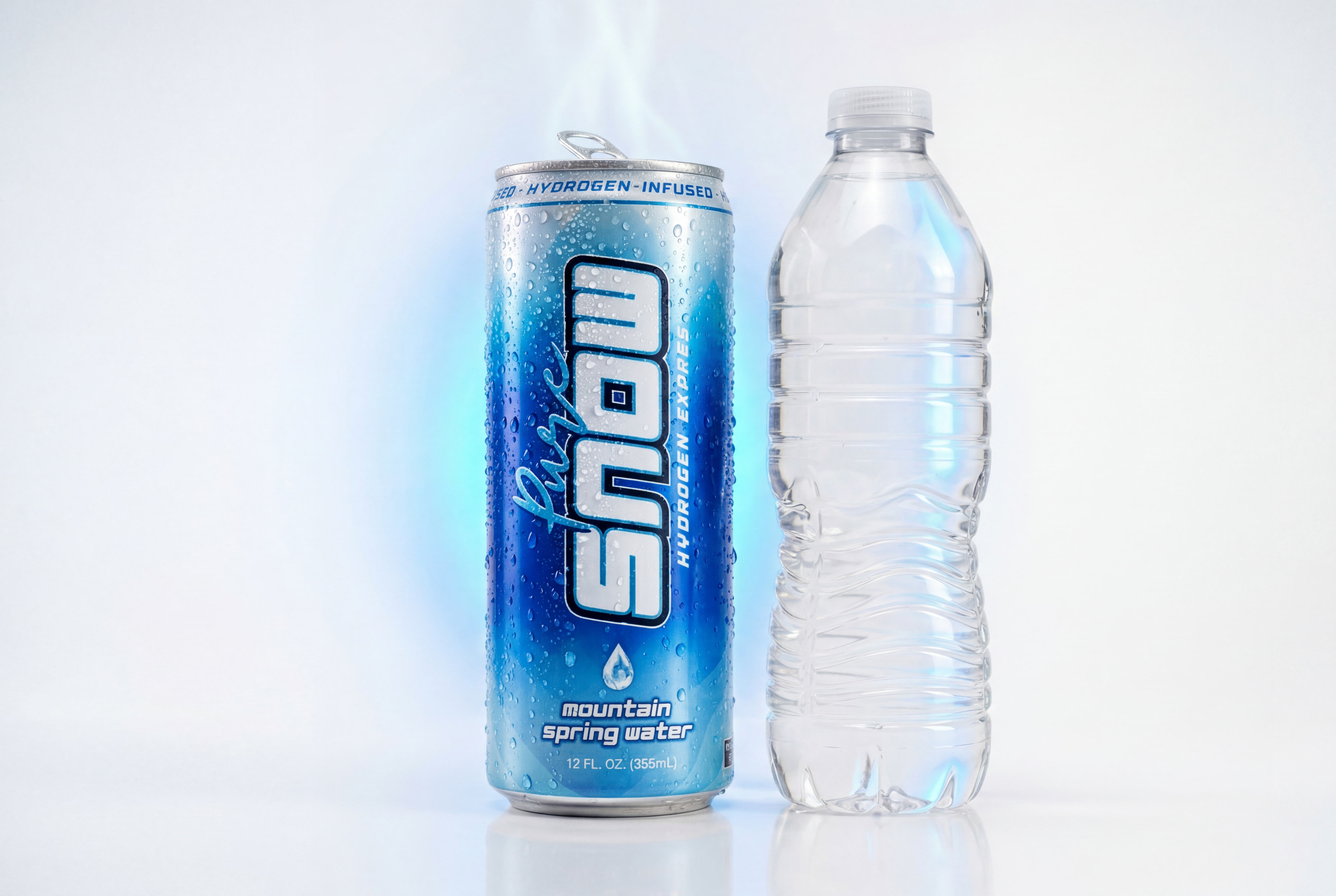
If you decide to try hydrogen water as part of your sleep routine, two practical factors deserve attention. First, concentration. Molecular hydrogen is the smallest molecule in existence and escapes easily from liquid, so the water you drink needs to be packaged in a way that preserves its potency. Aluminum cans provide a far better hydrogen barrier than plastic bottles, which is why Pure Snow cans its hydrogen-infused mountain spring water in aluminum, locking in a meaningful therapeutic concentration from filling to first sip.
Second, timing. Because hydrogen isn't a sedative, you don't need to drink it right before bed the way you'd take melatonin. Many people drink hydrogen water in the evening as part of a wind-down routine, while others drink it throughout the day to keep oxidative stress lower overall. Consistency appears to matter more than precise timing; the four-week study mentioned above involved daily consumption, not occasional use. Building it into your daily rhythm, the same way you'd approach any wellness habit, is the most realistic path to noticing a difference. If you have questions about serving size, daily amounts, or how to fit hydrogen water into your routine, our frequently asked questions page is a good place to start.
CAN YOU COMBINE BOTH APPROACHES?
Here's the good news: this isn't necessarily an either-or decision. Because hydrogen water has no known interactions and no sedative properties, it can complement other healthy sleep practices, consistent bedtimes, limited evening screen time, a cool dark bedroom, and, if your doctor recommends it, short-term use of a sleep aid. Think of hydrogen water as foundational support rather than a quick fix. It works on the terrain of your physiology, while behavioral changes and targeted interventions handle the rest. That said, always talk to your healthcare provider before making changes to any sleep medication regimen.
THE BOTTOM LINE ON HYDROGEN WATER AND SLEEP
Conventional sleep aids and hydrogen water are solving different problems. One forces sleep; the other supports the conditions that make natural sleep possible. For anyone dealing with occasional restlessness tied to stress, training load, or everyday oxidative wear, hydrogen water represents a gentle, evidence-supported option with essentially zero downside risk. The research is still growing, and no one should expect hydrogen water to cure chronic insomnia overnight, but as a daily habit that supports mood, autonomic balance, and cellular health, it earns a legitimate place in the sleep conversation.
KEY TAKEAWAY: Hydrogen water doesn't sedate you like conventional sleep aids; instead, it supports better sleep from the bottom up by reducing oxidative stress and helping balance the autonomic nervous system, with research showing improved mood and anxiety after four weeks of daily use.
If better rest is your goal, hydrogen water is one of the simplest, safest habits you can add to your evening routine, and Pure Snow makes it effortless with premium hydrogen-infused mountain spring water sealed in potency-preserving aluminum cans. Explore the Pure Snow shop today and taste what a difference real molecular hydrogen can make.
FAQ
Q: Should I drink hydrogen water right before bed?
A: You don't have to, since hydrogen water isn't a sedative and won't make you drowsy on demand. Many people enjoy it in the evening as part of a wind-down routine, but daily consistency matters more than exact timing. The key research on mood and autonomic function involved drinking it daily over several weeks.
Q: Will hydrogen water make me groggy in the morning like melatonin can?
A: No. Molecular hydrogen has no sedative properties, so there's no next-day grogginess, hangover effect, or dependency risk. Any hydrogen your body doesn't use is simply exhaled or converted to water.
Q: How long does it take to notice sleep-related benefits from hydrogen water?
A: Research suggests benefits like improved mood, reduced anxiety, and better autonomic nerve function emerge over roughly four weeks of consistent daily consumption. Individual results vary, so treat hydrogen water as a daily habit rather than a one-time fix, and give it at least a month before evaluating.
Back to BlogAPPROACH ONE: CONVENTIONAL SLEEP AIDS
The traditional route to better sleep usually involves supplements or medications designed to directly induce drowsiness. Melatonin is the most popular over-the-counter option, working by signaling to your brain that it's time to wind down. Prescription sleep medications go further, actively sedating the nervous system. These approaches share a common philosophy: force the body toward sleep by chemically nudging or overriding its natural systems.
The upside is that they often work quickly. The downside is well documented. Melatonin can cause grogginess, vivid dreams, and diminishing returns with regular use. Prescription sleep aids carry risks of dependency, next-day impairment, and disrupted sleep architecture, meaning you may be unconscious for eight hours without actually getting restorative rest. Perhaps most importantly, these approaches treat the symptom, difficulty falling asleep, without addressing underlying contributors like oxidative stress, inflammation, or an overactive stress response.
APPROACH TWO: HYDROGEN WATER AND SLEEP SUPPORT
Hydrogen water takes a fundamentally different path. Rather than sedating you, molecular hydrogen works at the cellular level as a selective antioxidant, neutralizing the most harmful free radicals in your body while leaving beneficial signaling molecules alone. Why does that matter for sleep? Because oxidative stress and poor sleep are locked in a vicious cycle. Elevated oxidative stress disrupts the nervous system's ability to downshift into rest mode, and poor sleep in turn increases oxidative stress. Breaking that cycle is where hydrogen shows promise.
There's also the autonomic nervous system to consider. Quality sleep depends on your parasympathetic nervous system, the rest-and-digest branch, taking over from the sympathetic fight-or-flight response. According to a study published in Medical Gas Research, adults who drank hydrogen-rich water for four weeks showed improvements in mood, reduced anxiety, and better autonomic nerve function compared to placebo. Those are precisely the physiological conditions that set the stage for deeper, more restorative sleep. Hydrogen doesn't knock you out; it helps create an internal environment where sleep can happen naturally.
HOW THE TWO APPROACHES STACK UP
When you place these approaches side by side, the differences become clear. Conventional sleep aids offer speed but come with tradeoffs: tolerance, dependency risk, and morning grogginess. Hydrogen water offers no sedative effect at all, which means it won't make you drowsy on demand, but it also carries none of those downsides. Molecular hydrogen has an outstanding safety profile, with no known toxicity even at high concentrations, and it simply converts to water vapor or is exhaled if your body doesn't use it.
The mechanism is the other major difference. Sleep aids work top-down, targeting the brain's sleep switches directly. Hydrogen works bottom-up, reducing the cellular stressors, oxidative damage, low-grade inflammation, and autonomic imbalance, that interfere with sleep in the first place. For people whose sleep issues stem from stress, intense training, or general wear and tear on the body, that bottom-up approach addresses root causes rather than masking symptoms. If you're curious about the mechanics of how dissolved hydrogen gas actually functions in the body, our breakdown of how hydrogen water works covers the science in plain language, including why hydrogen concentration measured in PPM matters so much.
WHY DELIVERY AND TIMING MATTER
If you decide to try hydrogen water as part of your sleep routine, two practical factors deserve attention. First, concentration. Molecular hydrogen is the smallest molecule in existence and escapes easily from liquid, so the water you drink needs to be packaged in a way that preserves its potency. Aluminum cans provide a far better hydrogen barrier than plastic bottles, which is why Pure Snow cans its hydrogen-infused mountain spring water in aluminum, locking in a meaningful therapeutic concentration from filling to first sip.
Second, timing. Because hydrogen isn't a sedative, you don't need to drink it right before bed the way you'd take melatonin. Many people drink hydrogen water in the evening as part of a wind-down routine, while others drink it throughout the day to keep oxidative stress lower overall. Consistency appears to matter more than precise timing; the four-week study mentioned above involved daily consumption, not occasional use. Building it into your daily rhythm, the same way you'd approach any wellness habit, is the most realistic path to noticing a difference. If you have questions about serving size, daily amounts, or how to fit hydrogen water into your routine, our frequently asked questions page is a good place to start.
CAN YOU COMBINE BOTH APPROACHES?
Here's the good news: this isn't necessarily an either-or decision. Because hydrogen water has no known interactions and no sedative properties, it can complement other healthy sleep practices, consistent bedtimes, limited evening screen time, a cool dark bedroom, and, if your doctor recommends it, short-term use of a sleep aid. Think of hydrogen water as foundational support rather than a quick fix. It works on the terrain of your physiology, while behavioral changes and targeted interventions handle the rest. That said, always talk to your healthcare provider before making changes to any sleep medication regimen.
THE BOTTOM LINE ON HYDROGEN WATER AND SLEEP
Conventional sleep aids and hydrogen water are solving different problems. One forces sleep; the other supports the conditions that make natural sleep possible. For anyone dealing with occasional restlessness tied to stress, training load, or everyday oxidative wear, hydrogen water represents a gentle, evidence-supported option with essentially zero downside risk. The research is still growing, and no one should expect hydrogen water to cure chronic insomnia overnight, but as a daily habit that supports mood, autonomic balance, and cellular health, it earns a legitimate place in the sleep conversation.
KEY TAKEAWAY: Hydrogen water doesn't sedate you like conventional sleep aids; instead, it supports better sleep from the bottom up by reducing oxidative stress and helping balance the autonomic nervous system, with research showing improved mood and anxiety after four weeks of daily use.
If better rest is your goal, hydrogen water is one of the simplest, safest habits you can add to your evening routine, and Pure Snow makes it effortless with premium hydrogen-infused mountain spring water sealed in potency-preserving aluminum cans. Explore the Pure Snow shop today and taste what a difference real molecular hydrogen can make.
FAQ
Q: Should I drink hydrogen water right before bed?
A: You don't have to, since hydrogen water isn't a sedative and won't make you drowsy on demand. Many people enjoy it in the evening as part of a wind-down routine, but daily consistency matters more than exact timing. The key research on mood and autonomic function involved drinking it daily over several weeks.
Q: Will hydrogen water make me groggy in the morning like melatonin can?
A: No. Molecular hydrogen has no sedative properties, so there's no next-day grogginess, hangover effect, or dependency risk. Any hydrogen your body doesn't use is simply exhaled or converted to water.
Q: How long does it take to notice sleep-related benefits from hydrogen water?
A: Research suggests benefits like improved mood, reduced anxiety, and better autonomic nerve function emerge over roughly four weeks of consistent daily consumption. Individual results vary, so treat hydrogen water as a daily habit rather than a one-time fix, and give it at least a month before evaluating.