How Much Hydrogen Water Should You Drink Per Day? Your Questions Answered
If you've recently added hydrogen water to your wellness routine this October 2026, you probably have a few questions. The three we hear most often are: How much hydrogen water should I drink per day to actually feel a difference? Does drinking more give me better results? And does the timing of when I drink it matter? These are smart questions, because unlike regular hydration, hydrogen water works on a dose-dependent basis tied to the amount of dissolved molecular hydrogen you consume, not just the volume of water. In this post, we'll answer all three questions clearly, walk through what the research actually suggests, and help you build a daily routine that makes sense for your goals.
HOW MUCH HYDROGEN WATER SHOULD YOU DRINK PER DAY?
Let's start with the big one. Most clinical research on hydrogen water has used daily intakes ranging from about 0.5 to 1.5 liters per day, typically delivering somewhere between 1 and 3 milligrams of molecular hydrogen daily. For most healthy adults, one to three servings of high-concentration hydrogen water per day lands comfortably within the range used in studies that reported measurable benefits.
Here's the detail that matters most: concentration counts more than volume. A liter of weakly infused hydrogen water at 0.3 PPM delivers far less molecular hydrogen than a single 16-ounce serving at 2.0 PPM or higher. PPM stands for parts per million, and it measures how much dissolved hydrogen gas is actually in the water. If you're drinking a product with a low or unverified concentration, you'd need to drink significantly more volume to reach a meaningful daily hydrogen dose. That's why understanding how hydrogen water is made and measured is just as important as counting your servings.
The scientific interest in molecular hydrogen traces back to a landmark 2007 paper in Nature Medicine, where researchers demonstrated that hydrogen acts as a selective antioxidant, neutralizing the most harmful free radicals while leaving beneficial signaling molecules alone. Since then, dozens of human trials have explored daily hydrogen water intake for exercise recovery, metabolic health, and oxidative stress, and the doses used in those studies form the basis of today's practical recommendations.
A reasonable starting point for most people: one can or bottle of high-PPM hydrogen water per day for the first week, then increase to two or three servings if you're targeting specific goals like athletic recovery or sustained energy.
DOES DRINKING MORE HYDROGEN WATER GIVE YOU BETTER RESULTS?
Up to a point, yes, but the relationship isn't unlimited. Molecular hydrogen is a gas, and your body can only absorb and utilize so much at once. Once your tissues are saturated, excess hydrogen is simply exhaled through your lungs within an hour or so. This is actually one of hydrogen water's most reassuring safety features: there's no known mechanism for hydrogen to accumulate to harmful levels, and studies using much higher doses than typical consumption have reported excellent safety profiles.
That said, drinking five or six servings a day won't give you five or six times the benefit. Research suggests the sweet spot for most adults is a total daily hydrogen intake of roughly 1 to 3 milligrams, which you can reach with two to three servings of properly concentrated hydrogen water. Beyond that, you're mostly getting excellent hydration, which is never a bad thing, but the hydrogen-specific returns diminish.
Instead of chasing volume, focus on consistency. The studies showing the most compelling outcomes involved daily intake over weeks or months, not occasional large doses. Think of hydrogen water like exercise or sleep: steady, repeated exposure is what moves the needle.
DOES TIMING MATTER? WHEN SHOULD YOU DRINK IT?
Timing matters more than most people realize, for two reasons. First, molecular hydrogen escapes from water quickly once a container is opened, since hydrogen is the smallest molecule in existence and diffuses out rapidly. Drink your hydrogen water promptly after opening rather than sipping it over several hours. An open can left on your desk all afternoon is mostly just spring water by the time you finish it.
Second, strategic timing can align hydrogen intake with moments of elevated oxidative stress. Popular windows include first thing in the morning on an empty stomach, when absorption tends to be efficient; 30 to 60 minutes before exercise, since several studies on athletes used pre-workout dosing; and immediately after training, when your body is managing exercise-induced oxidative stress. If you drink two servings a day, a morning serving plus a workout-adjacent serving is a simple, effective pattern.
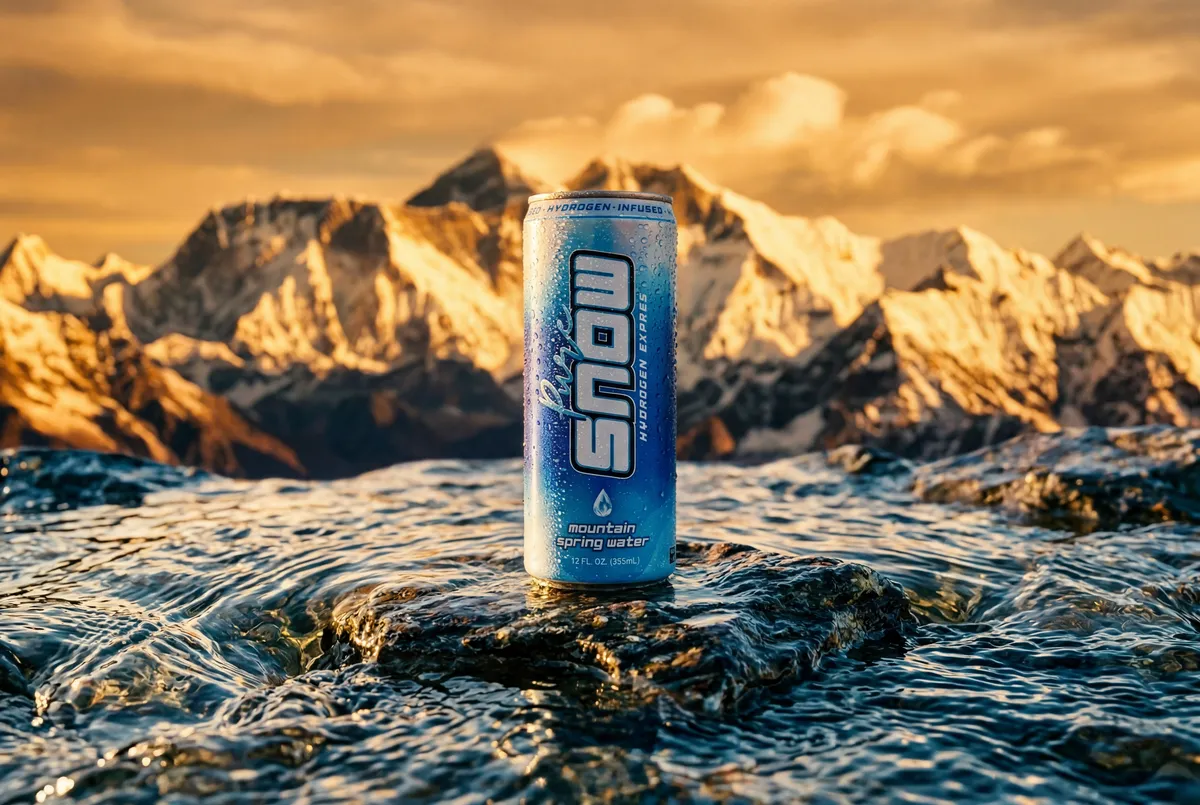
One more timing-related note: packaging determines how much hydrogen is left by the time you drink it. Hydrogen escapes through plastic over time, which is why aluminum cans have become the gold standard for preserving concentration from production to the moment you crack one open. It's one of the reasons we built Pure Snow around canned mountain spring water rather than plastic bottles.
BUILDING YOUR DAILY HYDROGEN WATER ROUTINE
Pulling it all together, here's a practical framework. For general wellness, drink one to two servings of high-PPM hydrogen water daily, with one in the morning. For athletic recovery or higher activity levels, aim for two to three servings, timed around your training. In every case, drink each serving soon after opening, stay consistent for at least four weeks before judging results, and remember that hydrogen water supplements your overall hydration rather than replacing it; keep drinking regular water throughout the day too.
If cost is a consideration when planning a daily habit, a subscription model can make consistent intake far more affordable, and you can compare options on our pricing page to find a cadence that fits your routine.
KEY TAKEAWAY: For most healthy adults, one to three servings of high-concentration hydrogen water per day, delivering roughly 1 to 3 milligrams of molecular hydrogen, matches the doses used in clinical research. Consistency and concentration matter more than sheer volume, so drink it fresh and make it a daily habit.
Ready to make hydrogen water part of your everyday routine? Explore Pure Snow's premium hydrogen-infused mountain spring water and taste the difference a daily habit can make at our shop.
FAQ
Q: Can you drink too much hydrogen water?
A: There's no known toxicity from drinking hydrogen water, and excess molecular hydrogen is simply exhaled through your lungs. The practical limit is the same as regular water intake, so drink sensible volumes. Beyond two to three high-PPM servings daily, extra hydrogen offers diminishing returns.
Q: Is it better to drink hydrogen water on an empty stomach?
A: Many people prefer drinking it first thing in the morning before eating, and some researchers suggest absorption may be more efficient on an empty stomach. However, the most important factors are concentration, freshness, and daily consistency. Drink it whenever you can do so reliably every day.
Q: How long does it take to notice benefits from daily hydrogen water?
A: Most clinical studies measured outcomes after two to twelve weeks of consistent daily intake. Some people report feeling differences in energy or recovery within the first week or two, but plan on at least four weeks of daily use before evaluating results.
Back to BlogHOW MUCH HYDROGEN WATER SHOULD YOU DRINK PER DAY?
Let's start with the big one. Most clinical research on hydrogen water has used daily intakes ranging from about 0.5 to 1.5 liters per day, typically delivering somewhere between 1 and 3 milligrams of molecular hydrogen daily. For most healthy adults, one to three servings of high-concentration hydrogen water per day lands comfortably within the range used in studies that reported measurable benefits.
Here's the detail that matters most: concentration counts more than volume. A liter of weakly infused hydrogen water at 0.3 PPM delivers far less molecular hydrogen than a single 16-ounce serving at 2.0 PPM or higher. PPM stands for parts per million, and it measures how much dissolved hydrogen gas is actually in the water. If you're drinking a product with a low or unverified concentration, you'd need to drink significantly more volume to reach a meaningful daily hydrogen dose. That's why understanding how hydrogen water is made and measured is just as important as counting your servings.
The scientific interest in molecular hydrogen traces back to a landmark 2007 paper in Nature Medicine, where researchers demonstrated that hydrogen acts as a selective antioxidant, neutralizing the most harmful free radicals while leaving beneficial signaling molecules alone. Since then, dozens of human trials have explored daily hydrogen water intake for exercise recovery, metabolic health, and oxidative stress, and the doses used in those studies form the basis of today's practical recommendations.
A reasonable starting point for most people: one can or bottle of high-PPM hydrogen water per day for the first week, then increase to two or three servings if you're targeting specific goals like athletic recovery or sustained energy.
DOES DRINKING MORE HYDROGEN WATER GIVE YOU BETTER RESULTS?
Up to a point, yes, but the relationship isn't unlimited. Molecular hydrogen is a gas, and your body can only absorb and utilize so much at once. Once your tissues are saturated, excess hydrogen is simply exhaled through your lungs within an hour or so. This is actually one of hydrogen water's most reassuring safety features: there's no known mechanism for hydrogen to accumulate to harmful levels, and studies using much higher doses than typical consumption have reported excellent safety profiles.
That said, drinking five or six servings a day won't give you five or six times the benefit. Research suggests the sweet spot for most adults is a total daily hydrogen intake of roughly 1 to 3 milligrams, which you can reach with two to three servings of properly concentrated hydrogen water. Beyond that, you're mostly getting excellent hydration, which is never a bad thing, but the hydrogen-specific returns diminish.
Instead of chasing volume, focus on consistency. The studies showing the most compelling outcomes involved daily intake over weeks or months, not occasional large doses. Think of hydrogen water like exercise or sleep: steady, repeated exposure is what moves the needle.
DOES TIMING MATTER? WHEN SHOULD YOU DRINK IT?
Timing matters more than most people realize, for two reasons. First, molecular hydrogen escapes from water quickly once a container is opened, since hydrogen is the smallest molecule in existence and diffuses out rapidly. Drink your hydrogen water promptly after opening rather than sipping it over several hours. An open can left on your desk all afternoon is mostly just spring water by the time you finish it.
Second, strategic timing can align hydrogen intake with moments of elevated oxidative stress. Popular windows include first thing in the morning on an empty stomach, when absorption tends to be efficient; 30 to 60 minutes before exercise, since several studies on athletes used pre-workout dosing; and immediately after training, when your body is managing exercise-induced oxidative stress. If you drink two servings a day, a morning serving plus a workout-adjacent serving is a simple, effective pattern.
One more timing-related note: packaging determines how much hydrogen is left by the time you drink it. Hydrogen escapes through plastic over time, which is why aluminum cans have become the gold standard for preserving concentration from production to the moment you crack one open. It's one of the reasons we built Pure Snow around canned mountain spring water rather than plastic bottles.
BUILDING YOUR DAILY HYDROGEN WATER ROUTINE
Pulling it all together, here's a practical framework. For general wellness, drink one to two servings of high-PPM hydrogen water daily, with one in the morning. For athletic recovery or higher activity levels, aim for two to three servings, timed around your training. In every case, drink each serving soon after opening, stay consistent for at least four weeks before judging results, and remember that hydrogen water supplements your overall hydration rather than replacing it; keep drinking regular water throughout the day too.
If cost is a consideration when planning a daily habit, a subscription model can make consistent intake far more affordable, and you can compare options on our pricing page to find a cadence that fits your routine.
KEY TAKEAWAY: For most healthy adults, one to three servings of high-concentration hydrogen water per day, delivering roughly 1 to 3 milligrams of molecular hydrogen, matches the doses used in clinical research. Consistency and concentration matter more than sheer volume, so drink it fresh and make it a daily habit.
Ready to make hydrogen water part of your everyday routine? Explore Pure Snow's premium hydrogen-infused mountain spring water and taste the difference a daily habit can make at our shop.
FAQ
Q: Can you drink too much hydrogen water?
A: There's no known toxicity from drinking hydrogen water, and excess molecular hydrogen is simply exhaled through your lungs. The practical limit is the same as regular water intake, so drink sensible volumes. Beyond two to three high-PPM servings daily, extra hydrogen offers diminishing returns.
Q: Is it better to drink hydrogen water on an empty stomach?
A: Many people prefer drinking it first thing in the morning before eating, and some researchers suggest absorption may be more efficient on an empty stomach. However, the most important factors are concentration, freshness, and daily consistency. Drink it whenever you can do so reliably every day.
Q: How long does it take to notice benefits from daily hydrogen water?
A: Most clinical studies measured outcomes after two to twelve weeks of consistent daily intake. Some people report feeling differences in energy or recovery within the first week or two, but plan on at least four weeks of daily use before evaluating results.