How Is Hydrogen Water Made? Your Most Common Questions, Answered
If you've been hearing about hydrogen water this October 2026, you probably have a few questions rattling around in your head. How is hydrogen water made in the first place? Is it just regular water with bubbles? And does the way it's made actually change how well it works? These are three of the most common questions we hear at Pure Snow, and they deserve clear, honest answers. Molecular hydrogen is the smallest molecule in existence, which makes it both remarkably effective in the body and remarkably tricky to keep dissolved in water. In this post, we'll walk through exactly how hydrogen water is produced, why the method matters more than most people realize, and what to look for when choosing a hydrogen water that actually delivers what the label promises.
QUESTION ONE: WHAT ACTUALLY HAPPENS WHEN HYDROGEN WATER IS MADE?
At its core, making hydrogen water means dissolving molecular hydrogen gas (H2) into water. This is different from the hydrogen atoms already bonded inside the H2O molecule itself. Those atoms are chemically locked in place and your body can't use them as free hydrogen. The goal of hydrogen water production is to saturate water with free-floating H2 gas, which research suggests can act as a selective antioxidant once consumed. In fact, the modern interest in hydrogen water largely traces back to a landmark 2007 study published in Nature Medicine, which found that molecular hydrogen can selectively neutralize harmful free radicals. Since then, researchers and manufacturers have focused on one central challenge: getting enough hydrogen into the water and keeping it there until you drink it.
There are three primary methods used to make hydrogen water today. The first is electrolysis, where an electric current is passed through water to split H2O molecules, releasing hydrogen gas that dissolves back into the water. This is the method used by most home hydrogen water machines and bottles. The second is direct gas infusion, where purified hydrogen gas is injected into water under pressure, allowing it to dissolve at higher concentrations. This is the method favored by premium producers because it offers precise control over the final hydrogen concentration. The third is chemical reaction, typically using magnesium tablets or sticks that react with water to produce hydrogen gas. This method is portable but offers the least consistency and can alter the taste of the water.
QUESTION TWO: DOES THE PRODUCTION METHOD CHANGE THE QUALITY?
Significantly, yes. The method used determines two critical things: the concentration of dissolved hydrogen, measured in parts per million (PPM), and the purity of the final product. Electrolysis machines vary widely in output, with many home units producing between 0.3 and 0.8 PPM. Cheaper electrolysis devices can also introduce unwanted byproducts like ozone or chlorine if the water isn't properly filtered first. Magnesium-based tablets typically produce inconsistent concentrations and leave behind dissolved magnesium, which changes the water's mineral profile and flavor.
Pressurized direct infusion is generally considered the gold standard. Because hydrogen is injected under controlled pressure, producers can reliably achieve concentrations well above what most home devices manage, often in the range of 1.6 PPM or higher, which aligns with the saturation levels used in many clinical studies. This is the approach Pure Snow uses, infusing pristine mountain spring water with high-purity molecular hydrogen under pressure before sealing it immediately. You can see a full breakdown of the process, including how we measure and verify PPM, on our how it works page.
QUESTION THREE: HOW DO YOU KEEP HYDROGEN IN THE WATER?
This is the question most people never think to ask, and it might be the most important one. Hydrogen is the lightest, smallest molecule in the universe, and it escapes from water with astonishing speed. Pour hydrogen water into an open glass and a meaningful portion of the dissolved H2 can dissipate within 30 to 60 minutes. This is why packaging is not an afterthought in hydrogen water production. It's a core part of how the product is made.
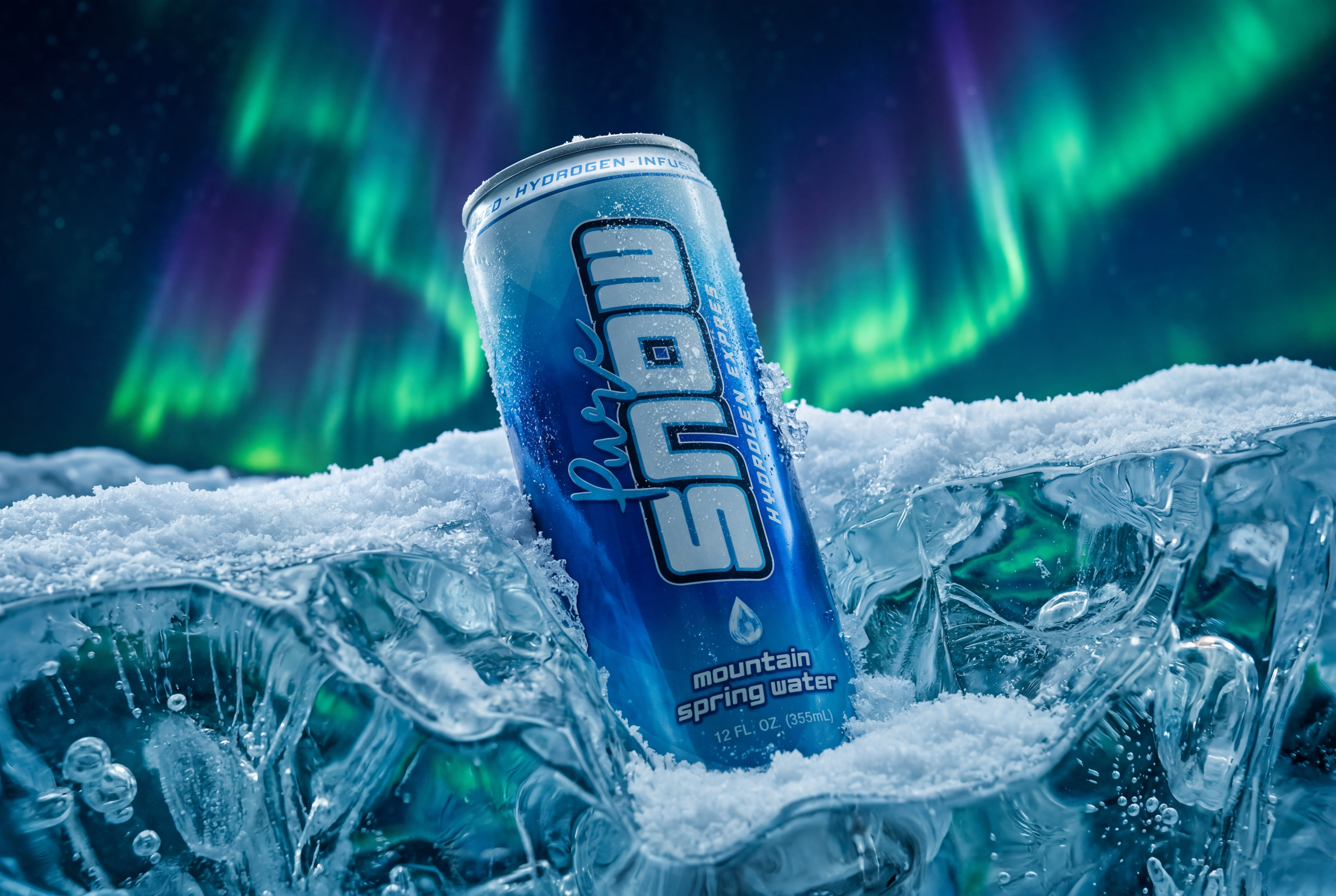
Plastic bottles are essentially useless for hydrogen water because H2 molecules are small enough to pass directly through plastic over time. Glass performs better but is heavy, fragile, and still relies on the cap seal. Aluminum cans are widely regarded as the best option because aluminum is impermeable to hydrogen gas, and a properly sealed can maintains internal pressure that keeps the hydrogen dissolved until the moment you open it. That's why Pure Snow is canned, not bottled. The hydrogen concentration you pay for is the concentration you actually drink, whether you open the can the week it arrives or months later.
WHAT ABOUT THE WATER ITSELF?
One overlooked aspect of how hydrogen water is made is the quality of the source water. Hydrogen dissolves more effectively in clean, cold water with low levels of dissolved gases competing for space. Water loaded with impurities or already saturated with other gases accepts less hydrogen. This is one reason premium producers start with spring or purified water rather than municipal tap water. At Pure Snow, we begin with naturally filtered mountain spring water, which gives the hydrogen infusion process an ideal starting point and gives you a crisp, clean taste without any chemical or metallic notes.
SHOULD YOU MAKE IT AT HOME OR BUY IT READY-MADE?
Home hydrogen generators offer convenience, but they come with trade-offs: upfront equipment costs, maintenance, inconsistent PPM output, and the fact that you need to drink the water almost immediately after generating it. Ready-made canned hydrogen water removes the guesswork. The concentration is verified at production, the aluminum can preserves it, and there's no device to clean or replace. If you're curious about how the cost compares over time, our pricing page breaks down per-can costs and subscribe-and-save options so you can do the math for your own routine.
KEY TAKEAWAY: Hydrogen water is made by dissolving molecular hydrogen gas into water through electrolysis, chemical reaction, or pressurized direct infusion, with pressurized infusion into sealed aluminum cans delivering the highest and most stable concentrations. The production and packaging method directly determines how much hydrogen actually reaches your glass.
Now that you know exactly how hydrogen water is made, you can judge any product by the standards that matter: infusion method, verified PPM, and hydrogen-tight packaging. If you'd like to taste the difference that pressurized infusion and pristine mountain spring water make, explore Pure Snow and try a can for yourself today.
FAQ
Q: What is the best method for making hydrogen water?
A: Pressurized direct gas infusion is widely considered the best method because it achieves the highest and most consistent hydrogen concentrations. It also avoids the byproducts and mineral changes that can come with electrolysis machines or magnesium tablets.
Q: Can I make hydrogen water at home?
A: Yes, home electrolysis bottles and magnesium tablets can generate hydrogen water, but concentrations are often lower and less consistent than professionally infused products. You also need to drink it immediately, since hydrogen escapes from open containers within about an hour.
Q: Why is hydrogen water sold in aluminum cans instead of plastic bottles?
A: Hydrogen is the smallest molecule in existence and can escape directly through plastic over time. Aluminum is impermeable to hydrogen gas, so a sealed can preserves the full concentration until you open it.
Back to BlogQUESTION ONE: WHAT ACTUALLY HAPPENS WHEN HYDROGEN WATER IS MADE?
At its core, making hydrogen water means dissolving molecular hydrogen gas (H2) into water. This is different from the hydrogen atoms already bonded inside the H2O molecule itself. Those atoms are chemically locked in place and your body can't use them as free hydrogen. The goal of hydrogen water production is to saturate water with free-floating H2 gas, which research suggests can act as a selective antioxidant once consumed. In fact, the modern interest in hydrogen water largely traces back to a landmark 2007 study published in Nature Medicine, which found that molecular hydrogen can selectively neutralize harmful free radicals. Since then, researchers and manufacturers have focused on one central challenge: getting enough hydrogen into the water and keeping it there until you drink it.
There are three primary methods used to make hydrogen water today. The first is electrolysis, where an electric current is passed through water to split H2O molecules, releasing hydrogen gas that dissolves back into the water. This is the method used by most home hydrogen water machines and bottles. The second is direct gas infusion, where purified hydrogen gas is injected into water under pressure, allowing it to dissolve at higher concentrations. This is the method favored by premium producers because it offers precise control over the final hydrogen concentration. The third is chemical reaction, typically using magnesium tablets or sticks that react with water to produce hydrogen gas. This method is portable but offers the least consistency and can alter the taste of the water.
QUESTION TWO: DOES THE PRODUCTION METHOD CHANGE THE QUALITY?
Significantly, yes. The method used determines two critical things: the concentration of dissolved hydrogen, measured in parts per million (PPM), and the purity of the final product. Electrolysis machines vary widely in output, with many home units producing between 0.3 and 0.8 PPM. Cheaper electrolysis devices can also introduce unwanted byproducts like ozone or chlorine if the water isn't properly filtered first. Magnesium-based tablets typically produce inconsistent concentrations and leave behind dissolved magnesium, which changes the water's mineral profile and flavor.
Pressurized direct infusion is generally considered the gold standard. Because hydrogen is injected under controlled pressure, producers can reliably achieve concentrations well above what most home devices manage, often in the range of 1.6 PPM or higher, which aligns with the saturation levels used in many clinical studies. This is the approach Pure Snow uses, infusing pristine mountain spring water with high-purity molecular hydrogen under pressure before sealing it immediately. You can see a full breakdown of the process, including how we measure and verify PPM, on our how it works page.
QUESTION THREE: HOW DO YOU KEEP HYDROGEN IN THE WATER?
This is the question most people never think to ask, and it might be the most important one. Hydrogen is the lightest, smallest molecule in the universe, and it escapes from water with astonishing speed. Pour hydrogen water into an open glass and a meaningful portion of the dissolved H2 can dissipate within 30 to 60 minutes. This is why packaging is not an afterthought in hydrogen water production. It's a core part of how the product is made.
Plastic bottles are essentially useless for hydrogen water because H2 molecules are small enough to pass directly through plastic over time. Glass performs better but is heavy, fragile, and still relies on the cap seal. Aluminum cans are widely regarded as the best option because aluminum is impermeable to hydrogen gas, and a properly sealed can maintains internal pressure that keeps the hydrogen dissolved until the moment you open it. That's why Pure Snow is canned, not bottled. The hydrogen concentration you pay for is the concentration you actually drink, whether you open the can the week it arrives or months later.
WHAT ABOUT THE WATER ITSELF?
One overlooked aspect of how hydrogen water is made is the quality of the source water. Hydrogen dissolves more effectively in clean, cold water with low levels of dissolved gases competing for space. Water loaded with impurities or already saturated with other gases accepts less hydrogen. This is one reason premium producers start with spring or purified water rather than municipal tap water. At Pure Snow, we begin with naturally filtered mountain spring water, which gives the hydrogen infusion process an ideal starting point and gives you a crisp, clean taste without any chemical or metallic notes.
SHOULD YOU MAKE IT AT HOME OR BUY IT READY-MADE?
Home hydrogen generators offer convenience, but they come with trade-offs: upfront equipment costs, maintenance, inconsistent PPM output, and the fact that you need to drink the water almost immediately after generating it. Ready-made canned hydrogen water removes the guesswork. The concentration is verified at production, the aluminum can preserves it, and there's no device to clean or replace. If you're curious about how the cost compares over time, our pricing page breaks down per-can costs and subscribe-and-save options so you can do the math for your own routine.
KEY TAKEAWAY: Hydrogen water is made by dissolving molecular hydrogen gas into water through electrolysis, chemical reaction, or pressurized direct infusion, with pressurized infusion into sealed aluminum cans delivering the highest and most stable concentrations. The production and packaging method directly determines how much hydrogen actually reaches your glass.
Now that you know exactly how hydrogen water is made, you can judge any product by the standards that matter: infusion method, verified PPM, and hydrogen-tight packaging. If you'd like to taste the difference that pressurized infusion and pristine mountain spring water make, explore Pure Snow and try a can for yourself today.
FAQ
Q: What is the best method for making hydrogen water?
A: Pressurized direct gas infusion is widely considered the best method because it achieves the highest and most consistent hydrogen concentrations. It also avoids the byproducts and mineral changes that can come with electrolysis machines or magnesium tablets.
Q: Can I make hydrogen water at home?
A: Yes, home electrolysis bottles and magnesium tablets can generate hydrogen water, but concentrations are often lower and less consistent than professionally infused products. You also need to drink it immediately, since hydrogen escapes from open containers within about an hour.
Q: Why is hydrogen water sold in aluminum cans instead of plastic bottles?
A: Hydrogen is the smallest molecule in existence and can escape directly through plastic over time. Aluminum is impermeable to hydrogen gas, so a sealed can preserves the full concentration until you open it.