How Is Hydrogen Water Made? Your Most Common Questions Answered
If you've been curious about hydrogen water this August 2026, you're not alone. As more people discover this functional beverage, three questions come up again and again: How is hydrogen water actually made? Does the production method affect how much hydrogen ends up in the water? And why does the packaging matter so much? These are smart questions, because the answers determine whether the hydrogen water you're drinking delivers a meaningful concentration of molecular hydrogen or has already lost most of it before you take your first sip. In this post, we'll answer all three questions in detail so you can understand exactly what happens between the source and your hand.
HOW IS HYDROGEN WATER ACTUALLY MADE?
Hydrogen water is regular water that has been enriched with extra molecular hydrogen gas, known chemically as H2. It's important to understand that this is different from the hydrogen already bonded inside the water molecule itself. In H2O, hydrogen atoms are chemically locked to oxygen and are not bioavailable as a therapeutic gas. Hydrogen water contains free, dissolved H2 gas suspended in the water, similar to how sparkling water contains dissolved carbon dioxide, except hydrogen gas is tasteless, odorless, and doesn't create carbonation you can feel.
There are three primary production methods used today. The first is electrolysis, where an electrical current is passed through water to split H2O molecules, generating hydrogen gas at the cathode. This is the method used by most home hydrogen water machines and bottles. The second is direct gas infusion, where purified molecular hydrogen gas is dissolved into water under pressure, much like carbonating a beverage. This method allows for precise, consistent concentrations and is typically used by premium bottled and canned hydrogen water producers. The third method uses magnesium-based tablets or sticks that react with water to release hydrogen gas, a chemical reaction approach that is convenient but often less consistent in the final concentration it delivers.
Each method produces the same molecule, H2, but they differ significantly in consistency, purity, and how much hydrogen actually remains dissolved by the time you drink it.
DOES THE PRODUCTION METHOD AFFECT HYDROGEN CONCENTRATION?
Yes, and this is where the details really matter. Hydrogen concentration is measured in parts per million, or PPM. Most research suggesting potential benefits has used water with concentrations between roughly 0.5 and 1.6 PPM or higher, so the production method needs to reliably hit that range. The scientific interest in molecular hydrogen took off after a landmark 2007 study published in Nature Medicine demonstrated that hydrogen gas can act as a selective antioxidant, neutralizing harmful free radicals without disrupting the beneficial ones your body needs for normal signaling.
Electrolysis machines can produce good concentrations, but output varies widely depending on the device quality, water source, mineral content, and how well the unit is maintained. Magnesium tablets are convenient for travel but often produce inconsistent results and can leave a mineral aftertaste. Pressurized gas infusion, when done professionally, delivers the most consistent and verifiable concentration because the process is controlled from start to finish in a production environment. At Pure Snow, we use pressurized infusion with pristine mountain spring water to achieve a reliable therapeutic-range concentration in every can. You can read more about the exact process and PPM levels on our how it works page.
Temperature and pressure also play a role. Hydrogen dissolves more readily in cold water and under pressure, which is why professional production facilities infuse chilled water in pressurized systems. This is difficult to replicate consistently at home, which is one reason ready-to-drink hydrogen water has become the preferred option for people who want dependable concentrations without the guesswork.
WHY DOES PACKAGING MATTER SO MUCH?
This is the question most people overlook, and it may be the most important one. Molecular hydrogen is the smallest molecule in the universe, which makes it remarkably good at escaping its container. Standard plastic bottles are permeable to hydrogen gas, meaning the H2 literally passes through the walls of the bottle over time. A plastic bottle of hydrogen water sitting on a shelf for weeks can lose most or all of its dissolved hydrogen before anyone ever opens it.
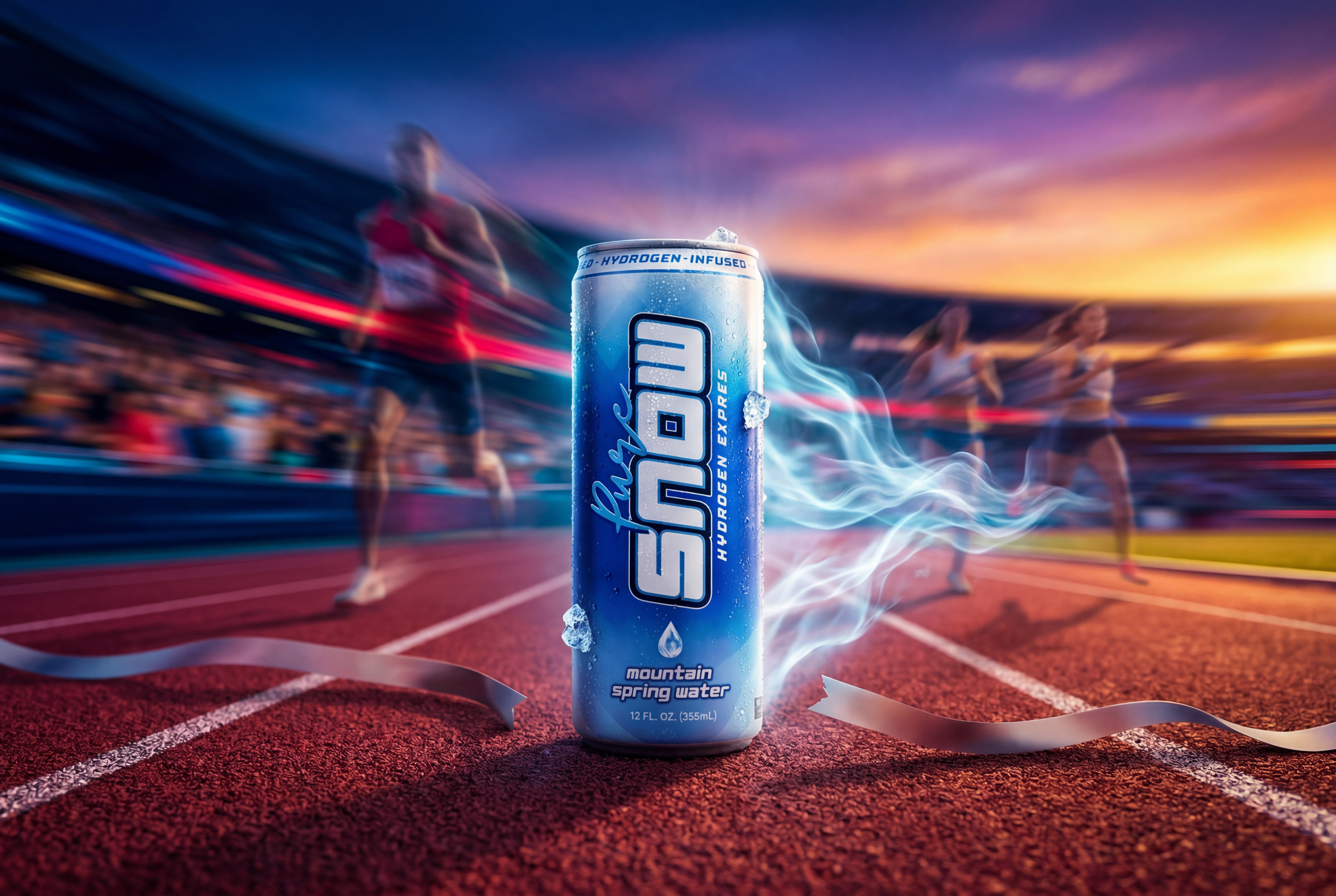
Aluminum, on the other hand, is effectively impermeable to hydrogen gas. A properly sealed aluminum can locks the hydrogen in, preserving the concentration from the moment of production until the moment you crack it open. Glass performs reasonably well too, but the seal quality matters enormously, and glass is heavier, more fragile, and less practical for an active lifestyle. This is exactly why Pure Snow chose aluminum cans from day one. It wasn't an aesthetic decision. It was a scientific one, driven by the simple reality that hydrogen water in the wrong packaging is just expensive regular water.
Once you open a can or bottle, the clock starts ticking. Dissolved hydrogen begins escaping into the air, so the best practice is to drink hydrogen water within about 15 to 30 minutes of opening it. Don't pour it into a wide glass and let it sit, and don't leave an open can on your desk for hours expecting the same potency.
WHAT SHOULD YOU LOOK FOR IN A HYDROGEN WATER PRODUCT?
Now that you understand how hydrogen water is made, evaluating products becomes much easier. Look for a stated PPM concentration, ideally at or above 1.0 PPM at the time of consumption, not just at the time of production. Look for aluminum packaging or another hydrogen-impermeable container. Look for a high-quality water source, since the base water affects taste and mineral content. And look for transparency, because reputable brands will explain their production process openly rather than hiding behind vague marketing language. If you have more questions about concentrations, sourcing, or shelf life, our FAQ page covers the details.
KEY TAKEAWAY: Hydrogen water is made by dissolving molecular hydrogen gas into water through electrolysis, pressurized gas infusion, or magnesium reactions, but the production method and packaging determine whether meaningful hydrogen actually reaches your glass. Pressurized infusion into aluminum cans offers the most consistent concentration and the best protection against hydrogen loss.
Now that you know exactly how hydrogen water is made and what separates a quality product from a gimmick, you're equipped to make an informed choice. If you're ready to taste the difference that pristine mountain spring water and precision hydrogen infusion make, try Pure Snow for yourself and experience hydrogen water done right.
FAQ
Q: Can I make hydrogen water at home?
A: Yes, home electrolysis bottles and magnesium tablets can produce hydrogen water, but concentrations vary widely and are difficult to verify without testing equipment. Professionally infused and canned hydrogen water offers more consistent, verifiable concentrations without maintenance or guesswork.
Q: How long does hydrogen stay in the water after production?
A: In a sealed aluminum can, dissolved hydrogen remains stable for months because aluminum is impermeable to hydrogen gas. Once opened, hydrogen begins escaping, so it's best to drink hydrogen water within 15 to 30 minutes of opening.
Q: Is hydrogen water carbonated or fizzy?
A: No, hydrogen water is not carbonated. Molecular hydrogen is tasteless, odorless, and dissolves smoothly into water, so hydrogen water looks and tastes just like clean, fresh still water.
Back to BlogHOW IS HYDROGEN WATER ACTUALLY MADE?
Hydrogen water is regular water that has been enriched with extra molecular hydrogen gas, known chemically as H2. It's important to understand that this is different from the hydrogen already bonded inside the water molecule itself. In H2O, hydrogen atoms are chemically locked to oxygen and are not bioavailable as a therapeutic gas. Hydrogen water contains free, dissolved H2 gas suspended in the water, similar to how sparkling water contains dissolved carbon dioxide, except hydrogen gas is tasteless, odorless, and doesn't create carbonation you can feel.
There are three primary production methods used today. The first is electrolysis, where an electrical current is passed through water to split H2O molecules, generating hydrogen gas at the cathode. This is the method used by most home hydrogen water machines and bottles. The second is direct gas infusion, where purified molecular hydrogen gas is dissolved into water under pressure, much like carbonating a beverage. This method allows for precise, consistent concentrations and is typically used by premium bottled and canned hydrogen water producers. The third method uses magnesium-based tablets or sticks that react with water to release hydrogen gas, a chemical reaction approach that is convenient but often less consistent in the final concentration it delivers.
Each method produces the same molecule, H2, but they differ significantly in consistency, purity, and how much hydrogen actually remains dissolved by the time you drink it.
DOES THE PRODUCTION METHOD AFFECT HYDROGEN CONCENTRATION?
Yes, and this is where the details really matter. Hydrogen concentration is measured in parts per million, or PPM. Most research suggesting potential benefits has used water with concentrations between roughly 0.5 and 1.6 PPM or higher, so the production method needs to reliably hit that range. The scientific interest in molecular hydrogen took off after a landmark 2007 study published in Nature Medicine demonstrated that hydrogen gas can act as a selective antioxidant, neutralizing harmful free radicals without disrupting the beneficial ones your body needs for normal signaling.
Electrolysis machines can produce good concentrations, but output varies widely depending on the device quality, water source, mineral content, and how well the unit is maintained. Magnesium tablets are convenient for travel but often produce inconsistent results and can leave a mineral aftertaste. Pressurized gas infusion, when done professionally, delivers the most consistent and verifiable concentration because the process is controlled from start to finish in a production environment. At Pure Snow, we use pressurized infusion with pristine mountain spring water to achieve a reliable therapeutic-range concentration in every can. You can read more about the exact process and PPM levels on our how it works page.
Temperature and pressure also play a role. Hydrogen dissolves more readily in cold water and under pressure, which is why professional production facilities infuse chilled water in pressurized systems. This is difficult to replicate consistently at home, which is one reason ready-to-drink hydrogen water has become the preferred option for people who want dependable concentrations without the guesswork.
WHY DOES PACKAGING MATTER SO MUCH?
This is the question most people overlook, and it may be the most important one. Molecular hydrogen is the smallest molecule in the universe, which makes it remarkably good at escaping its container. Standard plastic bottles are permeable to hydrogen gas, meaning the H2 literally passes through the walls of the bottle over time. A plastic bottle of hydrogen water sitting on a shelf for weeks can lose most or all of its dissolved hydrogen before anyone ever opens it.
Aluminum, on the other hand, is effectively impermeable to hydrogen gas. A properly sealed aluminum can locks the hydrogen in, preserving the concentration from the moment of production until the moment you crack it open. Glass performs reasonably well too, but the seal quality matters enormously, and glass is heavier, more fragile, and less practical for an active lifestyle. This is exactly why Pure Snow chose aluminum cans from day one. It wasn't an aesthetic decision. It was a scientific one, driven by the simple reality that hydrogen water in the wrong packaging is just expensive regular water.
Once you open a can or bottle, the clock starts ticking. Dissolved hydrogen begins escaping into the air, so the best practice is to drink hydrogen water within about 15 to 30 minutes of opening it. Don't pour it into a wide glass and let it sit, and don't leave an open can on your desk for hours expecting the same potency.
WHAT SHOULD YOU LOOK FOR IN A HYDROGEN WATER PRODUCT?
Now that you understand how hydrogen water is made, evaluating products becomes much easier. Look for a stated PPM concentration, ideally at or above 1.0 PPM at the time of consumption, not just at the time of production. Look for aluminum packaging or another hydrogen-impermeable container. Look for a high-quality water source, since the base water affects taste and mineral content. And look for transparency, because reputable brands will explain their production process openly rather than hiding behind vague marketing language. If you have more questions about concentrations, sourcing, or shelf life, our FAQ page covers the details.
KEY TAKEAWAY: Hydrogen water is made by dissolving molecular hydrogen gas into water through electrolysis, pressurized gas infusion, or magnesium reactions, but the production method and packaging determine whether meaningful hydrogen actually reaches your glass. Pressurized infusion into aluminum cans offers the most consistent concentration and the best protection against hydrogen loss.
Now that you know exactly how hydrogen water is made and what separates a quality product from a gimmick, you're equipped to make an informed choice. If you're ready to taste the difference that pristine mountain spring water and precision hydrogen infusion make, try Pure Snow for yourself and experience hydrogen water done right.
FAQ
Q: Can I make hydrogen water at home?
A: Yes, home electrolysis bottles and magnesium tablets can produce hydrogen water, but concentrations vary widely and are difficult to verify without testing equipment. Professionally infused and canned hydrogen water offers more consistent, verifiable concentrations without maintenance or guesswork.
Q: How long does hydrogen stay in the water after production?
A: In a sealed aluminum can, dissolved hydrogen remains stable for months because aluminum is impermeable to hydrogen gas. Once opened, hydrogen begins escaping, so it's best to drink hydrogen water within 15 to 30 minutes of opening.
Q: Is hydrogen water carbonated or fizzy?
A: No, hydrogen water is not carbonated. Molecular hydrogen is tasteless, odorless, and dissolves smoothly into water, so hydrogen water looks and tastes just like clean, fresh still water.