How Does Hydrogen Water Work? 7 Fascinating Ways Molecular Hydrogen Supports Your Body
If you've been hearing more about hydrogen water this September 2026 and wondering whether there's real science behind the buzz, you're asking the right question. Hydrogen water isn't just regular water with a fancy label. It's water that has been infused with dissolved molecular hydrogen gas (H2), a molecule so small it can slip into places in your body that most other compounds simply cannot reach. But how does hydrogen water work once you actually drink it? Below, we break down seven key ways molecular hydrogen interacts with your body, so you can understand exactly what's happening from the first sip to the cellular level.
1. MOLECULAR HYDROGEN DISSOLVES INTO THE WATER ITSELF
The first thing to understand is that hydrogen water starts with a simple but precise process: pressurizing pure H2 gas into water until it dissolves, much like carbon dioxide dissolves into sparkling water. The difference is that hydrogen doesn't add bubbles, flavor, or acidity. The water tastes exactly like clean, crisp spring water. The concentration of dissolved hydrogen is measured in parts per million (PPM), and higher-quality hydrogen waters aim for concentrations of 1.6 PPM or above to deliver a meaningful dose. If you want a deeper look at concentration levels and packaging, you can see exactly how Pure Snow infuses hydrogen and preserves it in aluminum cans.
2. HYDROGEN'S TINY SIZE LETS IT GO WHERE OTHER MOLECULES CAN'T
Molecular hydrogen is the smallest molecule in existence. That's not a marketing claim, it's chemistry. Because of its size and neutral charge, H2 can rapidly diffuse across cell membranes, pass through the blood-brain barrier, and even enter mitochondria, the energy-producing structures inside your cells. Most conventional antioxidants, like vitamin C or vitamin E, are far too large to access these areas efficiently. This unique bioavailability is one of the main reasons researchers became interested in hydrogen as a therapeutic molecule in the first place.
3. IT SELECTIVELY NEUTRALIZES THE MOST HARMFUL FREE RADICALS
Here's where things get genuinely interesting. Your body produces free radicals constantly as a byproduct of metabolism, exercise, stress, and environmental exposure. Some of these radicals actually serve useful signaling functions, but others, particularly the hydroxyl radical, are highly destructive and damage DNA, proteins, and cell membranes. According to a landmark study published in Nature Medicine, molecular hydrogen acts as a selective antioxidant, preferentially neutralizing cytotoxic hydroxyl radicals while leaving beneficial reactive species alone. This selectivity matters. Blanket antioxidant supplementation can sometimes interfere with helpful cellular signaling, but hydrogen appears to target only the troublemakers.
4. IT SUPPORTS YOUR BODY'S OWN ANTIOXIDANT DEFENSES
Beyond directly neutralizing harmful radicals, research suggests molecular hydrogen may also work indirectly by influencing cell signaling pathways. One of the most studied is the Nrf2 pathway, which acts like a master switch for your body's internal antioxidant production, including enzymes like glutathione peroxidase and superoxide dismutase. In other words, hydrogen doesn't just fight oxidative stress on its own. It may help train your cells to defend themselves more effectively, which is a fundamentally different mechanism than simply consuming antioxidant-rich foods.
5. IT MAY HELP MODULATE INFLAMMATION SIGNALS
Chronic low-grade inflammation is linked to fatigue, slower recovery, and a long list of health concerns. Preliminary human and animal studies suggest that molecular hydrogen may help modulate inflammatory signaling molecules, including certain cytokines involved in the inflammatory response. While research is still developing and hydrogen water is not a treatment for any condition, the anti-inflammatory angle is one of the most active areas of hydrogen research today, with studies examining everything from metabolic health to exercise-induced inflammation in athletes.
6. IT ABSORBS QUICKLY AND WORKS FAST
Unlike many supplements that need to be digested, broken down, and metabolized, dissolved hydrogen begins absorbing almost immediately. After drinking hydrogen water, H2 levels in your blood and breath rise within minutes, typically peaking within 5 to 15 minutes before gradually declining over the following hour. This rapid absorption is why timing matters. Drinking hydrogen water before or after a workout, or during a mentally demanding stretch of your day, aligns the hydrogen availability with the moments your body is generating the most oxidative stress.
7. PACKAGING DETERMINES WHETHER THE HYDROGEN ACTUALLY REACHES YOU
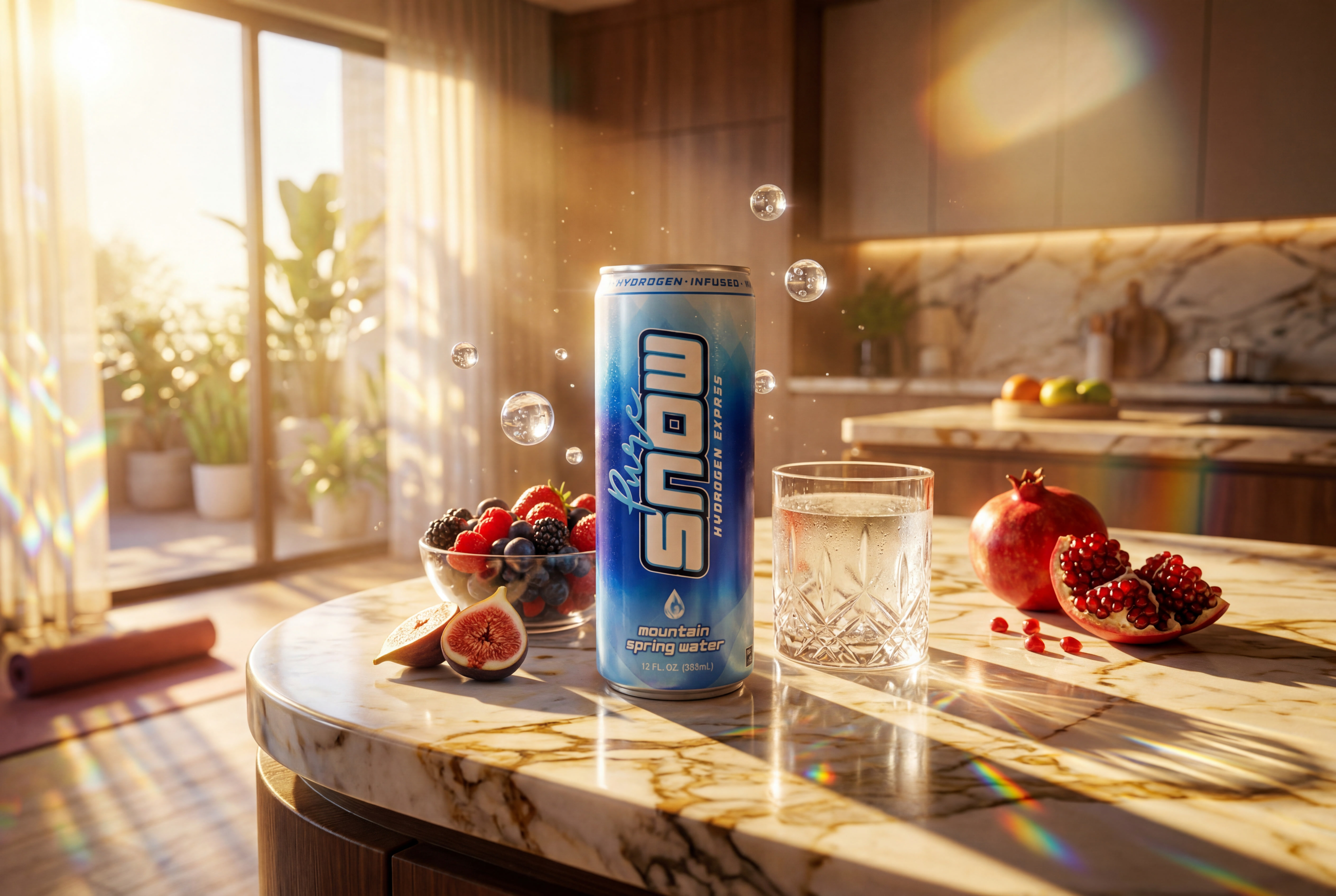
Here's the part many people miss: hydrogen is an escape artist. Because the H2 molecule is so small, it can literally pass through plastic bottles over time, meaning a plastic-packaged hydrogen water may contain little to no hydrogen by the time you drink it. Aluminum cans, by contrast, create an impermeable barrier that locks dissolved hydrogen in until the moment you open it. This is exactly why Pure Snow chose sealed aluminum cans for its premium mountain spring hydrogen water. All the cellular science in the world doesn't matter if the hydrogen has already evaporated before the first sip. If you have questions about shelf life, potency, or storage, the Pure Snow FAQ page covers the most common ones.
PUTTING IT ALL TOGETHER
So, how does hydrogen water work? In short: pressurized H2 gas is dissolved into water, absorbed rapidly into your bloodstream, and distributed throughout your body thanks to hydrogen's uniquely small size. Once there, it selectively neutralizes the most damaging free radicals, supports your body's own antioxidant systems, and may help modulate inflammation, all without altering the taste, calories, or pH of your water. The mechanism is elegant precisely because it's simple. You're not adding a foreign compound to your body; hydrogen is already a natural part of your biology. You're just giving your cells more of a molecule they already know how to use.
The catch is that not all hydrogen water is created equal. Concentration, water quality, and packaging all determine whether you're getting a therapeutic dose or expensive regular water. Look for products that disclose their PPM, use pristine source water, and package in aluminum rather than plastic.
KEY TAKEAWAY: Hydrogen water works because molecular hydrogen is small enough to reach your cells and mitochondria, where it selectively neutralizes harmful free radicals and supports your body's own antioxidant defenses. Proper concentration and aluminum packaging are essential for the hydrogen to actually reach you.
Ready to experience what properly preserved molecular hydrogen actually feels like? Explore Pure Snow's canned hydrogen mountain spring water and taste the difference science makes, one crisp can at a time.
FAQ
Q: How quickly does hydrogen water work after drinking it?
A: Dissolved hydrogen absorbs rapidly, with blood and breath hydrogen levels typically peaking within 5 to 15 minutes of drinking. Levels then gradually decline over roughly an hour, which is why many people time their hydrogen water around workouts or demanding parts of their day.
Q: Does hydrogen water taste different from regular water?
A: No. Molecular hydrogen is tasteless, odorless, and colorless, so hydrogen water tastes exactly like the source water it's made from. Pure Snow uses mountain spring water, so you simply taste clean, crisp spring water.
Q: Why does packaging matter so much for hydrogen water?
A: Hydrogen molecules are small enough to escape through plastic over time, so plastic-bottled hydrogen water often loses its potency before you drink it. Sealed aluminum cans create an impermeable barrier that keeps the dissolved hydrogen locked in until you open the can.
Back to Blog1. MOLECULAR HYDROGEN DISSOLVES INTO THE WATER ITSELF
The first thing to understand is that hydrogen water starts with a simple but precise process: pressurizing pure H2 gas into water until it dissolves, much like carbon dioxide dissolves into sparkling water. The difference is that hydrogen doesn't add bubbles, flavor, or acidity. The water tastes exactly like clean, crisp spring water. The concentration of dissolved hydrogen is measured in parts per million (PPM), and higher-quality hydrogen waters aim for concentrations of 1.6 PPM or above to deliver a meaningful dose. If you want a deeper look at concentration levels and packaging, you can see exactly how Pure Snow infuses hydrogen and preserves it in aluminum cans.
2. HYDROGEN'S TINY SIZE LETS IT GO WHERE OTHER MOLECULES CAN'T
Molecular hydrogen is the smallest molecule in existence. That's not a marketing claim, it's chemistry. Because of its size and neutral charge, H2 can rapidly diffuse across cell membranes, pass through the blood-brain barrier, and even enter mitochondria, the energy-producing structures inside your cells. Most conventional antioxidants, like vitamin C or vitamin E, are far too large to access these areas efficiently. This unique bioavailability is one of the main reasons researchers became interested in hydrogen as a therapeutic molecule in the first place.
3. IT SELECTIVELY NEUTRALIZES THE MOST HARMFUL FREE RADICALS
Here's where things get genuinely interesting. Your body produces free radicals constantly as a byproduct of metabolism, exercise, stress, and environmental exposure. Some of these radicals actually serve useful signaling functions, but others, particularly the hydroxyl radical, are highly destructive and damage DNA, proteins, and cell membranes. According to a landmark study published in Nature Medicine, molecular hydrogen acts as a selective antioxidant, preferentially neutralizing cytotoxic hydroxyl radicals while leaving beneficial reactive species alone. This selectivity matters. Blanket antioxidant supplementation can sometimes interfere with helpful cellular signaling, but hydrogen appears to target only the troublemakers.
4. IT SUPPORTS YOUR BODY'S OWN ANTIOXIDANT DEFENSES
Beyond directly neutralizing harmful radicals, research suggests molecular hydrogen may also work indirectly by influencing cell signaling pathways. One of the most studied is the Nrf2 pathway, which acts like a master switch for your body's internal antioxidant production, including enzymes like glutathione peroxidase and superoxide dismutase. In other words, hydrogen doesn't just fight oxidative stress on its own. It may help train your cells to defend themselves more effectively, which is a fundamentally different mechanism than simply consuming antioxidant-rich foods.
5. IT MAY HELP MODULATE INFLAMMATION SIGNALS
Chronic low-grade inflammation is linked to fatigue, slower recovery, and a long list of health concerns. Preliminary human and animal studies suggest that molecular hydrogen may help modulate inflammatory signaling molecules, including certain cytokines involved in the inflammatory response. While research is still developing and hydrogen water is not a treatment for any condition, the anti-inflammatory angle is one of the most active areas of hydrogen research today, with studies examining everything from metabolic health to exercise-induced inflammation in athletes.
6. IT ABSORBS QUICKLY AND WORKS FAST
Unlike many supplements that need to be digested, broken down, and metabolized, dissolved hydrogen begins absorbing almost immediately. After drinking hydrogen water, H2 levels in your blood and breath rise within minutes, typically peaking within 5 to 15 minutes before gradually declining over the following hour. This rapid absorption is why timing matters. Drinking hydrogen water before or after a workout, or during a mentally demanding stretch of your day, aligns the hydrogen availability with the moments your body is generating the most oxidative stress.
7. PACKAGING DETERMINES WHETHER THE HYDROGEN ACTUALLY REACHES YOU
Here's the part many people miss: hydrogen is an escape artist. Because the H2 molecule is so small, it can literally pass through plastic bottles over time, meaning a plastic-packaged hydrogen water may contain little to no hydrogen by the time you drink it. Aluminum cans, by contrast, create an impermeable barrier that locks dissolved hydrogen in until the moment you open it. This is exactly why Pure Snow chose sealed aluminum cans for its premium mountain spring hydrogen water. All the cellular science in the world doesn't matter if the hydrogen has already evaporated before the first sip. If you have questions about shelf life, potency, or storage, the Pure Snow FAQ page covers the most common ones.
PUTTING IT ALL TOGETHER
So, how does hydrogen water work? In short: pressurized H2 gas is dissolved into water, absorbed rapidly into your bloodstream, and distributed throughout your body thanks to hydrogen's uniquely small size. Once there, it selectively neutralizes the most damaging free radicals, supports your body's own antioxidant systems, and may help modulate inflammation, all without altering the taste, calories, or pH of your water. The mechanism is elegant precisely because it's simple. You're not adding a foreign compound to your body; hydrogen is already a natural part of your biology. You're just giving your cells more of a molecule they already know how to use.
The catch is that not all hydrogen water is created equal. Concentration, water quality, and packaging all determine whether you're getting a therapeutic dose or expensive regular water. Look for products that disclose their PPM, use pristine source water, and package in aluminum rather than plastic.
KEY TAKEAWAY: Hydrogen water works because molecular hydrogen is small enough to reach your cells and mitochondria, where it selectively neutralizes harmful free radicals and supports your body's own antioxidant defenses. Proper concentration and aluminum packaging are essential for the hydrogen to actually reach you.
Ready to experience what properly preserved molecular hydrogen actually feels like? Explore Pure Snow's canned hydrogen mountain spring water and taste the difference science makes, one crisp can at a time.
FAQ
Q: How quickly does hydrogen water work after drinking it?
A: Dissolved hydrogen absorbs rapidly, with blood and breath hydrogen levels typically peaking within 5 to 15 minutes of drinking. Levels then gradually decline over roughly an hour, which is why many people time their hydrogen water around workouts or demanding parts of their day.
Q: Does hydrogen water taste different from regular water?
A: No. Molecular hydrogen is tasteless, odorless, and colorless, so hydrogen water tastes exactly like the source water it's made from. Pure Snow uses mountain spring water, so you simply taste clean, crisp spring water.
Q: Why does packaging matter so much for hydrogen water?
A: Hydrogen molecules are small enough to escape through plastic over time, so plastic-bottled hydrogen water often loses its potency before you drink it. Sealed aluminum cans create an impermeable barrier that keeps the dissolved hydrogen locked in until you open the can.