Best Hydrogen Concentration for Health Benefits: Your Top Questions Answered
If you've been researching hydrogen water this August 2026, you've probably run into the same three questions almost everyone asks: What is the best hydrogen concentration for health benefits? Is a higher PPM always better? And how do I know the hydrogen is still in the water by the time I drink it? These are smart questions, because concentration is arguably the single most important factor separating hydrogen water that may actually support your health from hydrogen water that's essentially expensive regular water. In this post, we'll answer each of these questions clearly, using what the research actually says, so you can make an informed choice about what you're drinking.
WHAT IS THE BEST HYDROGEN CONCENTRATION FOR HEALTH BENEFITS?
Hydrogen concentration is measured in parts per million, or PPM, which tells you how much dissolved molecular hydrogen gas is present in the water. Most researchers and industry experts consider 0.5 PPM to be the minimum threshold at which hydrogen water begins to show measurable effects, while the majority of clinical studies demonstrating benefits have used concentrations between 1.0 and 3.0 PPM. That range, roughly 1.0 to 3.0 PPM, is widely regarded as the sweet spot for therapeutic potential.
Here's why that range matters. The foundational research on molecular hydrogen, including a landmark study published in Nature Medicine, showed that hydrogen can act as a selective antioxidant, neutralizing harmful free radicals like hydroxyl radicals without disrupting the beneficial signaling molecules your body needs. But dose matters. Studies that used water with very low hydrogen content often failed to show meaningful results, while studies using 1.0 PPM or higher consistently reported more promising outcomes across areas like oxidative stress markers, exercise recovery, and metabolic health.
Water at normal atmospheric pressure can hold a maximum of about 1.6 PPM of dissolved hydrogen. Products claiming higher concentrations achieve this through pressurization during production and sealed packaging that maintains that pressure until you open it. This is one reason why properly canned or pressurized hydrogen water tends to deliver higher, more reliable concentrations than water produced by home devices or tablets, which often struggle to exceed 0.5 to 1.0 PPM in real-world use.
IS A HIGHER PPM ALWAYS BETTER?
Within reason, yes, but with an important caveat: the concentration on the label only matters if it reflects what's actually in the water when you drink it. Molecular hydrogen is the smallest molecule in existence, and it escapes from water remarkably quickly once exposed to air. An open glass of hydrogen water can lose a significant portion of its dissolved hydrogen within 30 minutes to a couple of hours.
This is where total hydrogen intake comes into play. Researchers often think in terms of the total milligrams of hydrogen consumed rather than PPM alone. Drinking 500 mL of water at 2.0 PPM delivers roughly 1 mg of molecular hydrogen, which aligns with doses used in many clinical trials. So a higher concentration means you can reach a meaningful hydrogen dose with less water, which is practical for most people's daily routines.
There's no evidence that higher concentrations within the achievable range pose any safety risk. Molecular hydrogen has an excellent safety profile, your body simply exhales any excess. The real risk isn't drinking too much hydrogen; it's drinking water that contains far less than advertised because of poor packaging or degassing over time. If you want to dive deeper into how PPM works and why packaging matters so much, our breakdown of how hydrogen water works covers the science in plain language.
HOW DO YOU KNOW THE HYDROGEN IS STILL IN THE WATER?
This is the question too few people ask, and it's where product quality really separates. Because hydrogen escapes so easily, the packaging is just as important as the initial concentration. Plastic bottles are porous at the molecular level, meaning hydrogen can literally seep through the walls of the bottle over days and weeks on a shelf. By the time you drink it, a plastic-bottled hydrogen water may contain a fraction of its labeled PPM.
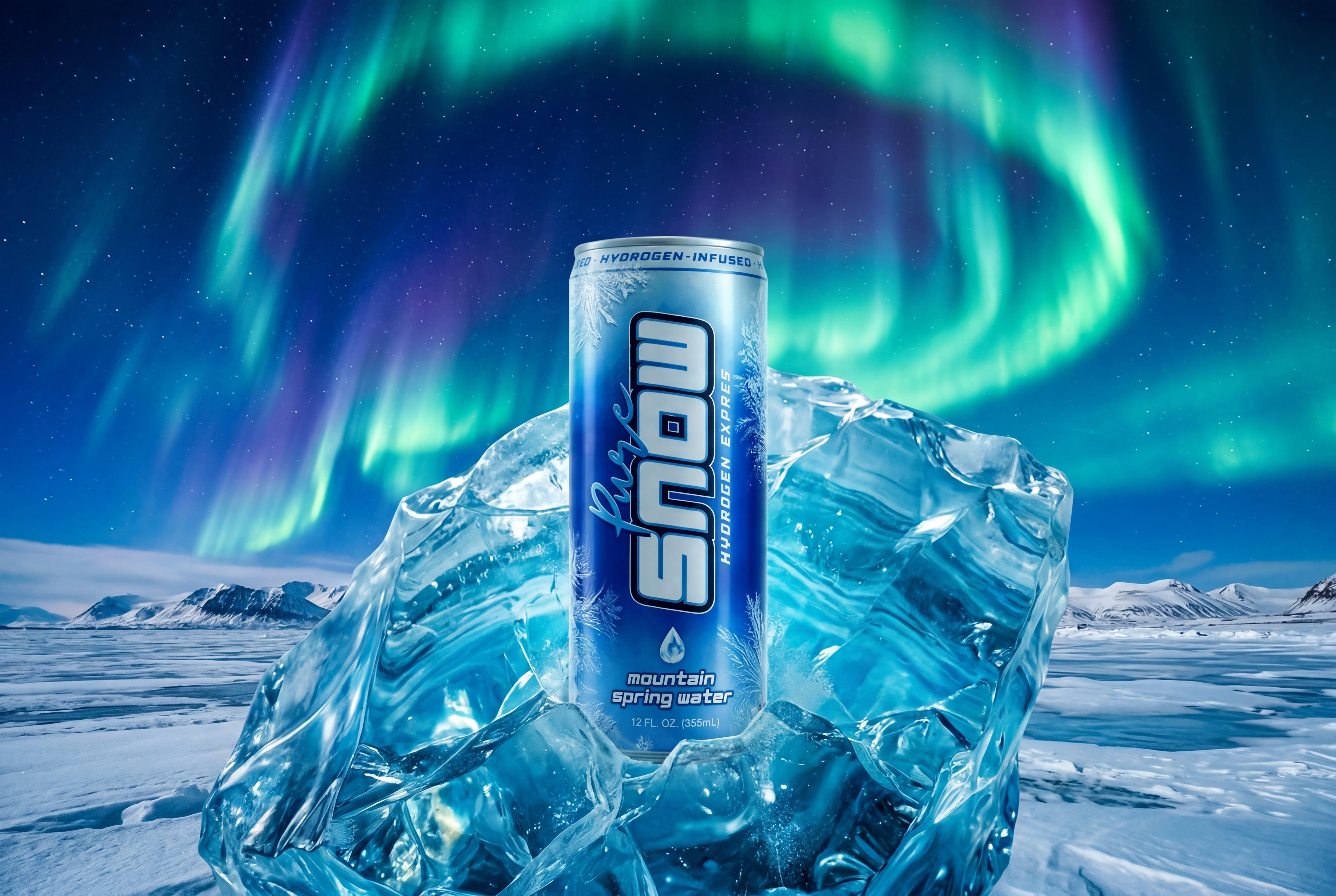
Aluminum, by contrast, is impermeable to hydrogen gas. A properly sealed aluminum can locks the dissolved hydrogen in place until the moment you crack it open. This is why aluminum cans have become the gold standard for shelf-stable hydrogen water, and it's a core reason Pure Snow chose pressurized aluminum cans for its hydrogen-infused mountain spring water. You get the concentration you paid for, not a diminished remnant of it.
A few practical tips for getting the most out of any hydrogen water: drink it soon after opening rather than letting it sit, don't pour it into an open glass and walk away, and store unopened cans in a cool place. Simple habits, but they meaningfully affect how much hydrogen actually reaches your system.
HOW MUCH SHOULD YOU DRINK TO HIT A THERAPEUTIC DOSE?
Most clinical studies showing benefits have used somewhere between 1 and 3 mg of molecular hydrogen per day, typically delivered through 500 mL to 1.5 liters of hydrogen-rich water. If your water is at a strong concentration of 1.6 PPM or higher, one to two servings per day puts you comfortably in the range used in research. Consistency appears to matter more than occasional large doses, since hydrogen's effects on cellular signaling and oxidative stress seem to build with regular intake.
Timing can also play a role. Many people drink hydrogen water first thing in the morning, before or after workouts, or during periods of physical or mental stress, when oxidative load tends to be highest. There's no wrong time, but pairing it with moments of higher demand on your body is a sensible approach supported by the exercise recovery literature. If you have more questions about serving sizes, daily intake, or storage, our frequently asked questions page covers the details.
KEY TAKEAWAY: The best hydrogen concentration for health benefits falls between 1.0 and 3.0 PPM, the range used in most successful clinical studies, but concentration only matters if the packaging, ideally sealed aluminum, preserves the hydrogen until you drink it.
If you're ready to experience hydrogen water at a concentration that actually reflects the research, Pure Snow delivers premium hydrogen-infused mountain spring water in hydrogen-locking aluminum cans. Try Pure Snow today and taste the difference a properly preserved concentration makes.
FAQ
Q: What is the minimum PPM for hydrogen water to be effective?
A: Most experts consider 0.5 PPM the minimum threshold for any measurable effect, but the majority of clinical studies showing benefits used 1.0 PPM or higher. For the best chance of therapeutic value, look for products in the 1.0 to 3.0 PPM range.
Q: Can hydrogen water have too much hydrogen?
A: No practical safety concern exists at achievable concentrations. Molecular hydrogen has an outstanding safety record in research, and your body simply exhales any hydrogen it doesn't use. The bigger concern is water containing less hydrogen than the label claims.
Q: How quickly does hydrogen escape from water after opening?
A: Dissolved hydrogen begins escaping immediately once the container is opened, with significant loss possible within 30 minutes to two hours in an open container. Drink hydrogen water soon after opening and keep it sealed until you're ready to consume it.
Back to BlogWHAT IS THE BEST HYDROGEN CONCENTRATION FOR HEALTH BENEFITS?
Hydrogen concentration is measured in parts per million, or PPM, which tells you how much dissolved molecular hydrogen gas is present in the water. Most researchers and industry experts consider 0.5 PPM to be the minimum threshold at which hydrogen water begins to show measurable effects, while the majority of clinical studies demonstrating benefits have used concentrations between 1.0 and 3.0 PPM. That range, roughly 1.0 to 3.0 PPM, is widely regarded as the sweet spot for therapeutic potential.
Here's why that range matters. The foundational research on molecular hydrogen, including a landmark study published in Nature Medicine, showed that hydrogen can act as a selective antioxidant, neutralizing harmful free radicals like hydroxyl radicals without disrupting the beneficial signaling molecules your body needs. But dose matters. Studies that used water with very low hydrogen content often failed to show meaningful results, while studies using 1.0 PPM or higher consistently reported more promising outcomes across areas like oxidative stress markers, exercise recovery, and metabolic health.
Water at normal atmospheric pressure can hold a maximum of about 1.6 PPM of dissolved hydrogen. Products claiming higher concentrations achieve this through pressurization during production and sealed packaging that maintains that pressure until you open it. This is one reason why properly canned or pressurized hydrogen water tends to deliver higher, more reliable concentrations than water produced by home devices or tablets, which often struggle to exceed 0.5 to 1.0 PPM in real-world use.
IS A HIGHER PPM ALWAYS BETTER?
Within reason, yes, but with an important caveat: the concentration on the label only matters if it reflects what's actually in the water when you drink it. Molecular hydrogen is the smallest molecule in existence, and it escapes from water remarkably quickly once exposed to air. An open glass of hydrogen water can lose a significant portion of its dissolved hydrogen within 30 minutes to a couple of hours.
This is where total hydrogen intake comes into play. Researchers often think in terms of the total milligrams of hydrogen consumed rather than PPM alone. Drinking 500 mL of water at 2.0 PPM delivers roughly 1 mg of molecular hydrogen, which aligns with doses used in many clinical trials. So a higher concentration means you can reach a meaningful hydrogen dose with less water, which is practical for most people's daily routines.
There's no evidence that higher concentrations within the achievable range pose any safety risk. Molecular hydrogen has an excellent safety profile, your body simply exhales any excess. The real risk isn't drinking too much hydrogen; it's drinking water that contains far less than advertised because of poor packaging or degassing over time. If you want to dive deeper into how PPM works and why packaging matters so much, our breakdown of how hydrogen water works covers the science in plain language.
HOW DO YOU KNOW THE HYDROGEN IS STILL IN THE WATER?
This is the question too few people ask, and it's where product quality really separates. Because hydrogen escapes so easily, the packaging is just as important as the initial concentration. Plastic bottles are porous at the molecular level, meaning hydrogen can literally seep through the walls of the bottle over days and weeks on a shelf. By the time you drink it, a plastic-bottled hydrogen water may contain a fraction of its labeled PPM.
Aluminum, by contrast, is impermeable to hydrogen gas. A properly sealed aluminum can locks the dissolved hydrogen in place until the moment you crack it open. This is why aluminum cans have become the gold standard for shelf-stable hydrogen water, and it's a core reason Pure Snow chose pressurized aluminum cans for its hydrogen-infused mountain spring water. You get the concentration you paid for, not a diminished remnant of it.
A few practical tips for getting the most out of any hydrogen water: drink it soon after opening rather than letting it sit, don't pour it into an open glass and walk away, and store unopened cans in a cool place. Simple habits, but they meaningfully affect how much hydrogen actually reaches your system.
HOW MUCH SHOULD YOU DRINK TO HIT A THERAPEUTIC DOSE?
Most clinical studies showing benefits have used somewhere between 1 and 3 mg of molecular hydrogen per day, typically delivered through 500 mL to 1.5 liters of hydrogen-rich water. If your water is at a strong concentration of 1.6 PPM or higher, one to two servings per day puts you comfortably in the range used in research. Consistency appears to matter more than occasional large doses, since hydrogen's effects on cellular signaling and oxidative stress seem to build with regular intake.
Timing can also play a role. Many people drink hydrogen water first thing in the morning, before or after workouts, or during periods of physical or mental stress, when oxidative load tends to be highest. There's no wrong time, but pairing it with moments of higher demand on your body is a sensible approach supported by the exercise recovery literature. If you have more questions about serving sizes, daily intake, or storage, our frequently asked questions page covers the details.
KEY TAKEAWAY: The best hydrogen concentration for health benefits falls between 1.0 and 3.0 PPM, the range used in most successful clinical studies, but concentration only matters if the packaging, ideally sealed aluminum, preserves the hydrogen until you drink it.
If you're ready to experience hydrogen water at a concentration that actually reflects the research, Pure Snow delivers premium hydrogen-infused mountain spring water in hydrogen-locking aluminum cans. Try Pure Snow today and taste the difference a properly preserved concentration makes.
FAQ
Q: What is the minimum PPM for hydrogen water to be effective?
A: Most experts consider 0.5 PPM the minimum threshold for any measurable effect, but the majority of clinical studies showing benefits used 1.0 PPM or higher. For the best chance of therapeutic value, look for products in the 1.0 to 3.0 PPM range.
Q: Can hydrogen water have too much hydrogen?
A: No practical safety concern exists at achievable concentrations. Molecular hydrogen has an outstanding safety record in research, and your body simply exhales any hydrogen it doesn't use. The bigger concern is water containing less hydrogen than the label claims.
Q: How quickly does hydrogen escape from water after opening?
A: Dissolved hydrogen begins escaping immediately once the container is opened, with significant loss possible within 30 minutes to two hours in an open container. Drink hydrogen water soon after opening and keep it sealed until you're ready to consume it.