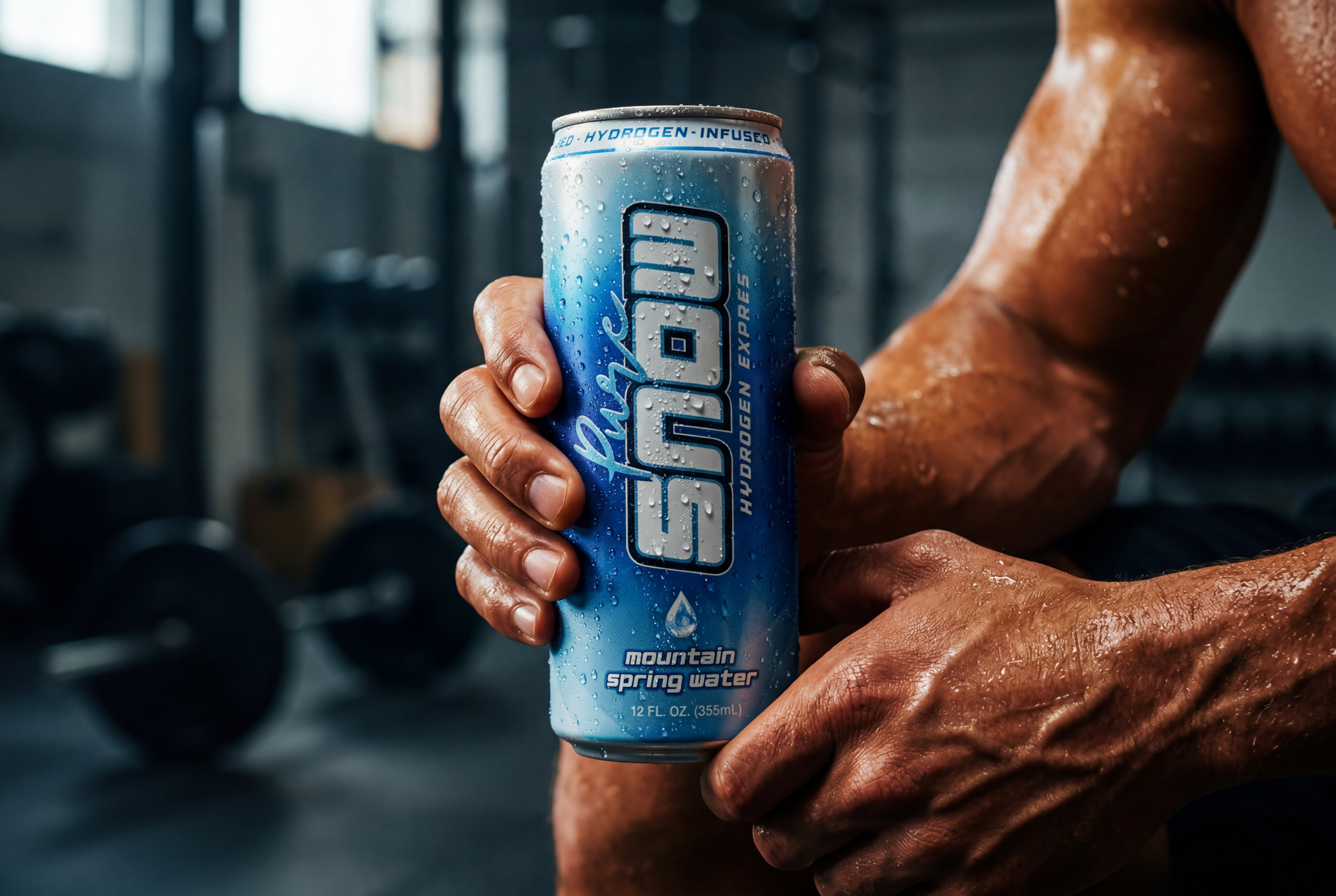
Aluminum vs Plastic Hydrogen Water Packaging: Why Pure Snow Chose the Can
If you've been browsing hydrogen water options this October 2026, you've probably noticed something: some brands come in plastic bottles, some in pouches, and a growing number in aluminum cans. Here's the thing most shoppers don't realize until it's too late — the packaging isn't just a design choice. With hydrogen water, the container determines whether you're actually drinking molecular hydrogen or just expensive regular water. At Pure Snow, we built our entire product around this reality, and it's one of the biggest reasons we package our premium hydrogen-infused mountain spring water exclusively in aluminum. In this post, we'll break down the science of aluminum vs plastic hydrogen water packaging and explain why we made the choice we did.
WHY PACKAGING MATTERS MORE FOR HYDROGEN WATER THAN ANY OTHER BEVERAGE
Molecular hydrogen (H2) is the smallest molecule in the universe. That's precisely what makes it so interesting as a wellness compound — it can diffuse rapidly through cell membranes and even cross the blood-brain barrier. Research into hydrogen's potential as a selective antioxidant has been building for nearly two decades, beginning with a landmark 2007 study published in Nature Medicine showing that molecular hydrogen can selectively neutralize harmful hydroxyl radicals.
But the same property that makes hydrogen so bioavailable also makes it incredibly difficult to contain. If a molecule can slip through cell membranes, it can absolutely slip through packaging materials. A hydrogen water product is only as good as the container's ability to hold that hydrogen in solution until you crack it open.
THE PROBLEM WITH PLASTIC
Plastic bottles — including PET, the standard material for bottled water — are gas-permeable. Hydrogen molecules pass through the polymer matrix of plastic relatively easily. In practical terms, this means hydrogen water packaged in standard plastic can lose the majority of its dissolved hydrogen within hours to days, long before it ever reaches your refrigerator.
Some brands attempt to work around this with thicker plastics or special liners, but the fundamental physics doesn't change: plastic is porous at the molecular level, and H2 is small enough to find its way out. If you've ever tried a plastic-bottled hydrogen water and wondered whether it did anything at all, there's a decent chance you were drinking water with little to no measurable hydrogen left in it.
There's also the environmental side of the equation. Plastic bottles have well-documented recycling challenges, with global recycling rates for plastic remaining stubbornly low. For a wellness brand, selling health in a package with a questionable environmental footprint has always felt like a contradiction to us.
WHY ALUMINUM WINS FOR HYDROGEN RETENTION
Aluminum is a different story entirely. A properly sealed aluminum can creates a near-impermeable barrier to gas. Hydrogen molecules simply cannot pass through solid aluminum the way they migrate through plastic. When hydrogen water is canned under pressure in aluminum, the dissolved H2 stays dissolved — often for a year or more — until the moment you open it.
This is why Pure Snow chose aluminum from day one. Our goal was never just to sell hydrogen water; it was to make sure the hydrogen concentration printed on the can is actually what ends up in your glass. We infuse our mountain spring water with molecular hydrogen and seal it in aluminum specifically to preserve potency from our facility to your hands. You can read more about our infusion process, hydrogen concentration levels, and why PPM matters on our how it works page.
Beyond hydrogen retention, aluminum brings other advantages worth noting:
Light protection. Aluminum completely blocks light, protecting water quality in a way clear plastic bottles can't.
Recyclability. Aluminum is infinitely recyclable without degrading in quality, and it's recycled at significantly higher rates than plastic worldwide. Most aluminum ever produced is still in circulation today.
Temperature performance. Cans chill faster than plastic bottles, and let's be honest — hydrogen water tastes best ice cold.
No microplastic concerns. As research into microplastics in bottled beverages continues to grow, aluminum sidesteps the issue entirely.
WHAT TO LOOK FOR WHEN COMPARING HYDROGEN WATER BRANDS
If you're evaluating hydrogen water products, packaging should be one of your first filters. Here's a quick checklist we recommend:
First, check the container material. If it's standard plastic with no specialized gas barrier, be skeptical of any hydrogen concentration claims. Second, look for a stated PPM (parts per million) of dissolved hydrogen, ideally measured at the time of consumption rather than at the time of bottling. Third, consider the seal — hydrogen water should be packaged under pressure with no headspace issues that allow hydrogen to escape into the gap at the top of the container. Finally, consider freshness and supply chain. Even well-packaged hydrogen water benefits from a brand that moves product quickly rather than letting it sit in warehouses.
Pure Snow checks every one of these boxes by design. Our aluminum cans are sealed under pressure, our hydrogen concentration is engineered to remain therapeutic at the moment you drink it, and our direct-to-consumer model means cans don't languish on shelves.
THE PURE SNOW DIFFERENCE IN A CROWDED MARKET
The canned hydrogen water category is growing fast, and not every brand approaches it with the same rigor. What sets Pure Snow apart starts with the source: genuine mountain spring water with a naturally clean mineral profile, not reprocessed municipal water. From there, we infuse molecular hydrogen at concentrations designed to deliver a meaningful dose per can, then lock it in with aluminum packaging that actually holds it.
We also believe premium shouldn't mean inaccessible. Our subscribe-and-save options on the pricing page make daily hydrogen water genuinely affordable compared to buying single cans at retail — and when you factor in that you're getting the full stated hydrogen dose instead of a degraded one, the value comparison isn't close.
KEY TAKEAWAY: Molecular hydrogen escapes through plastic packaging, which means plastic-bottled hydrogen water often loses its potency before you drink it. Aluminum cans create a near-impermeable gas barrier, which is why Pure Snow packages its hydrogen-infused mountain spring water exclusively in aluminum — so the hydrogen on the label is the hydrogen in your glass.
Ready to taste the difference that proper packaging makes? Head over to the Pure Snow shop and experience premium canned hydrogen water that delivers every bit of the potency it promises.
FAQ
Q: How long does hydrogen stay in an aluminum can versus a plastic bottle?
A: Hydrogen water sealed in a pressurized aluminum can typically retains its dissolved hydrogen for a year or more. In standard plastic bottles, significant hydrogen loss can occur within hours to days because H2 molecules pass through the gas-permeable plastic.
Q: Should I drink Pure Snow immediately after opening the can?
A: Yes, for best results drink it within a few minutes of opening. Once the seal is broken, dissolved hydrogen begins escaping into the air, so pouring it into an open glass and letting it sit will reduce the hydrogen concentration over time.
Q: Is aluminum packaging safe for drinking water?
A: Yes. Beverage-grade aluminum cans are lined with a food-safe barrier and are one of the most widely used, well-regulated packaging formats in the world. Aluminum also avoids the microplastic concerns associated with plastic bottles and is infinitely recyclable.
Back to BlogWHY PACKAGING MATTERS MORE FOR HYDROGEN WATER THAN ANY OTHER BEVERAGE
Molecular hydrogen (H2) is the smallest molecule in the universe. That's precisely what makes it so interesting as a wellness compound — it can diffuse rapidly through cell membranes and even cross the blood-brain barrier. Research into hydrogen's potential as a selective antioxidant has been building for nearly two decades, beginning with a landmark 2007 study published in Nature Medicine showing that molecular hydrogen can selectively neutralize harmful hydroxyl radicals.
But the same property that makes hydrogen so bioavailable also makes it incredibly difficult to contain. If a molecule can slip through cell membranes, it can absolutely slip through packaging materials. A hydrogen water product is only as good as the container's ability to hold that hydrogen in solution until you crack it open.
THE PROBLEM WITH PLASTIC
Plastic bottles — including PET, the standard material for bottled water — are gas-permeable. Hydrogen molecules pass through the polymer matrix of plastic relatively easily. In practical terms, this means hydrogen water packaged in standard plastic can lose the majority of its dissolved hydrogen within hours to days, long before it ever reaches your refrigerator.
Some brands attempt to work around this with thicker plastics or special liners, but the fundamental physics doesn't change: plastic is porous at the molecular level, and H2 is small enough to find its way out. If you've ever tried a plastic-bottled hydrogen water and wondered whether it did anything at all, there's a decent chance you were drinking water with little to no measurable hydrogen left in it.
There's also the environmental side of the equation. Plastic bottles have well-documented recycling challenges, with global recycling rates for plastic remaining stubbornly low. For a wellness brand, selling health in a package with a questionable environmental footprint has always felt like a contradiction to us.
WHY ALUMINUM WINS FOR HYDROGEN RETENTION
Aluminum is a different story entirely. A properly sealed aluminum can creates a near-impermeable barrier to gas. Hydrogen molecules simply cannot pass through solid aluminum the way they migrate through plastic. When hydrogen water is canned under pressure in aluminum, the dissolved H2 stays dissolved — often for a year or more — until the moment you open it.
This is why Pure Snow chose aluminum from day one. Our goal was never just to sell hydrogen water; it was to make sure the hydrogen concentration printed on the can is actually what ends up in your glass. We infuse our mountain spring water with molecular hydrogen and seal it in aluminum specifically to preserve potency from our facility to your hands. You can read more about our infusion process, hydrogen concentration levels, and why PPM matters on our how it works page.
Beyond hydrogen retention, aluminum brings other advantages worth noting:
Light protection. Aluminum completely blocks light, protecting water quality in a way clear plastic bottles can't.
Recyclability. Aluminum is infinitely recyclable without degrading in quality, and it's recycled at significantly higher rates than plastic worldwide. Most aluminum ever produced is still in circulation today.
Temperature performance. Cans chill faster than plastic bottles, and let's be honest — hydrogen water tastes best ice cold.
No microplastic concerns. As research into microplastics in bottled beverages continues to grow, aluminum sidesteps the issue entirely.
WHAT TO LOOK FOR WHEN COMPARING HYDROGEN WATER BRANDS
If you're evaluating hydrogen water products, packaging should be one of your first filters. Here's a quick checklist we recommend:
First, check the container material. If it's standard plastic with no specialized gas barrier, be skeptical of any hydrogen concentration claims. Second, look for a stated PPM (parts per million) of dissolved hydrogen, ideally measured at the time of consumption rather than at the time of bottling. Third, consider the seal — hydrogen water should be packaged under pressure with no headspace issues that allow hydrogen to escape into the gap at the top of the container. Finally, consider freshness and supply chain. Even well-packaged hydrogen water benefits from a brand that moves product quickly rather than letting it sit in warehouses.
Pure Snow checks every one of these boxes by design. Our aluminum cans are sealed under pressure, our hydrogen concentration is engineered to remain therapeutic at the moment you drink it, and our direct-to-consumer model means cans don't languish on shelves.
THE PURE SNOW DIFFERENCE IN A CROWDED MARKET
The canned hydrogen water category is growing fast, and not every brand approaches it with the same rigor. What sets Pure Snow apart starts with the source: genuine mountain spring water with a naturally clean mineral profile, not reprocessed municipal water. From there, we infuse molecular hydrogen at concentrations designed to deliver a meaningful dose per can, then lock it in with aluminum packaging that actually holds it.
We also believe premium shouldn't mean inaccessible. Our subscribe-and-save options on the pricing page make daily hydrogen water genuinely affordable compared to buying single cans at retail — and when you factor in that you're getting the full stated hydrogen dose instead of a degraded one, the value comparison isn't close.
KEY TAKEAWAY: Molecular hydrogen escapes through plastic packaging, which means plastic-bottled hydrogen water often loses its potency before you drink it. Aluminum cans create a near-impermeable gas barrier, which is why Pure Snow packages its hydrogen-infused mountain spring water exclusively in aluminum — so the hydrogen on the label is the hydrogen in your glass.
Ready to taste the difference that proper packaging makes? Head over to the Pure Snow shop and experience premium canned hydrogen water that delivers every bit of the potency it promises.
FAQ
Q: How long does hydrogen stay in an aluminum can versus a plastic bottle?
A: Hydrogen water sealed in a pressurized aluminum can typically retains its dissolved hydrogen for a year or more. In standard plastic bottles, significant hydrogen loss can occur within hours to days because H2 molecules pass through the gas-permeable plastic.
Q: Should I drink Pure Snow immediately after opening the can?
A: Yes, for best results drink it within a few minutes of opening. Once the seal is broken, dissolved hydrogen begins escaping into the air, so pouring it into an open glass and letting it sit will reduce the hydrogen concentration over time.
Q: Is aluminum packaging safe for drinking water?
A: Yes. Beverage-grade aluminum cans are lined with a food-safe barrier and are one of the most widely used, well-regulated packaging formats in the world. Aluminum also avoids the microplastic concerns associated with plastic bottles and is infinitely recyclable.