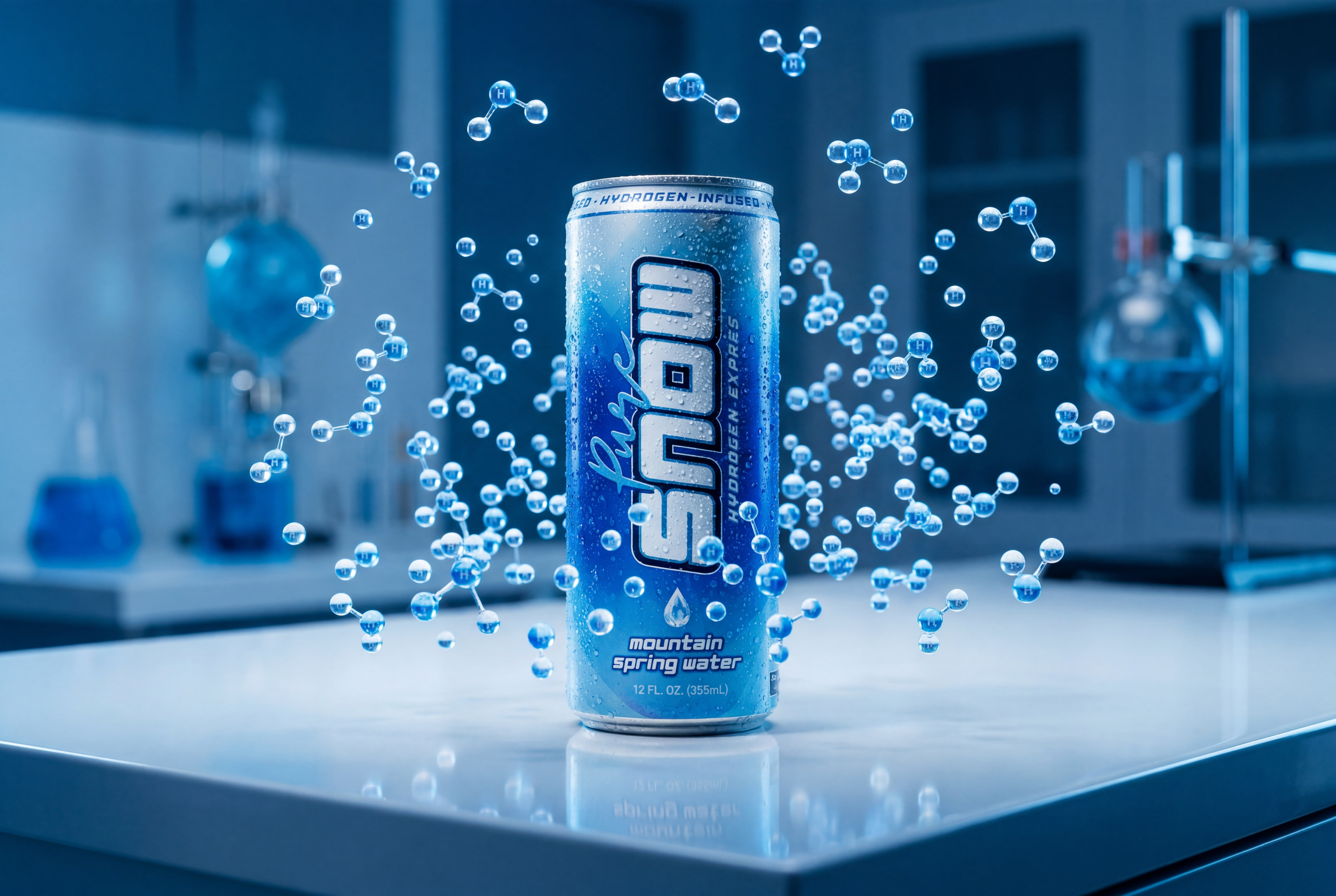
Aluminum vs Plastic Hydrogen Water Packaging: Why Pure Snow Chose the Can
If you've been researching hydrogen water this August 2026, you've probably noticed something curious: some brands sell it in plastic bottles, some in pouches, and a growing number in aluminum cans. Here's what most people don't realize until they dig into the science — when it comes to hydrogen water, the packaging isn't a design choice. It's the difference between a product that delivers real molecular hydrogen to your body and one that's essentially expensive regular water by the time you drink it. At Pure Snow, we built our entire product around this insight, and in this post we'll explain exactly why aluminum vs plastic hydrogen water packaging is the single most important decision a hydrogen water brand makes — and why we'll never put our mountain spring water in plastic.
WHY HYDROGEN ESCAPES: THE PROBLEM EVERY BRAND FACES
Molecular hydrogen (H2) is the smallest molecule in the universe. That's part of what makes it so remarkable as a potential wellness compound — it can diffuse into tissues and cross cellular membranes with ease. But that same tiny size creates a massive challenge for packaging. Hydrogen gas can slip through materials that would easily contain oxygen, carbon dioxide, or water vapor.
Plastic, at a molecular level, is surprisingly porous. PET bottles — the standard for most bottled water — allow hydrogen to permeate through the container walls and escape into the air. Research on molecular hydrogen has consistently noted this limitation. As highlighted in a comprehensive review published in Pharmacology and Therapeutics, hydrogen readily penetrates plastic and glass vessel walls over time, while aluminum containers are able to retain dissolved hydrogen for extended periods. In practical terms, a plastic bottle of hydrogen water sitting in a warehouse or on a store shelf is slowly losing the very ingredient you're paying for.
ALUMINUM: THE ONLY PACKAGING THAT HOLDS THE LINE
Aluminum is fundamentally different. Its dense metallic structure creates a true barrier that molecular hydrogen cannot pass through. This is why virtually every serious hydrogen water product on the market — and every clinical study that uses pre-packaged hydrogen water — relies on aluminum containers, whether cans or foil pouches.
When Pure Snow was developing our product, we tested this extensively. The results matched what the research predicted: hydrogen concentration in aluminum cans remained stable for months, while plastic-packaged samples showed measurable decline within days and dramatic losses within weeks. If you want to understand more about how we measure and maintain hydrogen concentration, our how it works page breaks down the science of PPM levels and why our sealed aluminum cans preserve them from filling to first sip.
Here's the uncomfortable truth about the hydrogen water market: some products sold in plastic bottles may contain little to no dissolved hydrogen by the time they reach consumers. The label might advertise an impressive concentration at the time of bottling, but hydrogen doesn't care what the label says. It escapes.
BEYOND HYDROGEN RETENTION: THE OTHER REASONS ALUMINUM WINS
Hydrogen retention is the headline reason we chose aluminum, but it's far from the only one.
First, there's the microplastics question. Growing research has raised concerns about plastic particles leaching into bottled water, particularly when bottles are exposed to heat or stored for long periods. For a wellness product designed to reduce oxidative stress, packaging that potentially introduces contaminants felt fundamentally contradictory to us. Aluminum cans with modern food-safe liners sidestep this issue entirely.
Second, sustainability. Aluminum is infinitely recyclable — a can you drink today can be back on a shelf as a new can in about 60 days. Plastic bottles, by contrast, are recycled at low rates and degrade in quality with each cycle. As a brand sourcing pristine mountain spring water, protecting the environments that produce that water isn't optional for us. It's the whole point.
Third, light protection. Aluminum blocks 100 percent of light, protecting water quality during storage. Clear plastic offers essentially none.
THE PURE SNOW DIFFERENCE IN A CROWDED MARKET
The canned hydrogen water category has grown quickly, and not every brand approaches it the same way. What sets Pure Snow apart starts with the source: we begin with premium mountain spring water, naturally filtered and mineral-rich, rather than processed municipal water. We then infuse it with molecular hydrogen at a meaningful therapeutic concentration and seal it immediately in aluminum cans, locking in the hydrogen at its peak.
Every step of our process was designed backward from one question: what does it take for the hydrogen concentration on our label to match what's actually in your hand when you open the can? The answer required aluminum, required careful pressurization, and required a commitment to quality control that we frankly don't see across the whole industry. You can read more about why we built the company this way on our story page — it started with frustration over exactly the packaging problem this post describes.
WHAT THIS MEANS FOR YOU AS A BUYER
If you take one practical lesson from this post, make it this: when evaluating any hydrogen water product, look at the container before you look at anything else. If it's plastic, be skeptical of the hydrogen claims regardless of what the label promises. If it's aluminum, you're at least starting with packaging capable of delivering what's advertised — then you can evaluate the source water, the hydrogen concentration, and the brand's transparency about testing.
Ask brands how they verify hydrogen levels, when they measure them, and how long their product maintains its stated concentration. Reputable companies will answer readily. If you have questions about how Pure Snow handles any of this, our FAQ page covers the details, from shelf life to storage recommendations.
One more tip: even in aluminum, hydrogen water is best consumed promptly after opening. Once the seal breaks, hydrogen begins escaping into the air. Crack the can, drink it fresh, and you'll get the full concentration we sealed in.
KEY TAKEAWAY: Molecular hydrogen escapes through plastic packaging, meaning plastic-bottled hydrogen water often loses its active ingredient before you drink it — aluminum is the only mainstream packaging material that reliably keeps hydrogen dissolved until you open the container.
Ready to taste hydrogen water done right, sealed at peak concentration in aluminum and sourced from pristine mountain springs? Explore Pure Snow and try your first case today — your cells will thank you.
FAQ
Q: Does hydrogen water in plastic bottles contain any hydrogen at all?
A: It may contain some hydrogen shortly after bottling, but because H2 molecules permeate plastic walls, the concentration declines steadily during shipping and shelf storage. By the time many plastic-bottled products reach consumers, dissolved hydrogen levels can be a fraction of what the label states. Aluminum packaging avoids this problem entirely.
Q: How long does hydrogen water stay potent in an aluminum can?
A: Sealed aluminum cans can maintain stable hydrogen concentrations for many months because hydrogen cannot pass through the metal barrier. Once you open the can, however, hydrogen begins escaping into the air, so it's best to drink it within about 30 minutes of opening for maximum benefit.
Q: Is aluminum packaging safe for drinking water?
A: Yes. Modern aluminum beverage cans use food-safe interior liners that prevent any direct contact between the water and the metal. Aluminum also blocks all light, protects against contamination, and is one of the most recyclable packaging materials available, making it a safe and sustainable choice.
Back to BlogWHY HYDROGEN ESCAPES: THE PROBLEM EVERY BRAND FACES
Molecular hydrogen (H2) is the smallest molecule in the universe. That's part of what makes it so remarkable as a potential wellness compound — it can diffuse into tissues and cross cellular membranes with ease. But that same tiny size creates a massive challenge for packaging. Hydrogen gas can slip through materials that would easily contain oxygen, carbon dioxide, or water vapor.
Plastic, at a molecular level, is surprisingly porous. PET bottles — the standard for most bottled water — allow hydrogen to permeate through the container walls and escape into the air. Research on molecular hydrogen has consistently noted this limitation. As highlighted in a comprehensive review published in Pharmacology and Therapeutics, hydrogen readily penetrates plastic and glass vessel walls over time, while aluminum containers are able to retain dissolved hydrogen for extended periods. In practical terms, a plastic bottle of hydrogen water sitting in a warehouse or on a store shelf is slowly losing the very ingredient you're paying for.
ALUMINUM: THE ONLY PACKAGING THAT HOLDS THE LINE
Aluminum is fundamentally different. Its dense metallic structure creates a true barrier that molecular hydrogen cannot pass through. This is why virtually every serious hydrogen water product on the market — and every clinical study that uses pre-packaged hydrogen water — relies on aluminum containers, whether cans or foil pouches.
When Pure Snow was developing our product, we tested this extensively. The results matched what the research predicted: hydrogen concentration in aluminum cans remained stable for months, while plastic-packaged samples showed measurable decline within days and dramatic losses within weeks. If you want to understand more about how we measure and maintain hydrogen concentration, our how it works page breaks down the science of PPM levels and why our sealed aluminum cans preserve them from filling to first sip.
Here's the uncomfortable truth about the hydrogen water market: some products sold in plastic bottles may contain little to no dissolved hydrogen by the time they reach consumers. The label might advertise an impressive concentration at the time of bottling, but hydrogen doesn't care what the label says. It escapes.
BEYOND HYDROGEN RETENTION: THE OTHER REASONS ALUMINUM WINS
Hydrogen retention is the headline reason we chose aluminum, but it's far from the only one.
First, there's the microplastics question. Growing research has raised concerns about plastic particles leaching into bottled water, particularly when bottles are exposed to heat or stored for long periods. For a wellness product designed to reduce oxidative stress, packaging that potentially introduces contaminants felt fundamentally contradictory to us. Aluminum cans with modern food-safe liners sidestep this issue entirely.
Second, sustainability. Aluminum is infinitely recyclable — a can you drink today can be back on a shelf as a new can in about 60 days. Plastic bottles, by contrast, are recycled at low rates and degrade in quality with each cycle. As a brand sourcing pristine mountain spring water, protecting the environments that produce that water isn't optional for us. It's the whole point.
Third, light protection. Aluminum blocks 100 percent of light, protecting water quality during storage. Clear plastic offers essentially none.
THE PURE SNOW DIFFERENCE IN A CROWDED MARKET
The canned hydrogen water category has grown quickly, and not every brand approaches it the same way. What sets Pure Snow apart starts with the source: we begin with premium mountain spring water, naturally filtered and mineral-rich, rather than processed municipal water. We then infuse it with molecular hydrogen at a meaningful therapeutic concentration and seal it immediately in aluminum cans, locking in the hydrogen at its peak.
Every step of our process was designed backward from one question: what does it take for the hydrogen concentration on our label to match what's actually in your hand when you open the can? The answer required aluminum, required careful pressurization, and required a commitment to quality control that we frankly don't see across the whole industry. You can read more about why we built the company this way on our story page — it started with frustration over exactly the packaging problem this post describes.
WHAT THIS MEANS FOR YOU AS A BUYER
If you take one practical lesson from this post, make it this: when evaluating any hydrogen water product, look at the container before you look at anything else. If it's plastic, be skeptical of the hydrogen claims regardless of what the label promises. If it's aluminum, you're at least starting with packaging capable of delivering what's advertised — then you can evaluate the source water, the hydrogen concentration, and the brand's transparency about testing.
Ask brands how they verify hydrogen levels, when they measure them, and how long their product maintains its stated concentration. Reputable companies will answer readily. If you have questions about how Pure Snow handles any of this, our FAQ page covers the details, from shelf life to storage recommendations.
One more tip: even in aluminum, hydrogen water is best consumed promptly after opening. Once the seal breaks, hydrogen begins escaping into the air. Crack the can, drink it fresh, and you'll get the full concentration we sealed in.
KEY TAKEAWAY: Molecular hydrogen escapes through plastic packaging, meaning plastic-bottled hydrogen water often loses its active ingredient before you drink it — aluminum is the only mainstream packaging material that reliably keeps hydrogen dissolved until you open the container.
Ready to taste hydrogen water done right, sealed at peak concentration in aluminum and sourced from pristine mountain springs? Explore Pure Snow and try your first case today — your cells will thank you.
FAQ
Q: Does hydrogen water in plastic bottles contain any hydrogen at all?
A: It may contain some hydrogen shortly after bottling, but because H2 molecules permeate plastic walls, the concentration declines steadily during shipping and shelf storage. By the time many plastic-bottled products reach consumers, dissolved hydrogen levels can be a fraction of what the label states. Aluminum packaging avoids this problem entirely.
Q: How long does hydrogen water stay potent in an aluminum can?
A: Sealed aluminum cans can maintain stable hydrogen concentrations for many months because hydrogen cannot pass through the metal barrier. Once you open the can, however, hydrogen begins escaping into the air, so it's best to drink it within about 30 minutes of opening for maximum benefit.
Q: Is aluminum packaging safe for drinking water?
A: Yes. Modern aluminum beverage cans use food-safe interior liners that prevent any direct contact between the water and the metal. Aluminum also blocks all light, protects against contamination, and is one of the most recyclable packaging materials available, making it a safe and sustainable choice.